Is an Affidavit Executed in One State Valid in Another State: Rules & Exceptions


259 Views
Table of Contents
Moving across regional borders in India often brings up questions about legal paperwork. A common concern for many citizens is whether documents prepared in their current city will be accepted elsewhere. If you are asking, is an affidavit executed in one state valid in another state, you will be pleased to know that cross-border acceptance is a standard practice. Understanding the basic rules regarding stamp paper and notary regulations ensures your submissions process without unnecessary delays.
What Is an Affidavit?
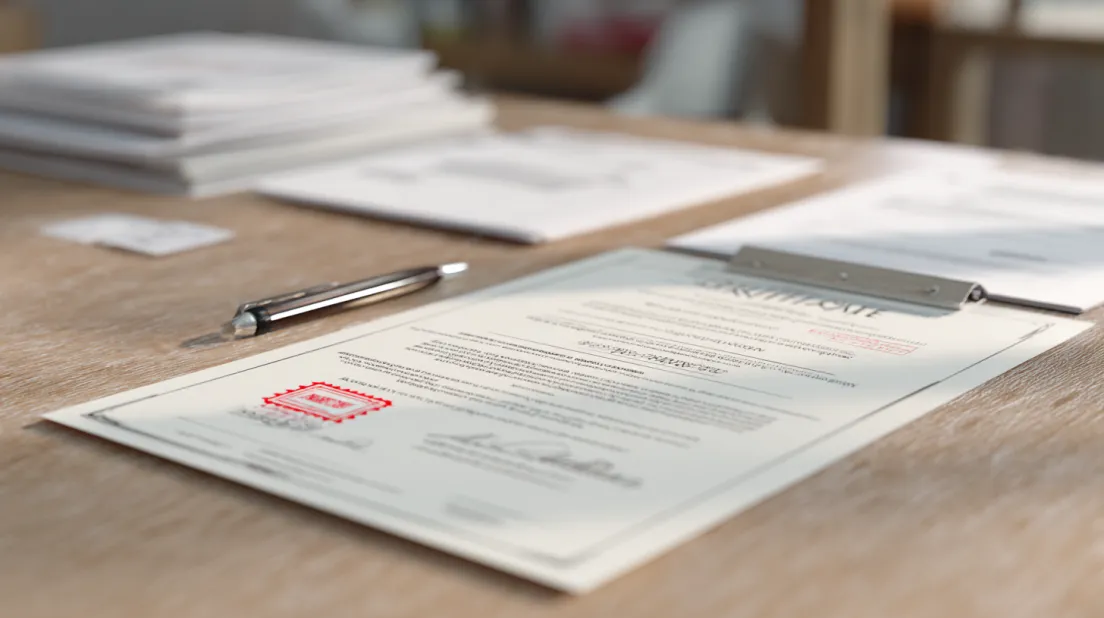
An affidavit is a written statement of facts voluntarily made by a person, known as the deponent, under oath or affirmation. To become legally binding, this document must be sworn before an authorised official, such as a notary public, a magistrate, or an oath commissioner. Once signed and sealed, it carries significant legal weight as formal evidence.
What Does It Mean to Execute an Affidavit?
Executing an affidavit refers to the formal, physical process of signing the prepared document before a competent legal authority after confirming that the contents are genuine and true. Drafting the text alone does not confer any legal standing on the paper. The execution phase is what gives the affidavit its legal validity and evidentiary value. When learning how to file affidavit documents, remember that execution requires you to present your identity proofs, sign the pages live in front of the official, and obtain their official registration seal and ledger entry.
Recommended Reading

Name Change for Minor in India: Procedur...
4.9K Views


How to Change Birthdate in Birth Certifi...
4.3K Views
How to Change Name in Educational Certif...
4.3K Views

How to Change Name Legally in India: Ste...
2.8K Views

What Is One and Same Person Affidavit: M...
2.5K Views
Is an Affidavit Executed in One State Valid in Another State?
Yes, an affidavit authorised in one Indian state is generally valid and legally recognised throughout India. Because the nation operates under a unified civil evidence framework, notarisation and attestation by authorised officials are nationally recognised.
Why Affidavits Are Generally Valid Across States
The nationwide acceptance of these sworn declarations is supported by central federal laws and standard judicial practices. The following reasons explain why these documents carry legal weight across all borders.
- Notaries are appointed under the Notaries Act, 1952: This central legislation allows the government to appoint legal practitioners whose official attestation and licensing cover the entire territory of India.
- Affidavits are recognised under Indian legal and evidentiary frameworks: Central laws like the Indian Evidence Act mandate that courts and civil bodies presume properly notarised documents are authentic and genuine.
- India follows a unified legal system for most civil documentation: The procedural codes governing sworn statements apply uniformly across the country, ensuring that standard evidence rules do not change regionally.
- Government departments and courts generally accept properly executed affidavits from other states: Major central institutions maintain consistent processing guidelines that apply equally to all regional branches and local civic counters.
- Interstate mobility would be impractical if affidavits had state-specific validity restrictions: Millions of students and working professionals cross borders daily, making universal document acceptance a basic functional necessity for the economy.
- Validity depends more on proper execution than the state of execution: Provided the deponent physically stood before a licensed official within their authorised district, the finalised paper becomes fully transportable.
When an Affidavit Executed in Another State May Face Issues
Despite broad federal protections, your out-of-state paperwork might occasionally face administrative objections at the receiving desk. Regional differences can create specific friction points that delay your submission for the following reasons.
- Incorrect or insufficient stamp duty: A low-value stamp from your current location will face rejection if the destination state mandates a higher minimum.
- State-specific procedural requirements: Certain local government bodies or municipal corporations require specific structural formats, unique paragraphs, or additional local verifications to accept an out-of-state filing into their system.
- Affidavits submitted to local authorities with additional compliance rules: Regional housing boards or transport offices may demand specific local advocate memos or certified regional translations if your text uses another language.
- Missing notary seal, registration number, or attestation details: A faint rubber stamp or the absence of a proper ledger entry number will cause the receiving officer to question the document's authenticity.
- Affidavits requiring registration rather than simple notarisation: High-stakes declarations, such as a permanent property handover, require formal registration at a local Sub-Registrar's Office rather than a simple notary public visit.
- Affidavits executed for specialised property or court-related matters: Individual state high courts maintain distinct procedural rules, so a format accepted in one region might face structural objections in another trial court.
Notary Affidavit Validity Across States
The role of the notary public involves verifying the identity of the person, or affiant, witnessing their live signatures, and certifying execution by logging the entry in a formal register. Because of this rigorous oversight, a notarised affidavit is generally accepted nationwide. However, receiving authorities may scrutinise the affidavit and pause processing if they have reasonable doubts about its authenticity or compliance.
How to Execute an Affidavit for Use in Another State
To prepare a sworn statement in your current city that will satisfy an administrative department located in a different fiscal zone, you must follow a systematic procedure. Follow these structural steps to ensure cross-border acceptance.
Draft the Affidavit Correctly
Ensure all facts, names, addresses, and declarations are accurate and relevant to the purpose of the affidavit. Write the content using formal, clear language, structuring the text into sequentially numbered paragraphs that address one specific factual point at a time.
Use Appropriate Stamp Paper
Purchase stamp paper or e-stamp paper in accordance with applicable state requirements. You must check the minimum fiscal value mandated by the destination state rather than your current location to prevent the receiving official from rejecting your file for insufficient revenue.
Carry Supporting Documents
Keep identity proof, address proof, and any supporting records required for verification. You must present your original, government-issued cards to the notary so they can verify your identity and residency before administering the formal oath.
Sign Before an Authorised Official
Execute the affidavit in the presence of a notary public, magistrate, or oath commissioner. Do not sign the printed pages at home; you must wait until you are in the official's office to sign in person.
Verify Attestation Details
Confirm that the official's seal, signature, registration number, and date are visible. Ensure the notary writes the exact serial number from their physical ledger onto your document's final page to provide a verifiable trail of execution.
Check the Requirements of the Receiving Authority
Verify whether the department, court, bank, or institution has any additional interstate document requirements. Some strict organisations might request a certified English translation or a supplementary local advocate verification if the document originates from a different linguistic zone.
Affidavit Stamp Paper Rules When Using an Affidavit in Another State
Managing fiscal regulations is often the most challenging aspect of cross-border documentation. Since stamp duties are a state subject under the Constitution, every region sets its own unique pricing guidelines.
- Stamp duty is governed by state laws: individual state legislatures have the authority to set specific tax codes and financial rules governing sworn legal instruments.
- Affidavit stamp paper values vary across states: A general declaration might require a basic ₹20 stamp in your current location, but demand a higher ₹100 denomination in the neighbouring destination state.
- Some authorities may require locally compliant stamping. If your document contains an underpaid denomination under destination laws, it will be considered legally inadmissible until the shortfall tax is fully paid.
- E-stamp certificates may be accepted depending on state regulations: Many digitised departments prefer an e-affidavit with electronic tracking numbers over traditional physical adhesive paper labels to prevent potential processing fraud.
- Always check the requirements of the receiving authority: Utilising an authorised national platform allows you to select the destination state from a menu, ensuring the correct regional revenue is paid upfront.
- Incorrect stamping can lead to rejection even if the affidavit is otherwise valid: Even if your facts are accurate and your notary is centrally licensed, a tax deficit will halt your file.
Common Situations Where Affidavits Are Used Across States
Because India features a mobile population of working professionals and students, cross-border filing is an everyday necessity for many households.
- Name change applications: Required when an individual relocates and needs to resolve minor spelling variations across central databases.
- Passport-related declarations: Essential when applying for travel documents at a regional office, requiring current residential address verification.
- Educational admissions: Students shifting regions for higher education must submit gap-year declarations to their new university registries.
- Marriage registration: Used when a couple marries in one state but files legal papers in a different state.
- Address proof requirements: Acts as a reliable alternative declaration for opening local bank accounts if standard utility bills are missing.
- Employment documentation: Submitted to corporate human resource departments during company transfers to verify past background checks.
- Property transactions: Non-resident owners execute supporting declarations to authorise a local relative to handle a house lease.
- Bank and financial institution requirements: Needed when updating automated identity files or changing nominee signatures across branch offices.
- Court proceedings: When civil litigation is transferred between state high courts, petitioners must cross-file supporting evidentiary declarations.
- NRI and immigration-related matters: Submitted to international consulates to process spousal visas, background checks, or residency applications.
Mistakes to Avoid When Using an Affidavit Across States
A single clerical oversight can cause a destination authority to reject your entire application package. Avoid these common operational blunders to ensure an efficient submission process.
- Using an incorrect stamp paper value: Underpaying the mandatory tax required by target state laws renders your file legally inadmissible.
- Signing before an unauthorised person: Relying on a standard lawyer instead of executing it before a registered notary public.
- Submitting photocopies instead of originals where originals are required: Administrative departments universally demand the physical stamped sheet.
- Missing notary seal or registration details: Forgetting to check if the official affixed their registration number leaves the document open to challenges.
- Providing false or inaccurate information: Knowingly presenting fabricated facts under oath exposes the deponent to severe perjury charges.
- Assuming all authorities have identical procedural requirements: Expecting a digitised zone to process a manual paper document without an electronic tracking number.
- Failing to verify destination-state requirements before submission: Writing the text in a regional language the receiving clerks cannot verify.
How NoBroker Can Help With Affidavits
Managing the conflicting fiscal rules and distinct formatting guidelines of different Indian states can quickly become a confusing process for ordinary citizens. NoBroker helps users simplify documentation requirements by providing guidance on legal paperwork, rental documentation, and related verification processes. Whether you are dealing with an out-of-state university admission or updating your property records across borders, our services assist you in navigating the complexities of civil paperwork. Users can better understand affidavit requirements, compliance needs, and supporting documentation before
Frequently Asked Questions
Can I get an affidavit notarised in a different state from where I live?
Does an affidavit need to be re-notarised when submitted in another state?
Is a notarised affidavit sufficient, or does it also need to be registered?
Can an e-stamped affidavit be used in another state?
Who can legally attest an affidavit in India?
About the Author

Sanjay A
Senior Editor


Recent Blogs
Subscribe to our Newsletter
Get latest news delivered straight to your inbox