Is an Affidavit Valid Without a Notary: Legal Requirements & Risks in India


Affidavit Guide & Formats

1.1K Views
Table of Contents
An affidavit is a formal written statement of facts voluntarily made by a person, known as the deponent, under a solemn oath or affirmation. To address the primary question, is affidavit valid without notary or a similar authorized official, the answer is generally no in the Indian legal context. For an affidavit to be legally admissible and recognized by authorities, it must be sworn before an authorized officer, such as a Notary Public or a Commissioner of Oaths, who validates the document with their official signature and seal.
What Is an Affidavit?
An affidavit is a written statement of facts voluntarily made by a person (the deponent) under a solemn oath or affirmation. By signing an affidavit, the deponent declares that the information provided is true to the best of their personal knowledge and belief. Because this is a sworn statement, intentionally providing false information can lead to criminal charges of perjury under the Indian Penal Code.
What Is a Notarized Affidavit?
A notarized affidavit is a written statement of facts that has been sworn or affirmed as true by a person in the physical presence of a licensed Notary Public. As part of the notarial act, the notary verifies the signer's identity using government-issued identification, such as an Aadhaar card or PAN card, and confirms that the individual is executing the document voluntarily, without any external pressure or coercion. This official verification transforms the written statement into a "notarized affidavit," which is widely accepted by banks, educational institutions, and government offices as a reliable legal instrument.
Recommended Reading

Name Change for Minor in India: Procedur...
4.9K Views


How to Change Birthdate in Birth Certifi...
4.3K Views
How to Change Name in Educational Certif...
4.3K Views

How to Change Name Legally in India: Ste...
2.8K Views

What Is One and Same Person Affidavit: M...
2.5K Views
Is an Affidavit Valid Without a Notary?
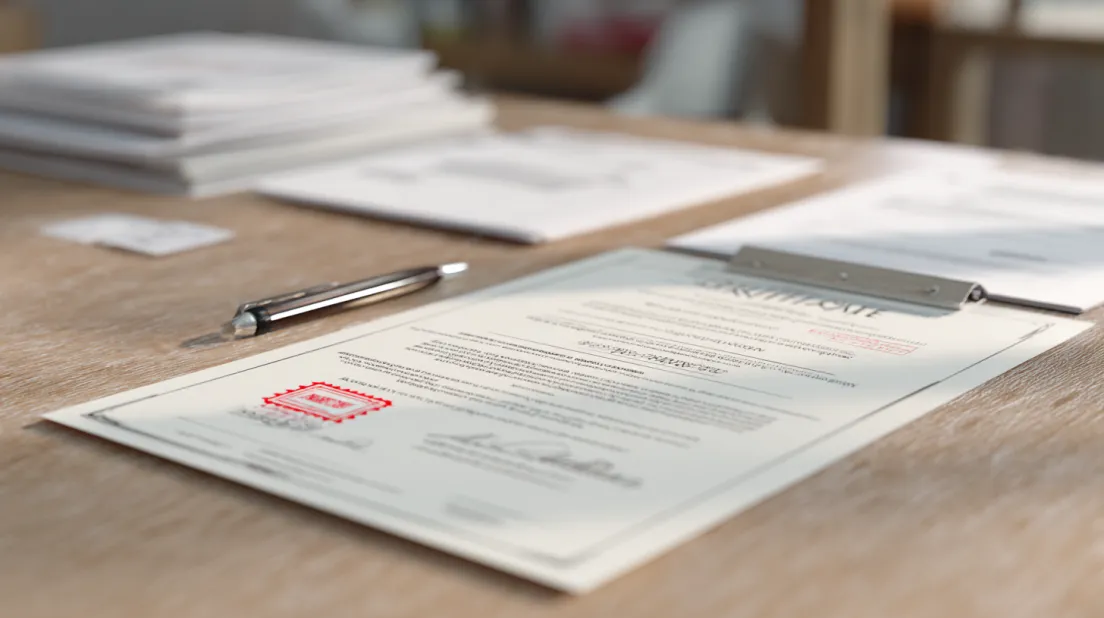
By its very nature, an affidavit requires attestation. Without attestation by a Notary Public, Oath Commissioner, or Magistrate, the document is technically not an "affidavit" but merely a "self-declaration" or an "unsworn statement." While such a declaration might be used for minor internal purposes, it cannot be considered for legal or government processes.
In India, what documents need to be notarized is often determined by the specific requirements. Most official processes, such as applying for a passport, registering a marriage, or filing a court petition, strictly mandate notarization. An unattested document can be rejected, especially if used in a legal/government process, as it is not ‘verified’.
What a Valid Affidavit Should Contain?
To ensure that an affidavit is legally sound and accepted by Indian authorities, it must follow a structured format as prescribed by the Oaths Act, 1969.
- Clear title identifying the document: A bold heading like "Affidavit for Name Change" defines the specific legal purpose.
- Personal details of the deponent: Includes full legal name, age, father’s/husband’s name, and complete residential address.
- Accurate statement of facts: Information must be listed clearly in numbered paragraphs based on personal knowledge.
- Oath or affirmation statement: A specific clause where the deponent swears the information is true under penalty of law.
- Signature of the deponent: The individual must sign the document, usually on every page, before the legal officer.
- Authorized officer attestation: The signature and seal of a Notary Public or Oath Commissioner certifying the oath.
- Date and place of execution: Records the exact timing and geographical location where the document was signed.
Additionally, most affidavits in India must be printed on Non-Judicial Stamp Paper, the value of which is determined by the specific State Stamp Act.
Why Notarization Is Usually Required?
Notarization serves as an essential safety in the Indian legal system, providing a layer of security that protects both the deponent and the receiving institution.
- Confirms identity of the signer: Prevents impersonation by vetting government-issued IDs during the notarial act.
- Ensures voluntary declaration: Notaries check that the signer understands the contents and is not being forced to sign.
- Prevents fraudulent statements: The threat of criminal liability for false swearing deters individuals from making dishonest claims.
- Provides legal credibility: A notary's seal is a mark of authenticity that courts and government agencies recognize as genuine.
Because a notary is an impartial witness, their attestation gives the document a "presumption of truth" under Section 85 of the Indian Evidence Act, 1872.
Situations Where a Notarized Affidavit Is Required
A notarized affidavit is mandatory in various high-stakes scenarios in India where a simple signature is insufficient for verification.
- Court filings and litigation: Under Order XIX of the CPC, courts often require specific facts to be proven via notarized statements.
- Property or financial documentation: Used to declare legal heirs (Heirship Affidavit) or to affirm facts during property registration.
- Government applications: Essential for name changes, date of birth corrections, and address proof when primary certificates are missing.
- Immigration and legal compliance: Mandatory for passport annexures, visa sponsorship letters, and verifying lost or damaged travel documents.
In these instances, the question of is an affidavit valid without a notary is quickly answered by the immediate rejection of the document by the concerned officials if the seal is missing.
Risks of Using an Affidavit Without Notarization
Choosing to skip the notarization process can lead to significant procedural and legal hurdles for the deponent.
- Document rejection: The most common risk is that the receiving authority will deem the document legally ineffective and refuse it.
- Reduced legal reliability: Opposing parties in a dispute can easily challenge an unnotarized statement, as it lacks official verification.
- Difficulty proving authenticity: Without a notary's stamp, the burden of proving that you actually signed the document stays entirely on you.
- Need to recreate the document: Rejection often means you must buy new stamp paper and start the entire process again.
Furthermore, a common concern is does a notarized document expire. While the facts may remain true, many departments accept only affidavits notarized within the last six months to ensure the information is current.
How NoBroker Can Help With Affidavits and Notarization
Navigating the legalities of stamp paper and finding a reliable notary can be a time-consuming task. NoBroker helps users prepare affidavits by connecting users with verified notary services to ensure documents are properly notarized and legally compliant. By understanding what is affidavit and its requirements, NoBroker ensures that your paperwork meets the strict standards of Indian government departments and courts.
Frequently Asked Questions
Can an affidavit be used in court without notarization?
Who is authorized to notarize an affidavit?
Is notarization required for all legal affidavits?
Can an affidavit be notarized after it is signed?
What happens if an affidavit is not properly notarized?
About the Author

Sanjay A
Senior Editor


Recent Blogs
Subscribe to our Newsletter
Get latest news delivered straight to your inbox