Can Affidavit Be Amended: Rules, Procedure and Court Permission in India 2026


Affidavit Guide & Formats

1.2K Views
Table of Contents
Summary
Affidavits are meant to present accurate facts under oath, but genuine mistakes, omissions, or changes in circumstances can sometimes require corrections after the document has been prepared or submitted. Many people are unsure whether such changes are legally permitted or if a completely new affidavit is required. If you are wondering can affidavit be amended, understanding the applicable legal rules and procedures is essential. Whether the affidavit contains clerical errors, incorrect information, or requires updates during legal proceedings, knowing when amendments are allowed and whether court permission is needed can help you avoid delays and legal complications.
Is Amendment of Affidavit Allowed?
Yes, the amendment of an affidavit is generally allowed, but it is not a right you can exercise freely like editing a draft. The permission to amend depends heavily on the stage of the proceedings and the nature of the change. Courts in India are usually lenient in correcting accidental slips or "curable" defects, such as a wrong date or a typo. However, substantial changes that try to withdraw an admission or completely change the factual narrative are viewed strictly and may be rejected to prevent prejudice to the other party.
When Can an Affidavit Be Amended?
There are specific situations where can affidavit be amended becomes a relevant legal question. Here, the affidavit can be amended with the court's permission or through the appropriate legal procedure, depending on the nature of the error:
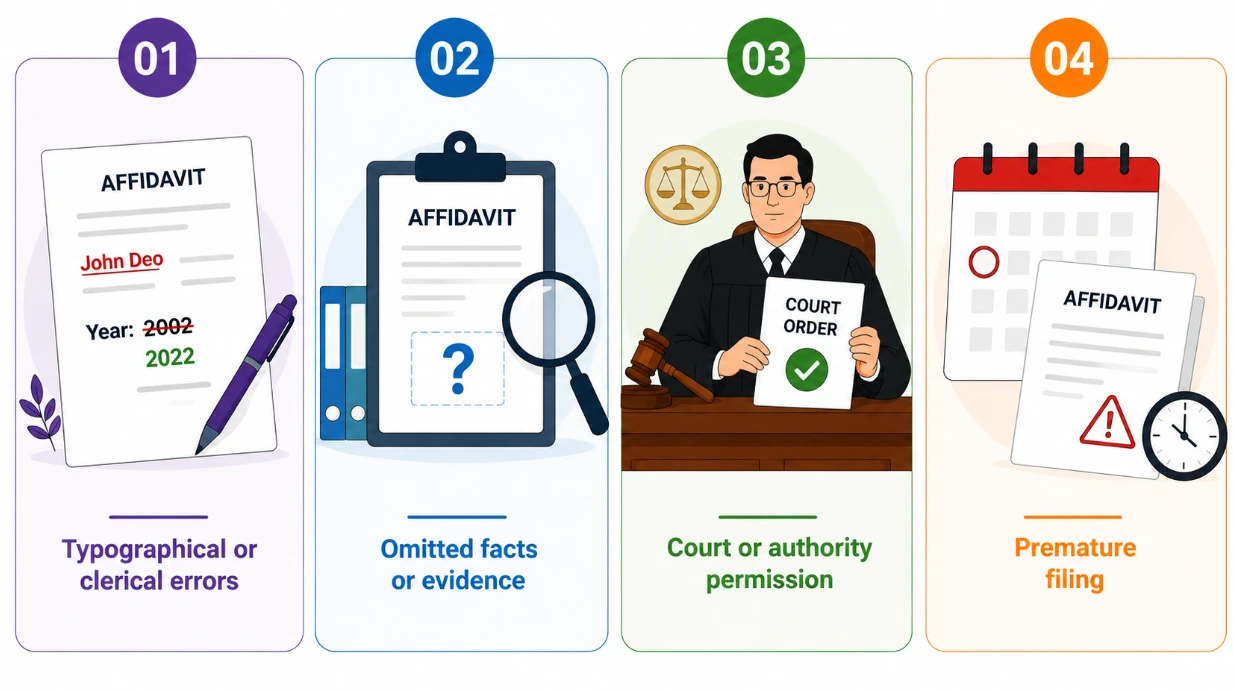
- Typographical or clerical errors: Simple mistakes like spelling names wrong or typing the wrong year.
- Omitted facts or evidence: When relevant details were accidentally left out, but are crucial for the case.
- Court or authority permission: When the judge explicitly orders a correction to clarify vague statements.
- Premature filing: Situations where an affidavit was filed before certain events occurred, needing an update.
When Is Amendment of an Affidavit Not Allowed?
The law draws a firm line against amendments that undermine the sanctity of a sworn statement.
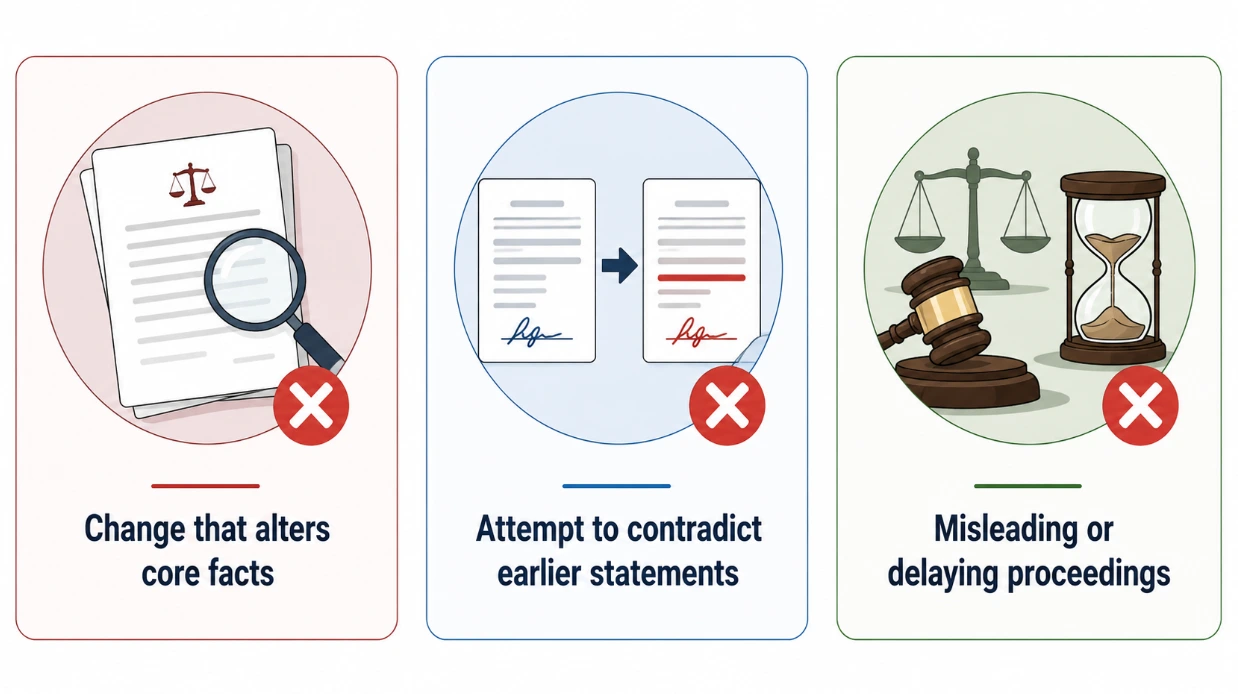
- Change that alters core facts: You cannot change the fundamental story or evidence originally sworn to.
- Attempt to contradict earlier statements: Courts do not allow amendments that try to "backtrack" on admissions made under oath.
- Misleading or delaying proceedings: Amendments filed with malicious intent to stall the case or harass the opponent are rejected.
Is Court Permission Required to Amend an Affidavit?
If the document is already part of the court record, you cannot touch it without permission.
- Required when affidavit is filed: Once submitted, the affidavit becomes court property; any change needs a judicial order.
- Process of seeking leave: You must file a formal application explaining why the amendment is necessary and why it wasn't done earlier.
- Situations where permission is not needed: Minor corrections made before the affidavit is sworn or filed, provided they are initialed by the Notary.
Methods of Correcting an Affidavit
Since physically altering a filed document is generally not permitted, many people ask, "can affidavit be amended?" The answer is yes—through recognised legal procedures such as filing an amended or supplementary affidavit, depending on the nature of the error and the stage of the proceedings:
- Fresh Affidavit: The most common method is to file a new, correct affidavit that supersedes the defective one.
- Supplementary Affidavit: Used to add new facts or clarify existing ones without discarding the original document.
- Amended Affidavit with Permission: In rare cases, the court may allow specific changes to the text of the original document.
How to Amend an Affidavit?
If you discover an error, follow this structured process to ensure your amendment of the affidavit is legally valid.
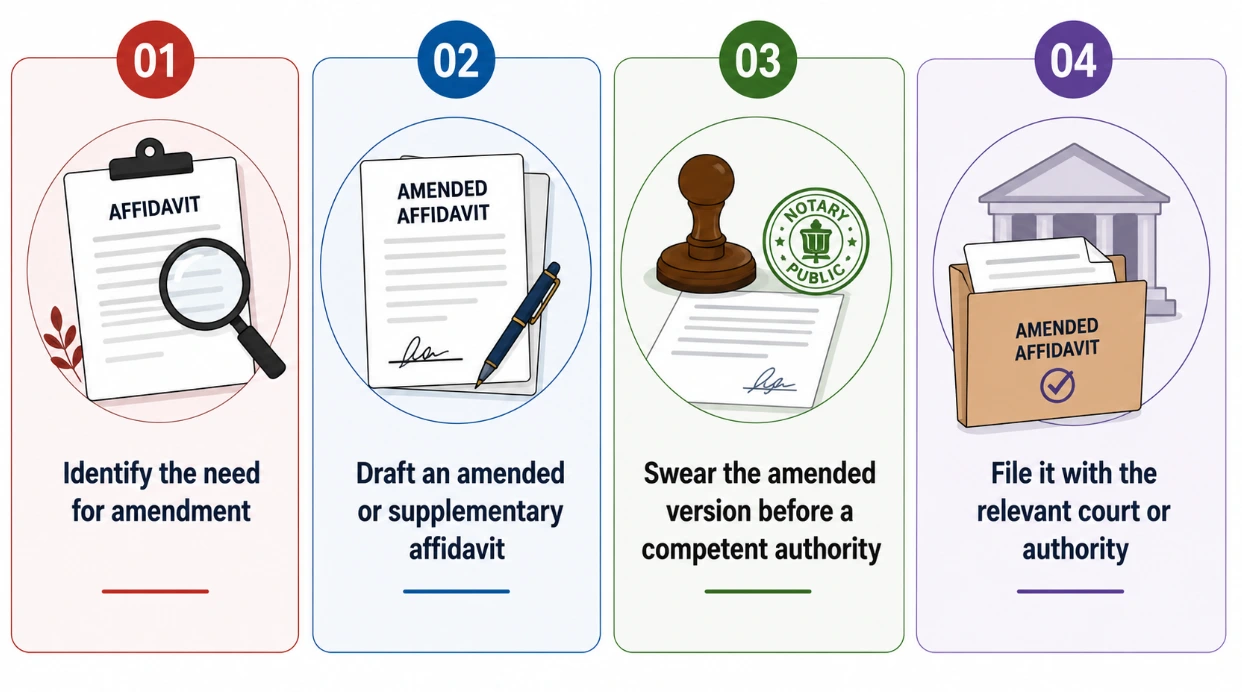
Identify the need for amendment
Carefully review the sworn document to pinpoint exactly what needs to be changed. Determine if it is a minor typo (like a misspelling) or a substantive fact (like a missing date) that could impact the outcome of your case.
Draft an amended or supplementary affidavit
Instead of editing the old paper, prepare a new document. Title it "Amended Affidavit" or "Supplementary Affidavit." Clearly state that this document is being filed to correct or add to the statements made in the previous affidavit.
Swear the amended version before a competent authority
You must verify the new content just like the original. Visit a Notary Public or Oath Commissioner to swear or affirm the truth of the amended affidavit. They will sign and stamp it to validate the new statements.
File it with the relevant court or authority
Submit the sworn amended affidavit to the court registry or the relevant authority. If the case is ongoing, you may need to file an accompanying application seeking the court's permission to take the new affidavit on record.
Amended Affidavit Format
IN THE COURT OF ____________________
AT ____________________
Case No.: ____________________
I, [Your name="true"],
son/daughter/wife of [Father s="true" husband="true" name="true"],
aged about [Age] years,
residing at [Address],
do hereby solemnly affirm and state as follows:
I am the [Plaintiff defendant="true" petitioner="true" respondent="true"] in the above case. I have amended the [plaint written="true" statement="true" petition="true"] as per the order of this Hon’ble Court dated __________. The amendments made are true and correct to the best of my knowledge and belief.
VERIFICATION
Verified at [Place] on this ___ day of __________ 20__.
DEPONENT
(Signature)
Before Me
Notary Public / Oath Commissioner
(Signature & Seal)
Affidavit Amendment vs New Affidavit
Understanding the difference between revising an existing document and drafting a new one is crucial to legal strategy.
| Basis of Comparison | Affidavit Amendment | New / Supplementary Affidavit |
|---|---|---|
| Purpose | To fix minor clerical slips or defects. | To introduce new facts or clarify omissions. |
| Procedural approach | Physical correction (rare after filing). | Filing a fresh document referencing the old one. |
| Court perspective | Discouraged for filed documents to avoid tampering. | Preferred method as it preserves the record. |
| When used | For typos discovered before filing. | For new developments or substantial corrections. |
What Happens If an Affidavit Is Not Corrected?
An incorrect affidavit should be corrected promptly to avoid legal complications. If errors remain unaddressed, they may weaken your case, lead to procedural delays, or result in the affidavit being rejected by the court registry. In serious cases, false or misleading statements may attract perjury-related consequences. Filing a supplementary affidavit as soon as the mistake is identified helps maintain the accuracy and credibility of your case.
Common Mistakes to Avoid When Amending an Affidavit
Here are the common mistakes to avoid when amending an affidavit to ensure your corrections remain legally valid and are accepted by the court:
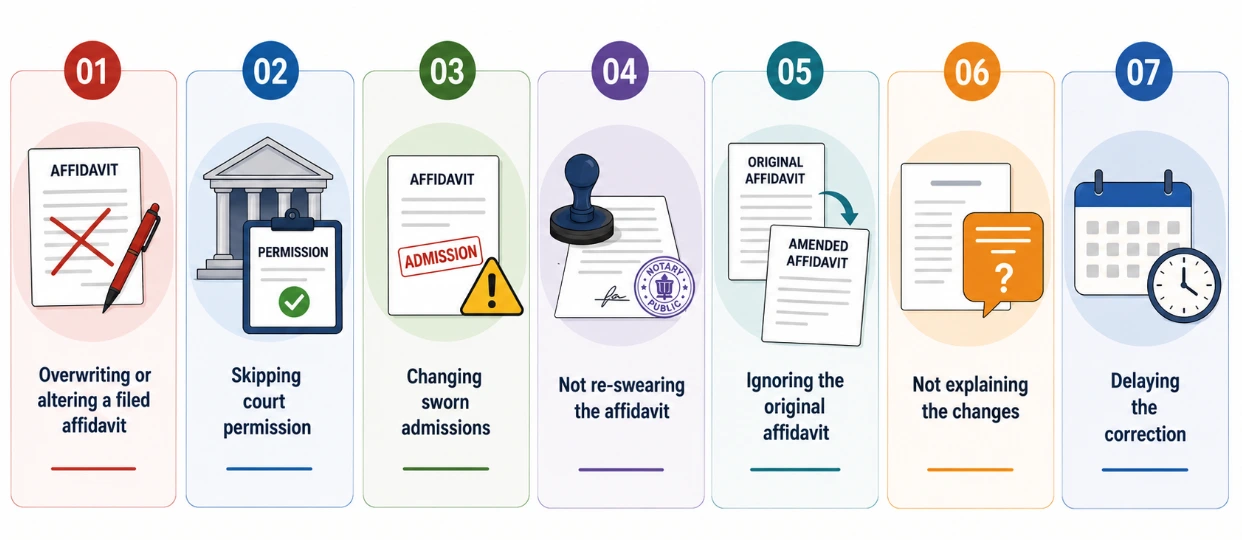
- Overwriting or altering a filed affidavit: Never strike out, erase, or overwrite a filed affidavit without the court's permission, as it may invalidate the document.
- Skipping court permission: If the original affidavit is already on record, obtain the court's leave before filing an amended affidavit, where required.
- Changing sworn admissions: Do not use an amended affidavit to withdraw or alter admissions made under oath without a valid legal basis, as courts may view it as misleading.
- Not re-swearing the affidavit: Every amended or supplementary affidavit must be sworn before a notary public or oath commissioner before filing.
- Ignoring the original affidavit: Clearly refer to the original affidavit, including its date and relevant details, so the court can identify the amendments accurately.
- Not explaining the changes: Briefly state the reason for the amendment to help the court understand why the correction is being made.
- Delaying the correction: File the amended or supplementary affidavit as soon as the error is discovered to avoid unnecessary procedural complications.
How NoBroker Can Help With Affidavit Drafting and Amendment?
Can affidavit be amended if you discover an error later? The answer depends on the type of mistake and the stage of the legal process. Navigating the legalities of an affidavit and its amendment can be tricky. NoBroker simplifies this by offering expert legal assistance. Whether you need an e-affidavit for a rental agreement or help correcting a name change declaration, our experts guide you through the drafting and verification process. We help review your documents for errors to ensure you don't face rejection. If you need to act as an affiant and file a supplementary affidavit, NoBroker connects you with verified notaries to get it done smoothly and correctly.
Frequently Asked Questions
Can an affidavit be amended after it is sworn?
Do I need court permission to amend an affidavit?
What is the difference between amending and re-swearing an affidavit?
Can a supplementary affidavit replace an amended affidavit?
Is the amendment of an affidavit allowed in all cases?
Can an Affidavit Be Amended After Filing?
When can an affidavit be amended without court permission in India?
What is the difference between an amended affidavit and a supplementary affidavit?
About the Author

Sanjay A
Senior Editor


Recent Blogs

Subscribe to our Newsletter
Get latest news delivered straight to your inbox