
Sanjay A
NOTARY AUTHOR
About the Author
Meet Sanjay A
Hi, I am an experienced advocate and legal documentation expert passionate about simplifying legal paperwork and compliance processes. I regularly write about affidavits, rent agreements, notaries, and property-related documentation to help readers better understand legal formalities in a simple, practical manner. I aim to make legal information more accessible through clear, reliable, and easy guidance.
145
Articles Published
Notary
Primary Category

Legalization vs Notarization: What's the Difference and When Do You Need Each?
Notarization and legalization are both document authentication processes, but they serve different purposes. Notarization validates signatures locally, while legalization enables documents to be accepted internationally. In simple terms, legalization vs notarization depends on your target audience. If you are showing a document to an Indian bank or...

What is the Notaries Act 1952? Functions, Rules & Legal Importance in India
Brief overview explaining that the Notaries Act 1952 governs notarial practice in India, provides the legal framework for appointment and duties of notaries public, and ensures authenticity in documentary transactions. It serves as a shield against document falsification, ensuring that every signature and seal carries the weight...
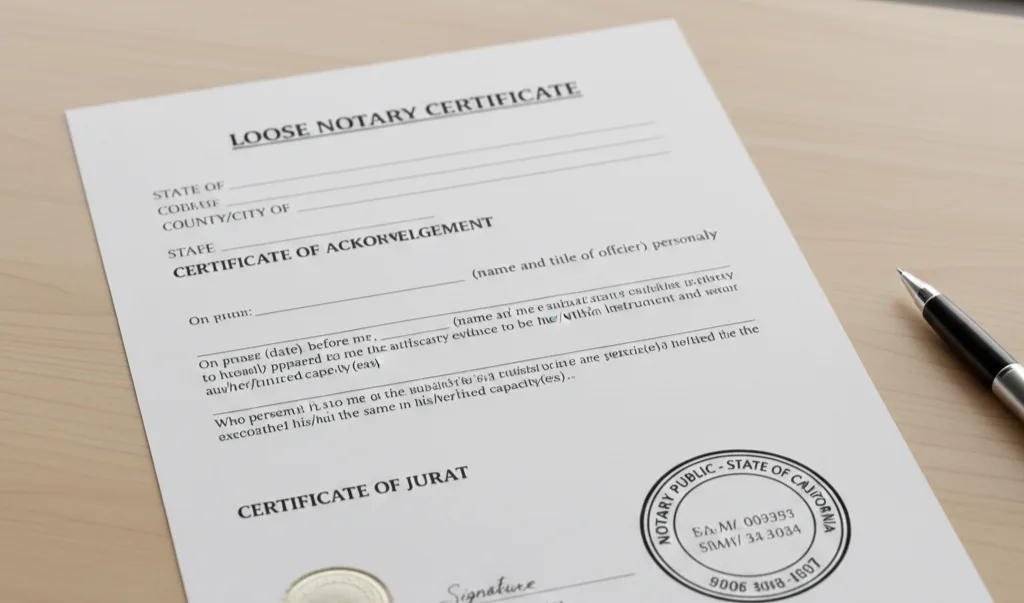
Loose Notary Certificate: Meaning, Uses and Ricks in India 2026
What Is a Loose Notary Certificate? A loose notary certificate (also frequently referred to as a notary loose certificate) is a separate, stand-alone authentication sheet used by a notary public to perform a notarial act. Instead of applying the...

Notary Seal Vs Stamp: Differences, Purpose, Usage and Legal Acceptance in India
What Is a Notary Stamp? A notary stamp is a physical device, often made of rubber or designed as a self-inking unit, used by notaries to leave a flat, inked impression on a document. This mark contains vital information...
What is a Notarial Act: Meaning, Examples, and Importance in India
What Is a Notarial Act? To understand what is a notarial act, one must view it as a formal action taken by a commissioned notary public in strict accordance with the law. In the Indian legal system, a notarial...

Acknowledgment vs Jurat: Meaning, Key Differences & When to Use Each
Understanding the difference between acknowledgment vs jurat is crucial when notarizing legal documents. An acknowledgment verifies the signer’s identity and confirms that they signed the document voluntarily. A jurat, however, is stricter as it requires the signer to appear before a notary, sign in their presence, and...

Sworn Declaration Meaning, Key Element and How to Prepare in India 2026
Sworn Declaration Meaning To grasp the sworn declaration meaning, one must view it as a written declaration of facts where the person making the statement (the declarant) affirms the contents under an oath or the penalty of perjury. In...

Difference Between Stamp Paper and Affidavit: Purpose, Uses and Documentation in India 2026
What is Stamp Paper? To understand the difference between stamp paper and affidavit, one must first define the medium itself. What is stamp paper? It is a government-issued paper that comes pre-printed with a specific revenue value. It serves...

Marriage Affidavit Vs Marriage Certificate: Process, Validity, and Requirements in 2026
What is a Marriage Affidavit? A marriage affidavit, also commonly known as an affidavit of marriage, is a sworn legal declaration made by the spouses under oath. It is typically drafted on non-judicial stamp paper and notarized by a...

Affidavit Vs Deposition: Meaning, Features, Advantages and Limitations in India 2026
What Is an Affidavit? An affidavit is a formal written statement of facts made voluntarily under an oath or affirmation. It serves as an essential tool in administrative processes, providing verified information when direct evidence is unavailable. The...

Affidavit Vs Sworn Statement: Differences, Meaning and Legal Validity in India 2026
What Is an Affidavit? An affidavit is a formal, written statement of facts voluntarily made by a person known as a deponent. This statement is confirmed by an oath or a solemn affirmation. In India, an affidavit is...

Can Affidavit Be Amended: Rules, Procedure and Court Permission in India 2026
Affidavits are meant to present accurate facts under oath, but genuine mistakes, omissions, or changes in circumstances can sometimes require corrections after the document has been prepared or submitted. Many people are unsure whether such changes are legally permitted or if a completely new affidavit is required....