Affidavit vs Power of Attorney: Meaning, Key Differences & When to Use Each


118 Views
Table of Contents
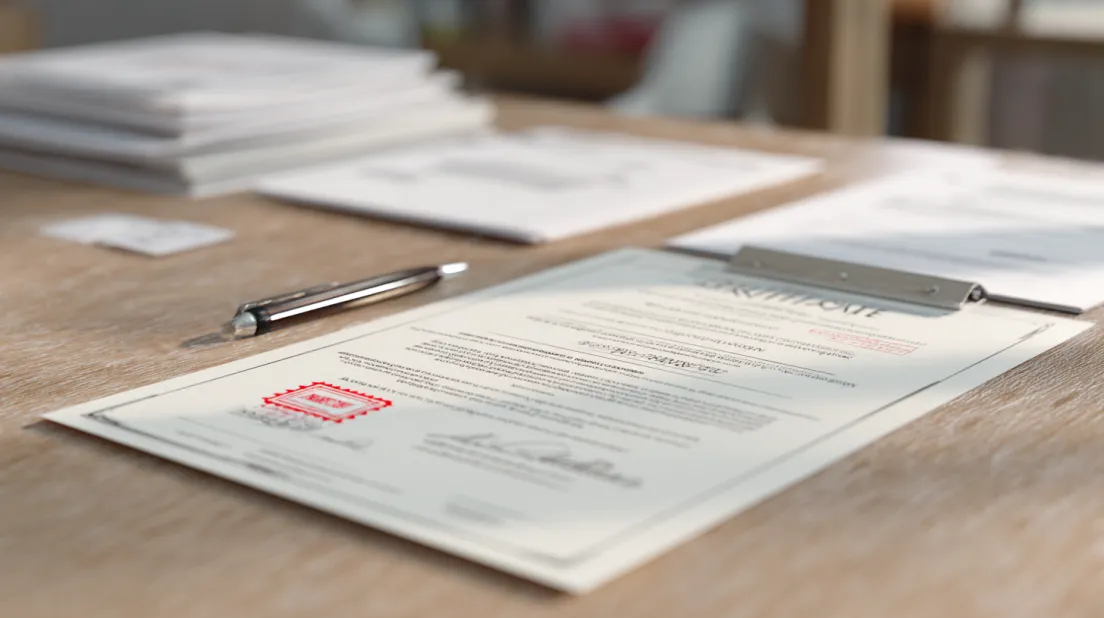
When navigating the legal world, understanding the difference between an affidavit vs power of attorney is essential for managing your personal and business affairs. Both documents hold significant weight in legal matters, but they serve different purposes. While one is used to state facts under oath, the other grants authority to someone else to act on your behalf. This guide simplifies these concepts to help you confidently choose the right legal tool.
What Is an Affidavit?
To understand these documents, you first need to know what is affidavit. An affidavit is a written statement made voluntarily under oath or affirmation before a notary public or authorized officer. These legal instruments are commonly used for formal declarations, providing evidence in court, confirming identity, and serving official documentation purposes. By signing an affidavit, you formally swear that the facts mentioned are true to the best of your knowledge, making it a reliable piece of evidence for various legal proceedings.
What is a Power of Attorney?
If you are wondering what is power of attorney or what does power of attorney mean, it is a formal legal document through which one person authorizes another person to act on their behalf in financial, legal, property, or personal matters. The individual granting the power is the principal, while the authorized person is commonly called an agent or attorney-in-fact. This legal delegation is important when someone is unavailable or unable to manage their own affairs and needs a trusted representative.
Recommended Reading

Name Change for Minor in India: Procedur...
5.1K Views

How to Change Name in Educational Certif...
4.4K Views

How to Change Birthdate in Birth Certifi...
4.4K Views

How to Change Name Legally in India: Ste...
2.9K Views

What Is One and Same Person Affidavit: M...
2.5K Views
Types of Power of Attorney
There are several variations of these documents designed for specific situations. Understanding the different types ensures you choose the right authorization for your needs.
- General Power of Attorney (GPA): Grants comprehensive authority to manage all of the principal's financial matters.
- Special Power of Attorney (SPA): Limits the agent to a single task and terminates upon successful completion.
- Durable Power of Attorney: Remains legally valid even if the principal becomes mentally incapacitated.
- Medical or Healthcare Power of Attorney: Grants authority to make healthcare decisions when the principal is unconscious.
- Limited Power of Attorney: Restricts the agent to specific boundaries, keeping decisions within a defined scope.
Difference Between Affidavit and Power of Attorney
To make things clearer, here is a detailed comparison highlighting the main differences between an affidavit and a power of attorney for your legal reference.
| Feature | Affidavit | Power of Attorney |
|---|---|---|
| Meaning | Sworn statement of facts. | Document granting authority. |
| Purpose | To present verified evidence. | To delegate decision-making power. |
| Parties Involved | Deponent and authorized officer. | Principal, agent, and witnesses. |
| Legal Nature | Evidentiary and declarative. | Authoritative and delegatory. |
| Main Function | Proves the truth of a claim. | Enables an agent to act. |
| Common Usage | Name changes, court evidence. | Property sales, bank management. |
| Signing Requirement | Signature before a notary. | Principal and witness signatures. |
| Legal Consequence | Falsehoods lead to perjury. | Misuse breaches fiduciary duty. |
Key Legal Differences Between an Affidavit and a Power of Attorney
Understanding the legal boundaries of each document helps prevent mistakes. Here are the core legal differences separating these two important instruments.
- Affidavit is a declaration; POA is an authorization: Affidavits state truths, while POAs empower someone to act.
- Affidavits are primarily evidentiary documents: courts treat sworn statements as reliable evidence to verify facts.
- Power of attorney grants decision-making authority: A POA transfers the capacity to sign contracts and manage assets.
- Affidavits are usually unilateral: The document involves only the person making the sworn statement.
- POA involves a principal-agent relationship: Establishes a fiduciary duty between the principal granting power and the agent.
- Both documents may require notarization depending on usage: Affidavits need oaths; POAs need notarization or registration.
What Does a Power of Attorney Include?
A well-drafted authorization document must contain specific elements to be considered legally valid. Here are the primary components included in standard formats.
- Name and details of principal: Identifies the legal name and address of the person granting authority.
- Name and details of agent: Specifies the precise identity and relationship of the chosen representative.
- Powers being granted: An explicit list outlining the exact actions the designated agent can execute.
- Duration or validity of authority: Mentions the commencement and expiration dates, indicating how long powers remain active.
- Restrictions or limitations: Outlines specific actions the agent is prohibited from taking.
- Signature of parties: Contains the physical signatures of both the principal and the accepting agent.
- Witness or notary details: Includes signatures of at least two independent witnesses to verify voluntary signing.
When Should You Use an Affidavit?
You will need this sworn statement in various administrative scenarios. Let us look at the most common situations where this document is necessary.
- Declaring personal facts officially: Used to state name changes, confirm dates of birth, or verify marital status.
- Submitting court evidence: Provides written testimony to a judge without requiring physical court appearances.
- Correcting records or information: Rectifies spelling errors on government identity cards or property registration documents.
- Supporting legal applications: Serves as supplementary proof for passports, scholarships, subsidies, or travel visas.
- Identity or address declarations: Acts as legal proof of residence when standard utility bills are unavailable.
When Should You Use a Power of Attorney?
Delegating your authority is helpful when you cannot manage tasks personally. Here are the typical scenarios requiring this specific legal delegation.
- Property transactions: Allows an agent to legally buy, sell, lease, or register real estate properties.
- Managing finances or bank accounts: Empowers a representative to handle banking operations, including withdrawing funds.
- Legal representation during absence: Permits your agent to hire lawyers and attend hearings while you live abroad.
- Medical decision-making authority: Grants a family member the right to approve surgeries if you become incapacitated.
- Business and contractual matters: Enables a business partner to sign agreements and handle daily operational duties smoothly.
Is an Affidavit Legally Binding?
Yes, affidavits are legally binding because they are formal statements made under a strict oath. When you sign one, you are swearing before a government-authorized official that the information provided is completely accurate. Because of this formal oath, submitting false statements in an affidavit may result in severe legal consequences. The authorities can impose strict criminal penalties for perjury or furnishing false evidence, ensuring that individuals do not misuse these documents to mislead courts or government departments during official procedures.
Is a Power of Attorney Legally Binding?
A power of attorney is legally binding once it is properly executed in accordance with applicable state laws. After the document is signed and witnessed, the appointed agent can legally act within the specific authority granted by the principal. This authorized representative's actions are treated as if the principal performed them personally. The document remains binding and enforceable until the POA naturally expires, is formally revoked by the principal, or otherwise becomes invalid due to the principal's death or mental incapacitation.
Common Misconceptions About Affidavits and Power of Attorney
People frequently misunderstand how these legal instruments function. Clearing up these common myths ensures you handle your legal documentation without making errors.
- Affidavits do not grant authority to another person: Sworn statements confirm facts, not decision-making authority.
- POA is not the same as property ownership transfer: Authorizing someone to sell property doesn't make them the owner.
- Not all affidavits require court filing; many sworn statements are used for administrative tasks, such as updating bank records.
- A power of attorney can have limited authority: an agent's authority can be restricted to a specific task.
- Notarization alone does not validate false statements: A notary stamp proves signatures, but doesn't make fabricated information true.
Important Legal Points About Affidavits and POA
Handling formal paperwork requires attention to detail. Keep these essential legal factors in mind when preparing your next sworn statement or authorization document.
- Accuracy of information is essential: Truthful details protect you from criminal charges for misleading government authorities.
- POA misuse can lead to legal action: If an agent acts outside their authority, the principal can sue them.
- Affidavits are commonly used as evidence: Courts treat these documents as reliable testimony to resolve disputes efficiently.
- Some POAs require registration: Property transfer authorizations must be officially registered at the Sub-Registrar's office.
- Rules may vary by jurisdiction and purpose: Stamp paper values and format guidelines vary by location.
How NoBroker Can Help With Affidavits and Power of Attorney
Navigating complex legal paperwork can be overwhelming for most people. NoBroker assists users with seamless e-affidavit drafting, accurate power-of-attorney documentation, and expert guidance on notarization to simplify the entire process. Whether you need an affidavit or a power of attorney, our platform provides comprehensive legal paperwork support for property, personal, and complex legal documentation requirements. By choosing NoBroker, you ensure your documents are legally compliant, properly formatted, and executed efficiently from the comfort of your home, saving you valuable time, money, and unnecessary stress.
Frequently Asked Questions
What is an affidavit?
What is a power of attorney?
What is the difference between an affidavit and a power of attorney?
What does an affidavit look like?
Is notarization required for affidavits?
About the Author

Sanjay A
Senior Editor


Recent Blogs
Subscribe to our Newsletter
Get latest news delivered straight to your inbox