Summer vs Winter Relocation: Which Season Is Better for Moving

79 Views
Table of Contents
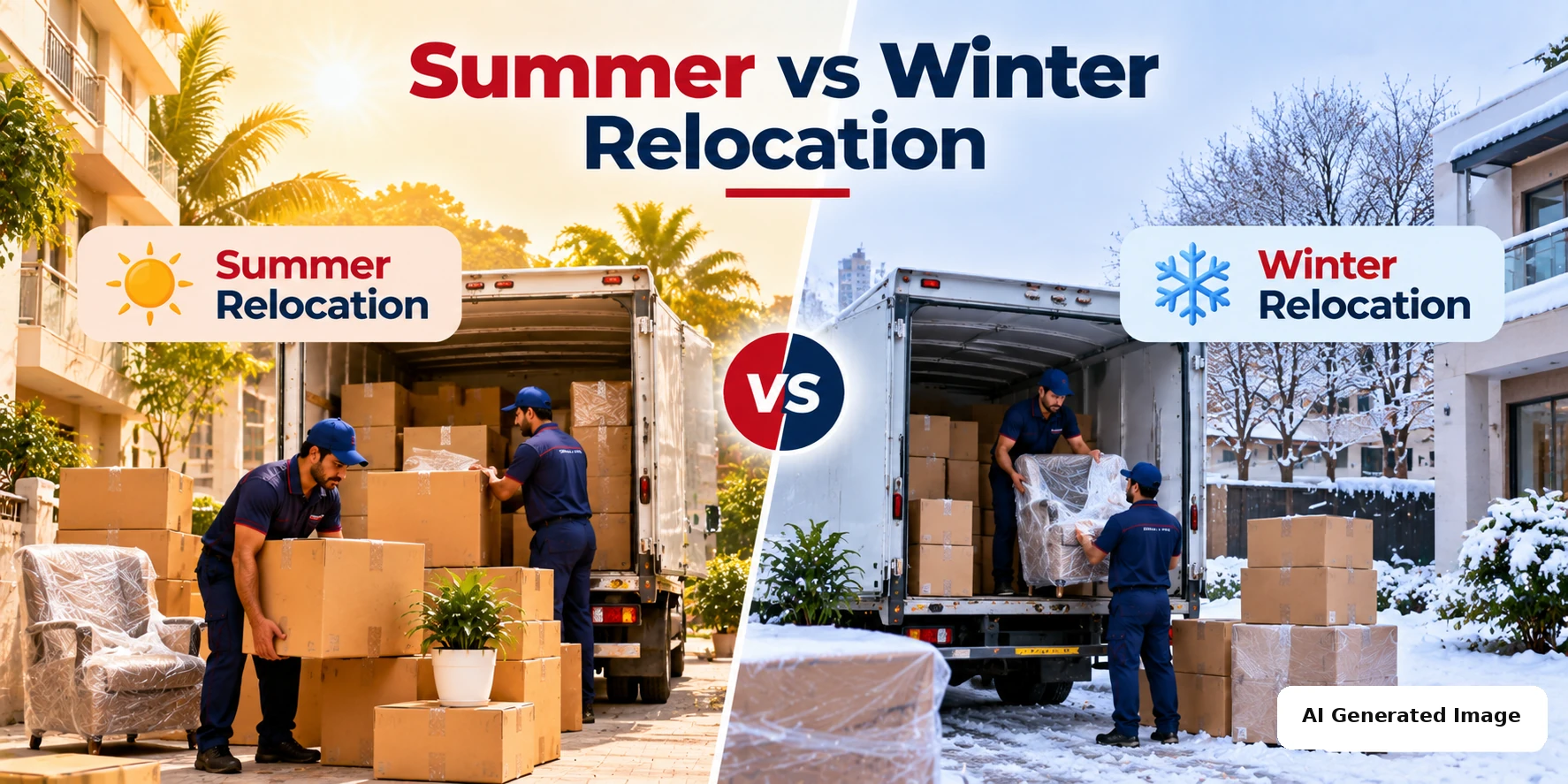
Your budget and weather conditions are two of the biggest factors when choosing between summer and winter relocation. While summer offers longer daylight hours but higher costs and is convenient for families moving during school holidays, winter offers lower costs and more comfortable weather, but shorter days and colder conditions, which can make the move more challenging. This blog is your guide to comparing summer and winter relocation to help you choose the season that works best for your move
Summer vs Winter Relocation at a Glance
The season you choose will have an impact on your moving costs, mover availability, travel conditions and comfort on moving day. The table below can help you compare summer and winter relocation and decide which works better for your move:
| Difference | Summer Relocation | Winter Relocation |
| Weather | Hot temperatures make packing, loading and unloading tiring | Cooler temperatures make physical moving work more comfortable, but challenging as well |
| Moving costs | Costs are higher during summer peak moving periods | Costs are comparatively lower during off-peak periods in winter |
| Mover availability | Movers have higher demand, especially during school holidays and other peak periods | Flexible availability during quieter periods |
| Daylight hours | Longer daylight hours give you more time for loading, unloading and settling in | Shorter daylight hours limit the time available for outdoor moving work |
| Packing concerns | Heat-sensitive items and electronics need extra protection from high temperatures | Moisture, cold and rain require extra protection for certain belongings |
| Best for | Families who can use school holidays or people who prefer longer daylight hours | People who prefer cooler moving conditions and can work around shorter days and local winter weather |
What Is It Like to Move in Summer?
If you're moving during summer, plan the physically demanding parts of the move during cooler hours. Packing, loading and unloading are generally easier in the morning or later in the evening when temperatures are lower. Keep water, snacks and essential medicines accessible instead of packing them with the rest of your belongings.
Recommended Reading
Relocation Allowance: Types, Expenses Co...
15.5K Views

Household Items List for Shifting: Compl...
11.9K Views

Packers and Movers Cost Estimate in Indi...
6.2K Views

House Shifting Tips: Ensure a Stress-Fre...
5.7K Views

How to Save Money When Moving: 5 Tips fo...
5.6K Views
Pros of Moving in Summer
- Better weather conditions make cleaning, painting or small repairs easier before settling in
- Dry weather makes road travel and outdoor moving work easier
- You can settle into your new home before the next school or work term begins.
Cons of Moving in Summer
- Increased traffic during holiday seasons
- Higher demand requires booking movers several weeks or months in advance
- Increased risk of food spoilage if transporting groceries or other perishable items.
What Is It Like to Move in Winter?
If you're moving in winter, plan your moving day around daylight and the weather forecast. Schedule loading and unloading during daylight hours, especially for long-distance moves or routes that may have fog or poor visibility. Check the weather along your route before the vehicle leaves and keep some flexibility in your delivery schedule if rain or poor visibility is expected.
Pros of Moving in Winter
- Moving companies offer seasonal discounts and promotional deals during non-peak winter season days
- Less traffic in some cities can make local moves faster
- Utility connections, property inspections and paperwork are completed faster because service providers are less busy.
Cons of Moving in Winter
- Delays because of fog, rain and poor visibility
- Wet shoes and muddy conditions make cleaning and settling in more difficult
- Requirement of extra packing materials such as waterproof covers and moisture absorbers.
How Should You Pack for a Summer Move?
High temperatures in summer affect both your belongings, especially heat-sensitive and high-value items and how easy your moving day goes. Here’s how you should pack for a summer move:
- Keep heat-sensitive items like medicines, cosmetics and important documents with you instead of leaving them in the moving vehicle
- Pack laptops, TVs and other electronics correctly so that they have no exposure to direct sunlight or excessive heat
- Use sturdy boxes and enough cushioning to protect your belongings during loading and transit
- Carry essentials such as water, snacks, basic medicines, chargers and a change of clothes separately with you so you can find them easily without searching through packed boxes.
- If possible, plan loading and unloading during the cooler parts of the day to reduce exposure to extreme heat and make the work less tiring
- Don't pack food or other items that can spoil or melt during the move.
How Should You Pack for a Winter Move?
Because harsh weather conditions can damage your belongings, it is important to pack them securely when moving. Keep a separate survival kit with thermal clothing and warm bedding with you personally and follow these instructions:
- Use waterproof covers or plastic wrapping for furniture, mattresses and other items that can be damaged by rain or moisture.
- Keep electronics securely packed and protected from moisture during loading and transit
- Pack jackets, sweaters, blankets and other winter essentials separately so you can reach them easily after arriving
- Keep documents, certificates and other paperwork in waterproof folders or bags and carry them with you
- Keep essentials such as medicines, chargers, toiletries, valuables and other items with you separately
- If you're travelling long distance, check for fog, rain or other weather conditions that can affect your route and delivery schedule.
Which Season Is Better for Shifting: Local vs Long-Distance?
The best shifting season depends on how far you're moving. For a local move, summer or winter work well if you can schedule loading and unloading around the weather. Your main focus here is more on mover availability, local traffic, moving costs and the comfort of the people handling the move.
For long-distance shifting, winter is considered more suitable because it involves several hours or days of travel. Summer heat, though convenient for families, can affect loading, unloading and travel comfort, while winter, though offering flexible schedules, can slow down the shifting because of fog and other challenges.
Plan Your Move With NoBroker
Whenever you're moving, be it summer or winter, NoBroker Packers & Movers make relocation easier. Our services include professional packing, unpacking, loading, unloading and transportation, with specialised packing options suited to different weather conditions during your move. Here's why NoBroker is preferred for its moving services:
- Moving services available across 100+ cities in India
- 15 Lakh+ satisfied customers
- Plan your move around your preferred date and requirements at affordable costs
- 100% damage and delay protection
Frequently Asked Questions
What is the best time of day to move in summer?
Is winter a good time to move with children
Is it better to move at the beginning or end of summer?
Is it cheaper to move in summer or winter?
Is monsoon a good time to move?
About the Author

Yumna Ahmed
Senior Editor
Reviewed By

Bramha Maity
Reviewer


Recent Blogs
Subscribe to our Newsletter
Get latest news delivered straight to your inbox