





Summary
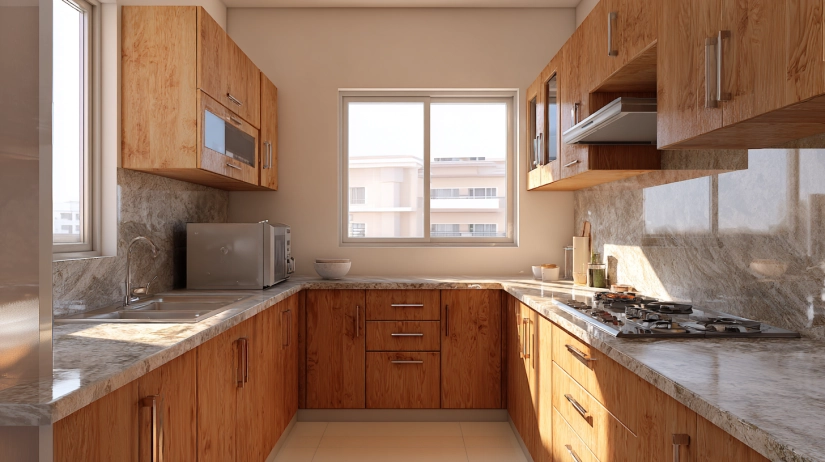
Generic modular kitchen costs typically range between Rs 50,000 and Rs 2,50,000, depending on size, materials, and finishes. The modular kitchen price per sq ft for basic setups generally falls within the Rs 1,200-2,500 range, with premium materials often pushing this higher. Aspects such as cabinet quality, hardware selection, and countertops impact the final price, as do cabinet hardware upgrades. Knowing these factors helps set realistic expectations while limiting budget overruns. In this guide, you can find pricing breakdowns with material comparisons; this provides cost-saving tips as well as how best to plan a kitchen renovation project's success by understanding each element's impactful factors to help set realistic expectations while staying within budget constraints when renovating kitchen renovation projects - understanding these elements helps set realistic expectations so budget overruns while remaining on time!
Planning to overhaul your kitchen can be intimidating; budget is always top of mind when making any important decision. Generic modular kitchens have quickly become the preferred solution among those seeking functionality without breaking their budgets; unlike premium or customised options, generic modulars feature standard designs at more affordable prices. But what factors determine their costs, and how effectively plan their budget? This Generic Modular Kitchen Cost guide covers everything you need to know about modular kitchen pricing - from per-square-foot rates and material options, through hidden costs.
With such information available at your fingertips, making informed decisions has never more achievable! Whether working in a compact 40 sq ft space or a 120 sq ft space, understanding cost structures will save time, money, and potential headaches when selecting your ideal modular kitchen model.
Recommended Reading
Perfect Roof Sheet Designs for Every Hom...

18.9K Views

Jan 31, 2025
Best Modern Cement Pop Designs for Your ...
13.7K Views
Jan 31, 2025
Transform Your Ceilings with Beautiful P...
13.2K Views
Jan 15, 2025
Interior Design Cost in Hyderabad for 1B...
12.7K Views
Jan 15, 2025
Transform Your Home With Stunning 22 Wal...
12.3K Views
Aug 18, 2023
What Is a Generic Modular Kitchen?
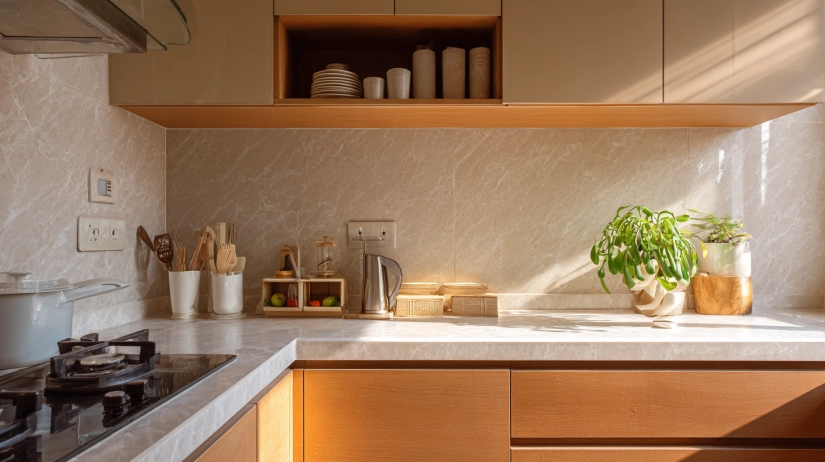
A generic modular kitchen consists of prefabricated cabinet modules assembled on-site for assembly. Unlike fully customised kitchens built from scratch, generic modulars are typically offered in standard sizes, with configurations mass-produced at lower costs to increase affordability for average homeowners. Generic does not indicate inferior quality; rather, it refers to solutions featuring standard sizes and designs instead of customised solutions tailored specifically for you. You will still have choices regarding colours, finishes, and layout; customisation will simply involve selecting among available options rather than starting from scratch.
These kitchens work great for standard apartment layouts. If your kitchen requires special elements due to specific dimensions or architectural constraints, custom components may be necessary; otherwise, standard options often provide excellent value in urban homes.
Factors That Determine Modular Kitchen Cost
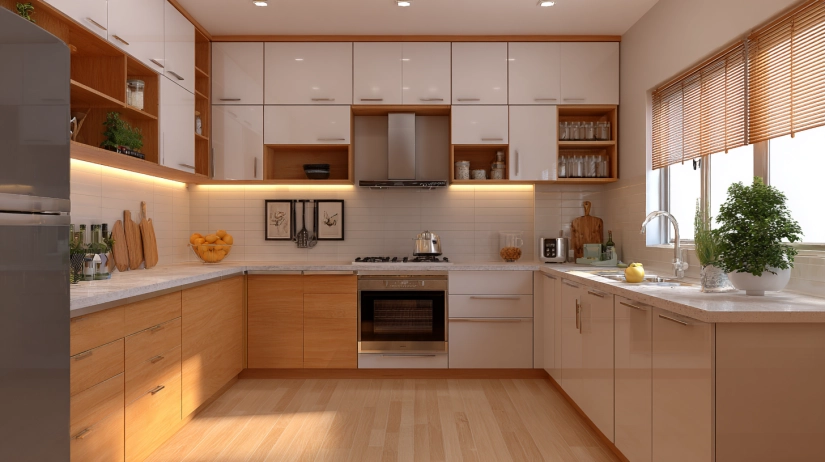
Understanding all the variables that affect costs will enable you to allocate spending to your needs and budget constraints.
Kitchen Size
Kitchen size plays a major role in determining overall modular kitchen costs. Larger spaces require more materials, fittings, and accessories, which directly impact the budget.
- Larger kitchens require more cabinets, countertops, and accessories, increasing overall costs. Modular kitchen cost per sq ft helps estimate expenses based on available space.
- Small kitchens (40–60 sq ft) are usually the most budget-friendly, medium kitchens (70–100 sq ft) fall in the mid-range, and large kitchens (100+ sq ft) cost significantly more due to higher material requirements.
Cabinet Material
The type of cabinet material selected influences both durability and overall pricing. Choosing the right material helps balance longevity, aesthetics, and cost.
- Cabinet material greatly influences durability and pricing. Plywood is strong and durable but more expensive, while MDF and particleboard are more economical options. Marine plywood is best suited for moisture-prone kitchens.
- Many homeowners choose plywood for the cabinet carcass and laminates or membrane finishes for shutters to balance durability, appearance, and cost.
Finish and Laminate Quality
Kitchen finishes enhance visual appeal and affect the overall kitchen budget. Different laminate types and textures offer varying levels of durability and pricing.
- Standard laminates are cost-effective, whereas high-gloss acrylic and glass finishes significantly increase the price per sq ft for a modular kitchen. Matte finishes typically fall in the mid-price range.
- Plain laminates are more affordable, while textured, wood-grain, and imported laminates cost more but offer better durability and scratch resistance.
Hardware and Accessories
Hardware and storage accessories improve kitchen functionality and user convenience. However, premium fittings can noticeably increase modular kitchen costs.
- Basic hardware, such as hinges, handles, and drawer channels, is affordable but may not operate smoothly. Premium options such as soft-close hinges, tandem boxes, and designer handles improve convenience but raise costs.
- Accessories like pull-out baskets, corner storage units, and tall pantry units improve storage efficiency, but each addition increases the total kitchen budget.
Countertop Selection
Countertops play a crucial role in kitchen usability, durability, and aesthetics. Material and design complexity significantly affect installation and material costs.
- Granite is widely preferred for durability and heat resistance, while quartz offers uniform designs with low maintenance. Laminate countertops are the most economical option.
- Countertop costs depend on measurement, edge finishing, sink cutouts, backsplashes, and layout complexity, especially in L-shaped or U-shaped kitchens.
Appliances and Built-Ins
Kitchen appliances enhance functionality but are often excluded from base modular kitchen pricing. Proper planning ensures appliances fit seamlessly into the design.
- Appliances such as chimneys, hobs, sinks, and faucets are usually purchased separately, while built-in ovens, microwaves, and dishwashers require dedicated cabinet space and may not be included in per sq ft kitchen costs.
- Some vendors offer appliance packages, but comparing individual appliance prices helps ensure better value and prevents overspending.
Modular Kitchen Price Per Sq Ft Breakdown
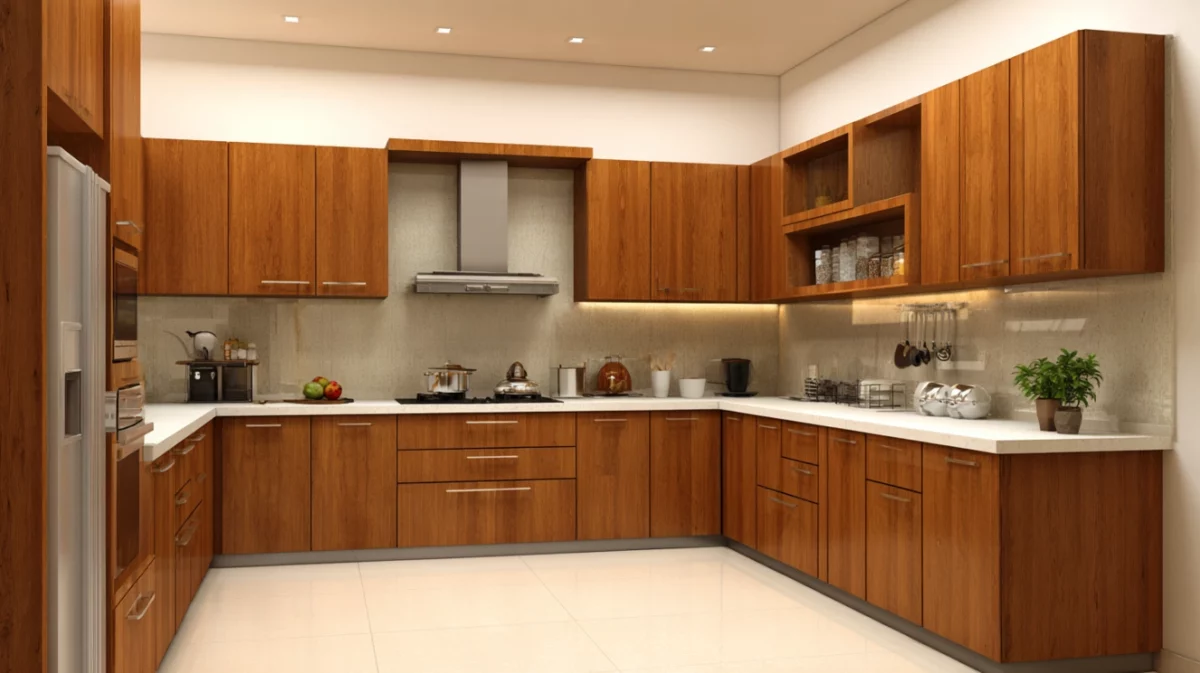
Let us examine realistic pricing across various budget categories in India's urban markets, accounting for basic installation. These estimates represent basic installation services.
Economy Range: Rs1,200 to Rs1,500 per sq ft
This category is designed for homeowners seeking functional kitchens at affordable prices. It focuses on basic materials and straightforward layouts, delivering reliability without premium features.
Key Features:
- Cabinets made using pre-laminated particle board or MDF
- Standard quality hardware and fittings
- Laminate or basic granite countertops with simple colours
- Minimal customisation and simple modular layouts
- Basic storage solutions without premium pull-outs
- Hinges and drawers usually do not include soft-close technology
- Focus on practicality rather than decorative finishes.
Estimated Cost Example:
- An 80 sq ft kitchen typically costs Rs 72,000 to Rs 90,000
- Includes base cabinets, wall cabinets, and laminate countertops
- Appliances and advanced accessories are usually charged separately.
Mid-Range: Rs 1,600 to Rs 2,000 per sq ft
The mid-range category balances durability, design flexibility, and improved hardware quality. It is popular among homeowners who want both functionality and modern aesthetics without premium-level pricing.
Key Features:
- Cabinets are generally made with durable plywood carcasses
- Shutters are available in laminate or membrane finishes
- Better quality hardware with soft-close hinges and smooth drawer channels
- Granite or engineered quartz countertops
- Additional storage accessories like plate racks and cutlery organisers
- More colour, finish, and layout design options
- Improved durability compared to economy kitchens.
Estimated Cost Example:
- A 60 sq ft kitchen usually costs between Rs 96,000 and Rs 1,20,000
- Includes improved finishes and enhanced storage features
- Provides a strong balance between affordability and design appeal.
Premium Range: Rs 2,100 to Rs 2,500+ per sq ft
Premium modular kitchens are designed for homeowners seeking luxury aesthetics, superior materials, and advanced accessories. These kitchens combine high durability with sophisticated styling and cutting-edge functionality.
Key Features:
- Cabinets made using high-grade plywood or marine plywood
- Shutters available in acrylic, glass, lacquered glass, or high-gloss finishes
- Imported hardware from German or Italian brands with extended warranties
- Premium countertop options such as quartz, Italian marble, or solid surfaces
- Advanced storage accessories like pull-out pantries and corner carousels
- Integrated lighting solutions for improved usability and design appeal
- High customisation options with superior finishing quality.
Estimated Cost Example:
- A 60 sq ft kitchen generally costs Rs 1,26,000 to Rs 1,50,000 or higher
- Usually includes standard modular components with semi-custom quality finishes
- Offers high durability and luxury-level visual appeal.
Material Comparison for Budget Planning
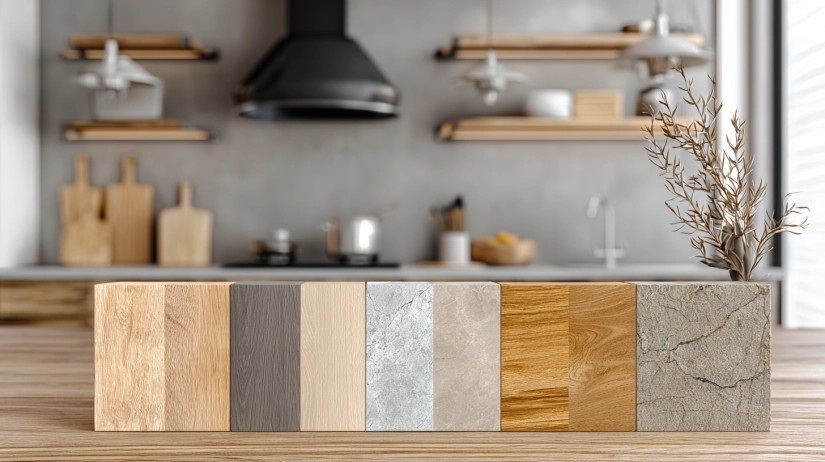
Choosing the right kitchen material is essential for balancing cost, durability, maintenance, and design preferences. Understanding the strengths and limitations of each material helps homeowners make practical and long-lasting investment decisions.
Plywood Vs MDF Vs Particle Board
Choosing the right material for modular kitchen cabinets is essential for balancing durability, cost, and maintenance. Plywood, MDF, and particleboard are among the most commonly used materials, each offering distinct benefits based on budget and usage requirements.
| Material | Cost Per Sq Ft | Advantages | Limitations | Best Use Case |
| Plywood | ₹80 – ₹120 (Commercial Grade) ₹150 – ₹200 (Marine Grade) | Highly strong and long-lasting, Good moisture resistance, Termite-resistant (treated variants) | Higher cost compared to MDF and particle board | Ideal for cabinet carcasses and areas exposed to moisture, especially in Indian kitchens |
| MDF (Medium Density Fibreboard) | ₹50 – ₹70 | Smooth surface suitable for painting and laminating, more affordable than plywood, and a uniform finish without grain patterns | Absorbs moisture easily. Not suitable near sinks or wet areas | Best used for shutters, decorative panels, and dry kitchen sections |
| Particle Board | ₹35 – ₹50 | Most economical option: Lightweight and easy to install. Often combined with laminate coatings | Low moisture resistance.Can warp or weaken in humid or wet environments | Suitable for budget kitchens and dry storage sections |
Laminate Types
Laminates are widely used for modular kitchen shutters and cabinet finishes due to their affordability, variety, and ease of maintenance. Different laminate thicknesses and finishes impact durability and overall kitchen appearance.
- 0.8 mm Laminates
- Commonly used in economy modular kitchens
- Available in basic colours and finishes
- Cost ranges between ₹50 – ₹80 per sq ft
- Suitable for budget-friendly kitchen designs.
- 1 mm Laminates
- Thicker and more durable than standard laminates
- Offers better scratch resistance and longevity
- Cost ranges between ₹100 – ₹150 per sq ft
- Ideal for mid-range kitchens requiring improved durability.
- High-Gloss Laminates
- Provides a modern and stylish reflective finish
- Enhances visual appeal and kitchen aesthetics
- Prices range from ₹150 to ₹250 per sq ft, depending on the brand and finish.
- Acrylic Shutters
- Offers a premium ultra-glossy and smooth surface finish
- Provides superior durability and a luxury appearance
- Cost ranges between ₹300 – ₹500 per sq ft
- Commonly used in premium modular kitchen designs.
Countertop Materials
Countertops play a major role in kitchen functionality, durability, and overall design. The choice of countertop material affects maintenance requirements, longevity, and budget planning.
- Laminate Countertops
- One of the most affordable countertop options
- Cost ranges between ₹200 – ₹400 per running foot
- Lightweight and easy to install
- More prone to scratches and less heat-resistant.
- Granite Countertops
- Highly popular due to durability and natural stone appearance
- Cost ranges between ₹150 – ₹400 per sq ft, depending on pattern and quality
- Excellent heat resistance and long lifespan
- Requires occasional sealing for maintenance.
- Quartz Countertops
- Premium engineered stone with a uniform finish
- Cost ranges between ₹400 – ₹800 per sq ft
- Non-porous surface that resists stains and moisture
- Requires minimal maintenance and offers long-term durability.
Hardware Quality Levels
Kitchen hardware is crucial to ensuring smooth functionality, durability, and ease of use in modular kitchens. The quality of hinges, drawer channels, and fittings directly impacts the lifespan and performance of cabinets.
- Basic Indian Hardware
- Cost ranges between ₹100 – ₹200 per hinge or drawer channel
- Provides standard functionality for daily kitchen use
- Suitable for budget modular kitchens
- May have a shorter lifespan than premium hardware.
- Mid-Range Hardware (Hettich, Ebco, etc.)
- Cost ranges between ₹300 – ₹500 per set
- Includes soft-close hinges and smooth drawer channels
- Offers improved durability and better user convenience
- Popular choice for mid-range modular kitchens.
- Premium European Hardware (Blum, Hafele, etc.)
- Cost ranges between ₹600 – ₹1,000 per set
- Known for superior build quality and long-term performance
- Often includes extended warranties and advanced mechanisms
- Ideal for high-usage cabinets and premium kitchen designs.
Hidden Costs to Consider
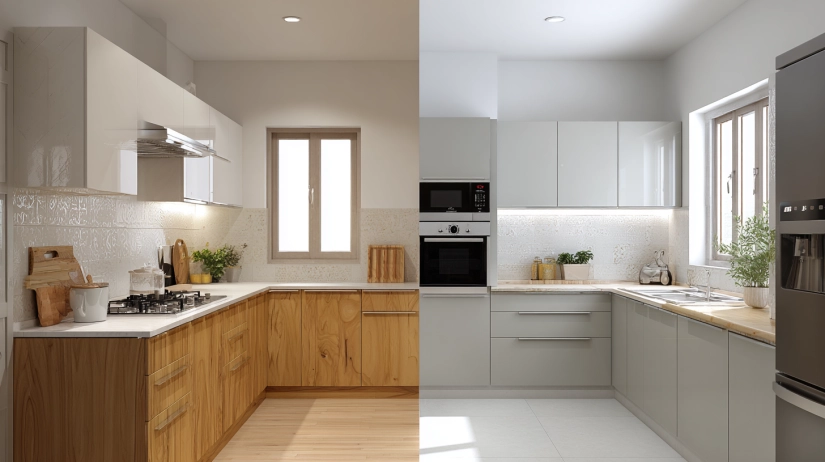
Be wary of vendors' modular kitchen price-per-square-foot quotes, as they may not include additional expenses.
- Installation Charges
Some vendors include installation in their total kitchen cost, while others charge separately. Installation expenses typically account for 10% to 15% of the total kitchen cost and cover labour, assembly, and the attachment of cabinets to walls.
- Electrical and Plumbing Work
Relocating electrical points or plumbing lines incurs additional costs. If your kitchen layout changes significantly, budget between Rs 5,000 and Rs 15,000 for electrical rewiring or pipe relocation, as these are outside the modular kitchen cost but are necessary for optimal functionality.
- Demolition & Disposal
Removing old cabinets and disposing of debris typically costs Rs 2,000-5,000, depending on the extent of work required. Some vendors include this in their quotes; many do not.
- Appliances and Fixtures
Chimneys typically cost Rs 5,000 and Rs 30,000, depending on brand and suction power requirements, while hobs run from Rs 3,000 to Rs 20,000. Sinks and faucets cost an additional Rs 3,000 and Rs 10,000, respectively, with built-in appliances such as ovens and dishwashers starting at around Rs 20,000.
- Backsplash and Dado Tiles
Kitchen wall tile prices rarely include estimates for backsplash and dado tile; standard tiles cost between Rs 80 and Rs 200 per sq ft, including materials and labour, while designer or full-height dado work may incur higher costs.
- False Ceiling and Lighting
Add Rs 100 and Rs 200 per sq ft for spotlights or false ceilings designed to hide pipes; under-cabinet LED strips cost Rs 500-1.500 each unit.
Cost Estimation Examples
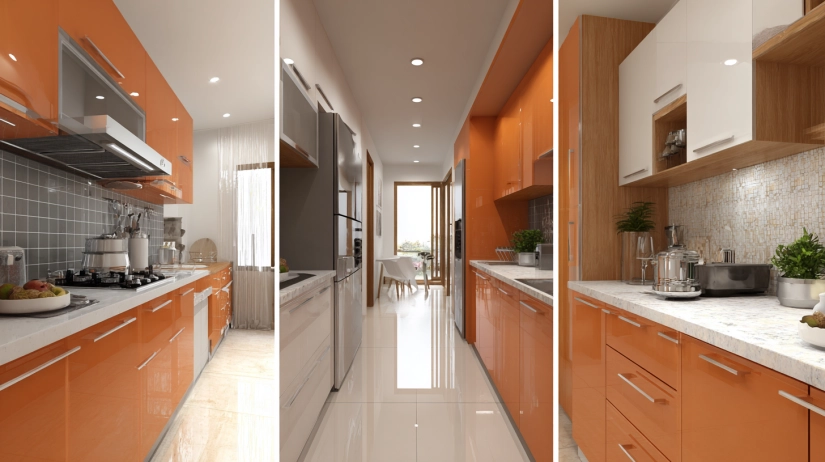
Here are examples for cost estimates across kitchen sizes:
Small Kitchen (50 Sq Ft)
Small modular kitchens are ideal for compact homes and apartments, offering efficient storage and functionality within limited space. The overall cost depends on the selected materials, finishes, and accessories.
- Economy Setup
- Approximate cost: ₹1,300 per sq ft
- Cabinet and countertop cost: Around ₹65,000
- Installation charges: Approximately 10% of the total cabinet cost
- Appliance expenses: Around ₹8,000
- Estimated Total Cost: Approximately ₹83,000.
- Mid-Range Setup
- Approximate cost: ₹1,800 per sq ft
- Cabinet and countertop cost: Around ₹90,000
- Installation and appliance costs increase overall expenses
- Estimated Total Cost: Approximately ₹1,10,000.
Medium Kitchen (75 sq ft)
In comparison, the economy range requiring Rs 1,300 per square foot = Rs 97,500 cabinets will likely cost you approximately that total when including basic installation services as well.
- Mid-Range: Rs 1,800 per sq ft = Rs 1,35,000.
- Complete Setup: Quality appliances cost around Rs 1,65,000.
- Premium range: Rs 2,200 per sq ft = Rs 1,65,000.
- Full setup with quality appliances totals Rs 2,05,000.
Large Kitchen (100 sq ft)
Large kitchens offer greater flexibility in layout, storage, and premium upgrades. Costs vary significantly based on material selection, hardware quality, and added accessories.
- Economy Setup
- Approximate cost: ₹1,300 per sq ft
- Cabinet cost: Around ₹1,30,000
- Includes basic materials and standard hardware
- Estimated Total Project Cost: Approximately ₹1,60,000
- Mid-Range Setup
- Approximate cost: ₹1,800 per sq ft
- Cabinet cost: Around ₹1,80,000
- Features improved materials, finishes, and hardware
- Estimated Total Project Cost: Around ₹2,20,000
- Premium Setup
- Approximate cost: ₹2,300 per sq ft
- Cabinet cost: Around ₹2,30,000
- Includes high-end finishes, premium hardware, and accessories
- Estimated Total Project Cost: Approximately ₹2,80,000 – ₹3,00,000.
Money-Saving Tips Without Compromising Quality
Smart planning helps create an efficient kitchen on a budget.
- Prioritise Storage Over Style
Buy high-quality base cabinets made with strong materials - budget-friendly shutters will let you customise their appearance later, and strong carcasses ensure longevity even if their appearance looks simple.
- Mix Materials Strategically
Use plywood for base cabinets that must withstand weight and moisture. Opt for MDF or particleboard wall cabinets instead, as this reduces overall modular kitchen costs without sacrificing durability in key areas.
- Choose Standard Sizes
Custom sizes increase waste and labour costs. To maintain reasonable pricing, standard module widths (300mm, 450mm, and 600mm are among the most commonly recommended) should be selected instead of custom sizes.
- Limit Speciality Accessories
Corner carousels and magic corners may seem appealing at first, but their expense often outweighs their convenience. Simple L-shaped shelves or pull-out drawers provide similar functionality at a lower cost; fancier add-ons can be added later if budget allows.
- Consider Semi-Modular Options
For unusual spaces, combine modular units with on-site carpentry to deliver affordable modular construction that accommodates odd dimensions. This hybrid approach gives the best of both worlds!
- Negotiate Package Deals
Many vendors offer discounted bundle deals when you combine kitchen cabinets with wardrobes or other pieces of furniture from one vendor. Bulk purchasing of appliances through kitchen vendors often yields lower rates than purchasing them independently.
Calculate Your Interior Designing Cost Now -
Conclusion
Being aware of generic modular kitchen costs helps the homeowner plan renovations clearly and without doubt. Assessing the kitchen size, materials, finishes, hardware quality, and installation costs will help you make informed decisions that do not compromise functionality, durability, or cost. The generic modular kitchen is a good solution for contemporary homes, as it balances standardised design efficiency with customised style options. By organising, choosing materials wisely, and considering hidden costs, you can make your kitchen practical and attractive without breaking the budget. Be it an economy or premium configuration, it is always important to first put long-term usability into consideration so that your kitchen will be efficient, stylish, and worthwhile over the following years.
How NoBroker Interiors Can Help You
NoBroker Interiors makes remodelling hassle-free by offering transparent pricing without hidden costs, so you know exactly what your payment covers. We guarantee it. Our design experts help you select materials and layouts based on your cooking habits and space restrictions. From economy setups to premium finishes, we tailor solutions that suit every budget. With our 10-year guarantee on modular kitchens, quality is assured. From design through manufacturing and installation services to after-sales support, we ensure timely completion without multiple vendors and always ensure quality! Unlock a free consultation and detailed quote now from NoBroker Interiors, and transform your kitchen into an enjoyable space that works hard for you.
