




Summary
Planning an interior design project without a clear understanding of costs can quickly lead to budget overruns and unrealistic expectations. From design consultation fees and material selection to labour charges and execution timelines, every decision influences your final spend. Whether you’re renovating a single room or designing an entire home, knowing how interior pricing works empowers you to compare quotes, prioritise features, and avoid hidden costs. This Project Cost Breakdown & Rate Lists guide breaks down interior design cost structures, cost estimation methods, and key pricing components, helping you make informed choices and plan a project that balances aesthetics, functionality, and financial control.
Understanding Interior Design Cost Structure
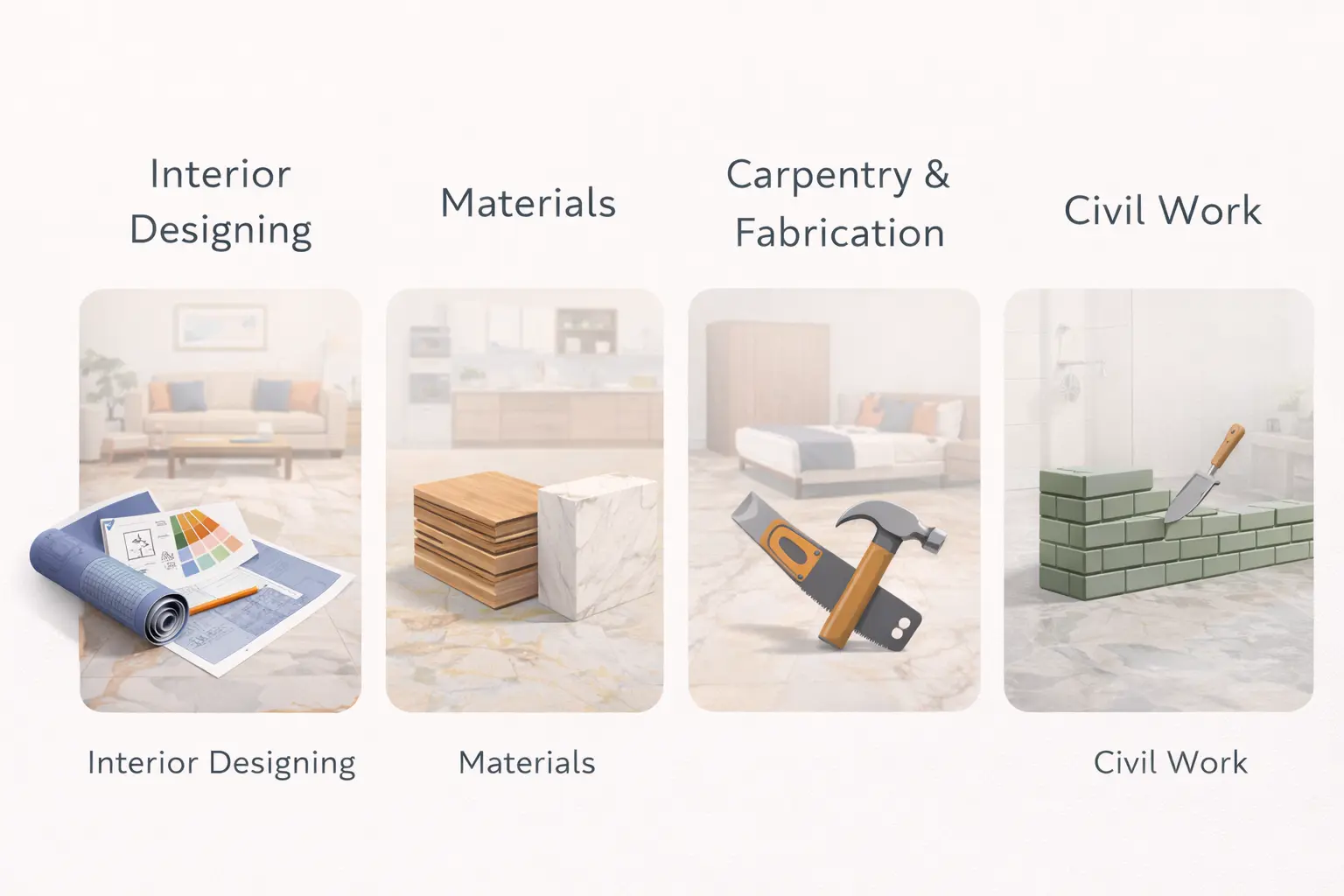
Planning an interior design project requires a clear understanding of how costs are allocated across the project. The cost of interior design work depends heavily on the specific details of each project, including its size and materials, location, and the amount of labour required. The typical cost structure for interior work consists of four main categories: design expenses, materials, workforce compensation, and additional project costs. Knowledge of this structure enables you to develop operational budgets that protect your project from unexpected construction costs.
Key Components of Interior Design Pricing
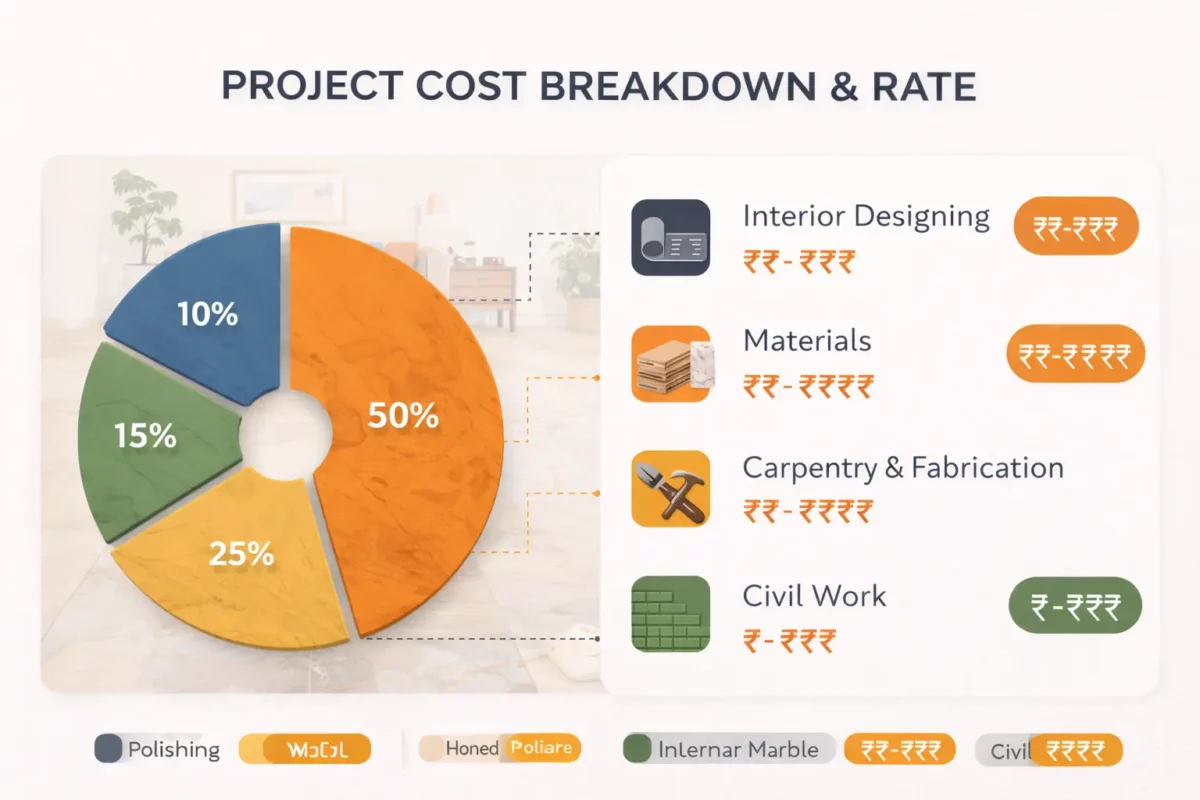
Understanding how interior design costs are structured helps you plan budgets realistically and avoid surprises. Here’s a clear overview of the core elements that make up your total interior design pricing.
- Design Consultation Fees: Typically 10–15% of the total project cost, covering concept development, planning, and professional guidance.
- Material Costs: The largest share of the budget is 40–50%, covering furniture, finishes, fixtures, and décor materials.
- Labour Costs: Usually 30–40% of the total, accounting for carpentry, electrical work, plumbing, painting, and installation.
- Transportation, Permits & Contingency: Around 5–10% of the budget, covering logistics, approvals, and unexpected project requirements.
- Interior Work Rate Lists: Detailed breakdowns prepared by designers that list all cost components, helping track spending and identify cost-saving opportunities.
Comprehensive Interior Work Rate List
An interior work rate list provides detailed pricing for various tasks and materials. Here's a cost estimation interior design breakdown of common interior work costs across different categories:
Tile Installation
| Flooring Type | Price Range (₹ per sq ft) | Note |
| Ceramic/Vitrified tiles | 80-150 | Including labour |
| Marble/Granite flooring | 200-400 | Including labour |
Other Flooring Options
| Flooring Type | Cost per sq ft (₹) | labour Only (₹/sq ft) | Notes |
| Laminate Flooring | 100-250 (material + install) | 30-50 | Wood-like finish; ideal for bedrooms |
| Vinyl Flooring | 200-1100 (material + install) | 160-750 | Durable, moisture-resistant planks or sheets |
| Carpet Installation | 150-400 (material + install) | 40-80 | Soft underfoot; suits living areas, pile-dependent |
Painting & Wall Treatment Rates
Interior walls require proper preparation and quality paint application. Standard painting rates include surface preparation, primer application, and two coats of paint.
| Painting Type | Price Range (₹ per sq ft) |
| Fresh painting (interior walls) | 20 – 30 |
| Repainting (existing walls) | 12 – 22 |
| Exterior painting | 25 – 40 |
| Textured painting | 35 – 60 |
| Wallpaper installation | 40 – 150 |
False Ceiling & Partition Rates
| Item | Price Range (₹ per sq ft) |
| POP false ceiling | 90 – 140 |
| Gypsum false ceiling | 75 – 120 |
| Grid false ceiling | 60 – 95 |
| POP partition | 85 – 130 |
| Gypsum partition | 70 – 110 |
Interior Labour Rate Breakdown by Trade
Understanding interior labour rate structures helps you evaluate quotes and plan budgets effectively. Labour costs vary by skill level, location, and project complexity.
Carpentry Labour Rates
Carpenters are essential for installing custom furniture and woodwork. Skilled carpenters charge between ₹600 and ₹1,200 per day, depending on experience and location.
Custom Furniture Making
- Wardrobe installation: ₹350-650 per sq ft
- Modular kitchen: ₹1,200-2,500 per sq ft
- TV unit installation: ₹400-800 per sq ft
- Study table fabrication: ₹8,000-18,000 per unit
Electrical Work Labour Rates
Electrical work requires certified professionals for safety and compliance. The standard interior labour rate for electricians ranges from ₹500 to ₹900 per day.
- New wiring installation: ₹25-45 per sq ft
- Switch and socket installation: ₹150-300 per point
- Light fixture installation: ₹200-500 per fixture
- Fan installation: ₹300-600 per unit
Plumbing Labour Rates
Plumbers charge ₹500-1,000 per day for standard interior work. Complex installations may command premium rates.
- Bathroom fitting installation: ₹15,000-35,000 per bathroom
- Kitchen sink installation: ₹2,000-5,000 per unit
- Water line installation: ₹30-60 per running foot
- Drainage work: ₹40-75 per running foot
Mason & Tiling Labour Rates
Masons handle structural modifications and tile installations. The interior masonry work costs range from ₹600 to ₹1,100 per day.
- Tile laying (floor): ₹25-45 per sq ft
- Tile laying (wall): ₹30-50 per sq ft
- Plastering work: ₹20-35 per sq ft
- Brick work: ₹35-60 per sq ft
Interior Work Price List: Material Costs
Material quality significantly impacts your overall interior work price list. Here's a detailed breakdown of common interior materials and their price ranges.
Kitchen Materials
Material choices play a major role in shaping your interior work budget, influencing both upfront costs and long-term durability. Below is a practical overview of key kitchen materials and their typical price ranges to help you plan better.
| Category | Item | Price Range (₹) |
| Cabinets & Countertops | Laminate cabinets | 800 – 1,400 per sq ft |
| Membrane cabinets | 1,200 – 1,800 per sq ft | |
| Lacquered glass cabinets | 1,500 – 2,200 per sq ft | |
| Granite countertop | 150 – 350 per sq ft | |
| Quartz countertop | 300 – 600 per sq ft | |
| Kitchen Fixtures | Sink (stainless steel) | 3,000 – 12,000 |
| Chimney | 8,000 – 35,000 | |
| Built-in hob | 6,000 – 25,000 |
Bedroom Furniture Materials
| Category | Item | Price Range (₹) |
| Wood & Boards | Plywood (per sheet) | 2,000 – 4,500 |
| MDF (per sheet) | 1,500 – 3,000 | |
| Particle board (per sheet) | 800 – 1,800 | |
| Hardware fittings (per wardrobe) | 1,500 – 5,000 | |
| Laminates (per sheet) | 800 – 2,500 | |
| Bathroom Materials | Sanitaryware (basic) | 12,000 – 25,000 per bathroom |
| Sanitaryware (premium) | 30,000 – 80,000 per bathroom | |
| Bathroom tiles | 25 – 150 per sq ft | |
| Bathroom fittings | 8,000 – 35,000 per bathroom |
Cost Estimation Methods for Interior Design
The process of interior design cost estimation must be accurate to prevent clients from unexpected budget increases. Professional designers use multiple estimation methods to provide reliable quotes. Here we have the estimated cost of interior design:
Square Footage Method
Costs are calculated based on total home square footage.
- Standard projects: ₹1,200–₹1,800 per sq ft.
- Mid-range projects: ₹1,800–₹2,800 per sq ft.
- Premium projects: ₹2,800–₹5,000+ per sq ft.
- Includes materials, labour, and basic design services.
- Lacks the flexibility to reflect task-specific effort or premium material upgrades.
Itemised Estimation Approach
Provides detailed cost breakdowns for each project component.
- Offers full visibility to identify cost-saving opportunities.
- Uses internal work-rate lists covering materials, labour hours, and service charges.
- Best suited for specialised or highly customised projects.
Percentage-Based Estimation
Design fees are charged as a percentage of the total project cost.
- Typical range: 10%–20%, based on project complexity and designer experience.
- Works best for large-scale projects with substantial budgets.
- Links designer performance to project success, encouraging higher-quality outcomes.
Factors Affecting Interior Work Cost
The final estimated cost of interior design depends on multiple factors that affect the outcome. Understanding these elements enables you to make strategic choices that yield the best possible budget results.
Project Scope & Complexity
- Larger and more complex projects cost more than single-room makeovers.
- Custom furniture, intricate ceilings, and specialised lighting increase material and labour costs.
Material Quality Selection
- Economy materials: budget-friendly and practical.
- Mid-range materials: good quality at reasonable prices.
- Premium materials: superior aesthetics and long-term durability, but higher cost.
Location & Accessibility
- Urban projects cost 15%–25% more than rural ones due to higher labour rates.
- Hard-to-access sites increase transportation and workforce deployment expenses.
Timeline Requirements
- Rush projects drive up costs due to overtime and expedited work.
- Standard timelines help control pricing and resource use.
- Advance planning can reduce total expenses by 10%–20%.
Creating Your Interior Design Budget
Creating an actual budget requires detailed preparation and a thorough understanding of cost estimation in interior design. The following steps will help you create an effective budget plan.
Step 1: Define Your Requirements
Create a list of all rooms that need renovation and rank them by the level of attention required. Identify which features are essential for the project and which features would be beneficial to add but are not essential. The system lets you allocate your budget funds across different sections.
Step 2: Research Rate Lists
Collect multiple interior work rate lists from different vendors and designers. Compare pricing for similar materials and services. The research helps you find market rates when you need competitive pricing quotes.
Step 3: Build a Contingency Buffer
Always include a 10-15% contingency in your interior design estimate. The execution phase encounters two types of unexpected problems: required structural damage and supply chain interruptions for essential materials. The buffer system protects the project from financial difficulties that may arise at its midpoint.
Step 4: Prioritise Spending
Your budget should allocate the largest amounts to essential spaces, such as living rooms and master bedrooms. You should identify your main activity areas and the initial points visitors encounter upon arrival at your location.
Step 5: Get Multiple Quotes
I require three designers and contractors to provide me with complete price estimates for their work. Compare their interior work price lists, included services, and payment terms before making decisions.
Understanding Design Fee Structures
Professional interior designers use multiple fee structures to determine the amount they will charge their clients. Understanding these structures helps you evaluate project proposals and choose suitable methods for participating in projects.
| Fee Structure | Description | Typical Cost / Range | Best Suited For | Pros | Cons |
| Fixed Fee Model | A single predetermined fee covering all design work for the project. | Varies by project scope | Well-defined, straightforward projects | Predictable costs, easy budgeting | Limited flexibility if scope changes mid-project |
| Hourly Rate Model | Designers charge based on hours worked. | ₹1,500 – ₹5,000 per hour | Consultations, small or short-term projects | Flexible, pay only for time used | Costs can escalate for longer or undefined projects |
| Percentage of Project Cost | Designers charge a share of the total project value. | 10% – 20% of the total project cost | Full-service, large-scale projects | Aligns designer incentives with project success | Total fee increases as project cost rises |
| Hybrid Models | Combines a fixed design fee with a percentage-based execution charge. | Fixed fee + % of project cost | Complex or evolving projects | Balanced cost control with flexibility | More complex to evaluate and compare |
Cost-Saving Tips Without Compromising Quality
The following list presents cost-saving methods that maintain product quality standards. Smart planning helps you reduce your interior design cost estimate while delivering high-quality results. Here are proven strategies to optimise your interior work cost.
- Optimise Material Selection
Select mid-range materials, as they offer excellent performance while remaining affordable. The design achieves balance by using premium materials visible to customers while using economy options for areas out of sight.
- Phase Your Project
The project timeline needs task distribution only after you complete all essential work areas. The method lets you start saving costs immediately, enabling you to adjust your plans based on your initial results.
- Combine Similar Work
Schedule all electrical work together, all plumbing together, and so on. The system achieves this reduction in the effects of internal labour rates by optimising resource use.
- Negotiate Bulk Purchases
Buying materials in bulk yields a 10-15% discount on total cost. You should work with your designer or contractor to access their established supplier network to help you secure better pricing.
- Consider Ready-Made Options
The price range for modular furniture and ready-made fixtures is 20-30% lower than for custom solutions. The system is designed to reduce processing time and the work required to complete tasks.
Regional Rate Variations Across India
Interior work cost varies significantly across Indian cities and regions. You should develop location-specific budgets because different regions across the country have distinct price points.
Metro Cities (Mumbai, Delhi, Bangalore, Chennai)
Metro areas have the highest interior labour rates, ranging from ₹700 to ₹ 1,200 per day for skilled workers. Current market conditions have led to higher costs, as delivery issues and rising customer demand have driven material costs up by 10%-20%.
Tier-2 Cities (Pune, Jaipur, Chandigarh, Kochi)
The cities maintain affordable costs because their interior labour rates range from ₹500 to ₹900 per day. The location incurs the same material costs as metropolitan areas, but the company negotiates better contracts than other companies.
Tier-3 Cities and Towns
The most affordable construction options are available in smaller cities because their in-house labour rates start at ₹400-₹700 per day. The selection of materials and their quality standards remain lower than those offered by bigger cities.
Technology in Cost Estimation
Modern tools have introduced more accurate cost-estimation methods in interior design, providing greater precision and clarity. Digital solutions enable designers and homeowners to create better plans through their collaborative workflow.
1. Design Software with Costing Modules
The current version of professional design software includes built-in cost calculation tools that users can use to determine project expenses. The tools automatically calculate material quantities and generate complete interior work-rate lists from design information.
2. Online Cost Calculators
Homeowners can use web-based calculators to obtain initial cost estimates before they start working with designers. The system generates approximate cost estimates using its built-in calculation engine, which depends on room dimensions and user-entered materials.
3. Digital Quotation Management
Users can instantly compare prices across vendors through cloud-based platforms that also manage their supplier relationship needs. These tools improve project visibility and help users track their interior design budget estimates against actual spend.
Payment Structures for Interior Projects
Payment terms must be understood, as they serve as safeguards that benefit both homeowners and service providers. Standard payment structures help projects maintain financial stability through effective cash management and minimise the risk of payment-related conflicts.
- Milestone-Based Payments
Most projects use milestone payment systems, which require 10-15% of the total project cost at the project beginning and subsequent payments of 30-35% at material procurement, 30-35% at 50% work completion, 15-20% at 90% completion, and 5-10% retention after project completion.
- Material & labour Separation
The payment structure of some contracts distributes costs between materials expenses and work execution expenses. You need to pay suppliers for all materials, while you should pay contractors for their labour. The system provides users with better visibility, but management staff must do additional work to operate it.
- Progress-Based Payments
The payment schedule requires clients to pay either weekly or every two weeks, depending on the work completed. The system requires close monitoring to ensure payments align with the work employees have performed.
Conclusion
Understanding interior design costs is essential for planning a successful 4 BHK project in 2026. From material selection and labour charges to design complexity and customisation, every factor influences your budget. Using detailed interior work rate lists, accurate cost estimation methods, and smart project planning ensures transparency, avoids overruns, and maximises value. By prioritising high-impact areas, combining ready-made and custom solutions, and leveraging professional guidance, homeowners can achieve stylish, functional interiors while maintaining full control over expenses.
How NoBroker Interiors Can Help You
NoBroker Interior offers three main benefits to customers, including competitive labour rates for interior work, wholesale pricing on high-quality materials, and professional staff who deliver projects on schedule. Our company provides comprehensive solutions, including modular kitchen designs, custom furniture, home interior design, and office space planning. NoBroker Interiors provides complete project expense reports, full price transparency, free-of-charge services, high-quality workmanship, scheduled project completion dates, and post-installation maintenance services.
Get in touch to get an estimate for interior design.
