Single Door Fridge Wattage Explained: Power Consumption, Units & Electricity Cost

314 Views
Table of Contents
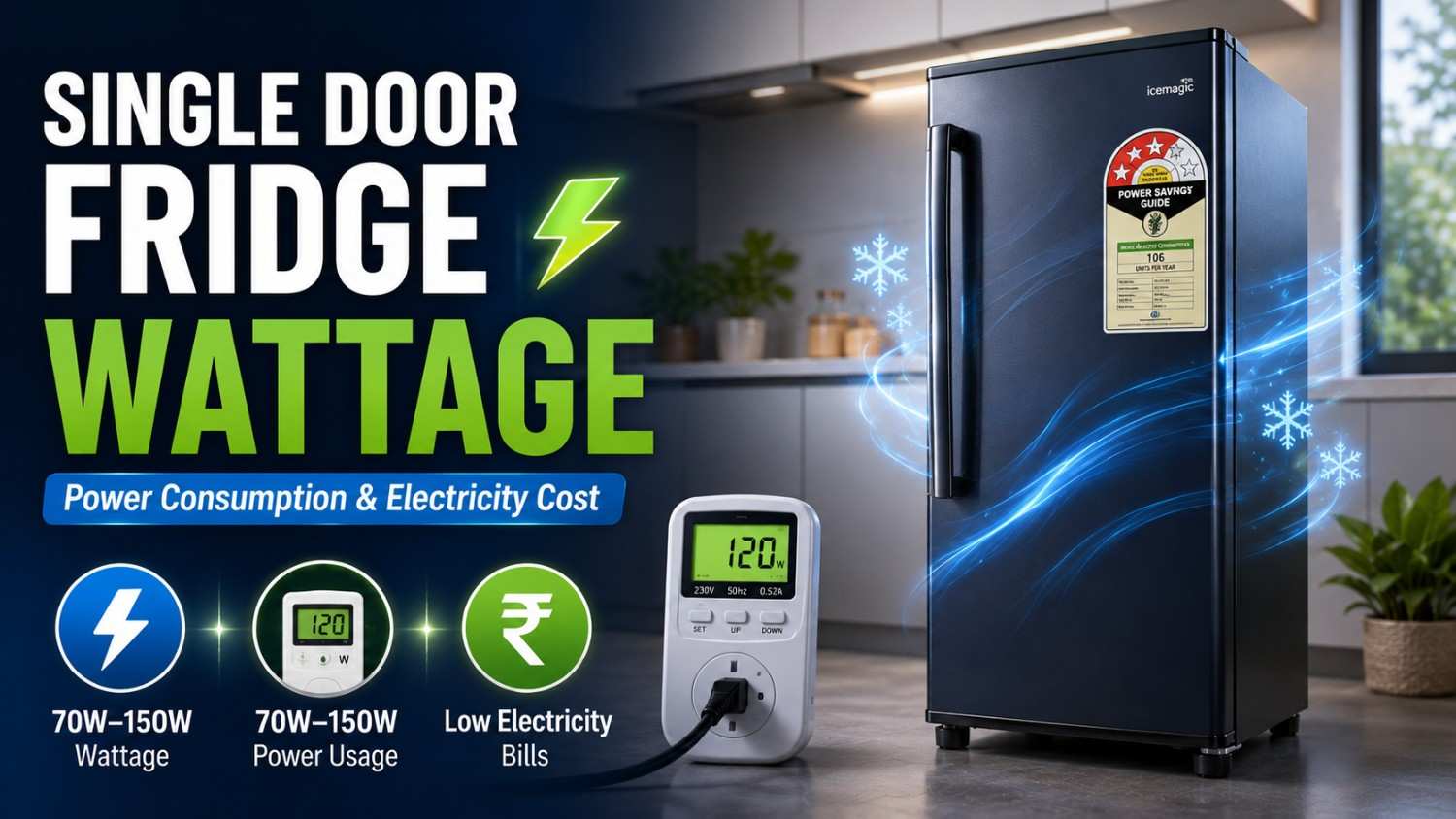
Knowing the wattage of a single door refrigerator which is around 70 to 150 watts is important in saving on electricity charges and buying an economical refrigerator. The continuous and 24/7 operation of refrigerators uses up 0.8 to 2.5 units of energy each day in India, which depends on size, utility, and the star rating of the appliances. By knowing the power consumption of your single door refrigerator, you can easily determine your monthly expenditure and buy more efficiently.
What is the Wattage of a Single Door Refrigerator?
Single door refrigerators usually have an average wattage of 70 to 150 watts, based on various factors such as the size and model used. There is slight variation among brands such as Samsung single door fridge and LG single door refrigerator. Generally, inverter models require less energy because of better compressor function.
Single Door Fridge Electricity Consumption by Star Rating (1-Star to 5-Star Comparison)
Rating affects the electricity usage for single door fridge directly, where the high rating implies that the fridge is efficient and uses little energy. For instance, a 5-star rated fridge will use less energy compared to a 1-star fridge.
| Star Rating | Average Wattage Range | Daily Consumption (Approx.) | Efficiency Level |
| 1-Star | 120–150W | 1.5–2 units | Low |
| 2-Star | 110–140W | 1.3–1.8 units | Moderate |
| 3-Star | 100–130W | 1–1.5 units | Balanced |
| 4-Star | 90–120W | 0.8–1.2 units | High |
| 5-Star | 70–100W | 0.6–1 unit | Very High |
Single Door Fridge Power Consumption: Monthly and Annual Units Explained
Single Door Fridge Power Consumption is dependent on the number of cycles that the compressor works, usage patterns and the stars on their ratings. Generally, the fridge uses 20-40 units per month, while 240-480 units are used yearly.
How to Calculate Annual Electricity Consumption of a Single Door Fridge
In order to determine the annual consumption, multiply the daily consumption by 365 days. This allows you to measure the influence of electricity on the appliance and make comparisons between refrigerator brands.
Formula:
Units (kWh/year) = (Wattage × Hours × 365) ÷ 1000
Calculation:
Take the wattage of the fridge to be 100 and operating hours 24:
= (100 × 24 × 365) ÷ 1000 = 876 units/year
The true consumption is lower because compressors run intermittently.
How to Calculate Monthly Electricity Consumption of a Single Door Fridge
The monthly consumption makes it easier for you to estimate your electricity bills.
Formula:
Units (kWh/month) = (Wattage × Hours × 30) ÷ 1000
Calculation:
Assuming 100W refrigerator running 24/7:
= (100 × 24 × 30) ÷ 1000
= 72 units per month
Actual consumption will be less than this as the compressor doesn’t run continuously.
Single Door Fridge Electricity Bill Calculation (Monthly and Annual Cost)
The consumption of electrical energy varies as per the amount of energy consumed and the tariffs applicable. The average energy rate in India varies from ₹6 per unit to ₹10 per unit.
How to Calculate Annual Electricity Bill -H3
Calculate annual costs by multiplying annual consumption by the cost per unit.
Greater efficiency results in less cost.
Formula:
Cost per year (₹) = Consumption × Cost per Unit
Calculation:
If yearly consumption is 300 units and cost per unit is ₹8:
= 300 × 8 = ₹2400 per year
How to Calculate Monthly Electricity Bill -H3
Monthly cost helps track ongoing expenses and optimize usage patterns easily.
Formula:
Cost (₹/month) = Units × Electricity Rate
Calculation:
If usage is 25 units/month at ₹8/unit:
= 25 × 8 = ₹200/month
Energy-efficient models reduce monthly bills noticeably.
Single Door Fridge Wattage: Average Power Usage by Size & Capacity
The wattage for a single door fridge is known to rise with increasing capacity because a bigger refrigerator needs more energy for proper cooling. Fortunately, innovations in design have led to energy efficiency, allowing for an optimal balance between performance and energy consumption.
| Refrigerator Capacity | Average Wattage (Running) | Daily Electricity Usage |
| 150–180 Litres | 70–100W | 0.6–1 unit |
| 180–200 Litres | 80–120W | 0.8–1.2 units |
| 200–230 Litres | 100–150W | 1–1.5 units |
Difference Between Running and Starting Wattage in Single Door Refrigerators
Knowing about single door refrigerator watts includes starting and running watts. The starting wattage is comparatively higher because of the loading of the compressor while starting, but once started, the running watts become comparatively lower and constant.
| Feature | Running Wattage | Starting Wattage |
| Power Usage | Low & stable | High (2–3x spike) |
| Duration | Continuous | Few seconds |
| Impact | Affects bills | Affects inverter load |
Inverter vs Non-Inverter Single Door Fridge Power Consumption
The use of inverters enables one to minimize the amount of power used in single-door refrigerators through regulating the speed of the compressor according to cooling requirements rather than turning it on and off repeatedly.
| Feature | Inverter Fridge | Non-Inverter Fridge |
| Energy Efficiency | High | Moderate |
| Power Consumption | Lower | Higher |
| Compressor Operation | Variable speed | Fixed speed |
| Electricity Savings | Up to 30–40% | Standard usage |
Factors That Affect Single Door Fridge Electricity Consumption
A variety of things can affect electricity used by a single door fridge besides the star rating and watts. Usage frequency, ambient temperature, thermostat settings, position of the fridge, and the quantity of food kept in the refrigerator determine the amount of energy used by the fridge.
- Frequency of usage- When one uses the fridge frequently, it consumes a lot of energy due to the loss of cold air.
- Ambient temperature- In areas with high temperature levels, the fridge works for long, hence consuming more energy.
- Temperature settings- The higher the temperature setting, the higher the number of cycles that the compressor takes hence more energy consumed.
- Position of the fridge- Putting the refrigerator in hot places affects the performance, hence consuming more electricity.
- Quantity of food- More food in the fridge makes it difficult for the air to flow freely inside hence working for long.
Effective Tips to Reduce Single Door Fridge Electricity Consumption
There are ways that you can save on power consumption when using a one-door refrigerator by just changing your day-to-day practices. Such little things, which include maintenance procedures, will not only help save on power, but it will also serve to extend the life of your appliance.
- Maintain the right temperatures- Keeping your fridge in the recommended temperature range prevents it from overworking, therefore saving power.
- Minimize door opening- Constantly opening and closing the door will force the fridge to compensate for cold air loss and work harder.
- Clean the condenser coils- Condensation can affect the heat dissipation process and prevent the fridge from cooling effectively.
- Provide enough ventilation- By ensuring there is room surrounding your fridge, you ensure the fridge is not working hard.
- Defrost your fridge regularly- This helps to ensure that your fridge does not have to overwork due to accumulated ice build-up.
Conclusion
Having knowledge on single door fridge power usage will help you make informed decisions on purchase and usage while at the same time keeping down electricity bills. Everything from working out the amount of electricity used each day to computing for electricity costs incurred in a month or year will play its part. By going for efficient appliances, providing proper ventilation, and adhering to prudent usage practices, you can considerably lower electricity use by your appliance.
Cities We Cover for Refrigerator Repair Services
If you need refrigerator repair services, NoBroker provides fast and reliable doorstep assistance in major cities such as Bangalore, Mumbai, Chennai, Delhi, Pune, Hyderabad, and many more. You can get skilled technicians scheduled quickly within 15 minutes of booking, with quick issue diagnosis and the use of authentic spare parts, ensuring dependable service support.
Brands We Serve for Refrigerator Repair Services
NoBroker provides professional refrigerator repair services for all leading brands, including Samsung, LG, Whirlpool, Godrej, Bosch, IFB, and Panasonic. Skilled technicians offer fast issue diagnosis, convenient doorstep service, and the use of genuine spare parts to ensure your refrigerator continues to run efficiently.
Frequently Asked Questions
1. What is the wattage of a single door fridge?
2. What is the unit consumption of a single door fridge per month?
3. What single door fridge uses less electricity, LG or Samsung?
4. What is the power consumption of Samsung single door 198 litre fridge with a 5-star rating?
5. Does inverter fridge technology reduce electricity consumption?
6. How do I reduce my fridge electricity bill?
7. What is the difference between single door fridge watts and energy consumption?
8. Does single door fridge capacity affect single door refrigerator watts?
9. How many units does an LG single door refrigerator use daily?
10. Is a single door fridge with a 5-star rating worth it in terms of electricity savings?

Login / Sign up
Zero Brokerage.
Thousands of new listings daily.
100 Cr+ Brokerage saved monthly.
About the Author

Siri Hegde K
Senior Editor


Recent Blogs

Subscribe to our Newsletter
Get latest news delivered straight to your inbox