Semi Automatic vs Fully Automatic Washing Machine: Complete Guide to Features, Water & Power Consumption, and Which to Buy

82 Views
Table of Contents
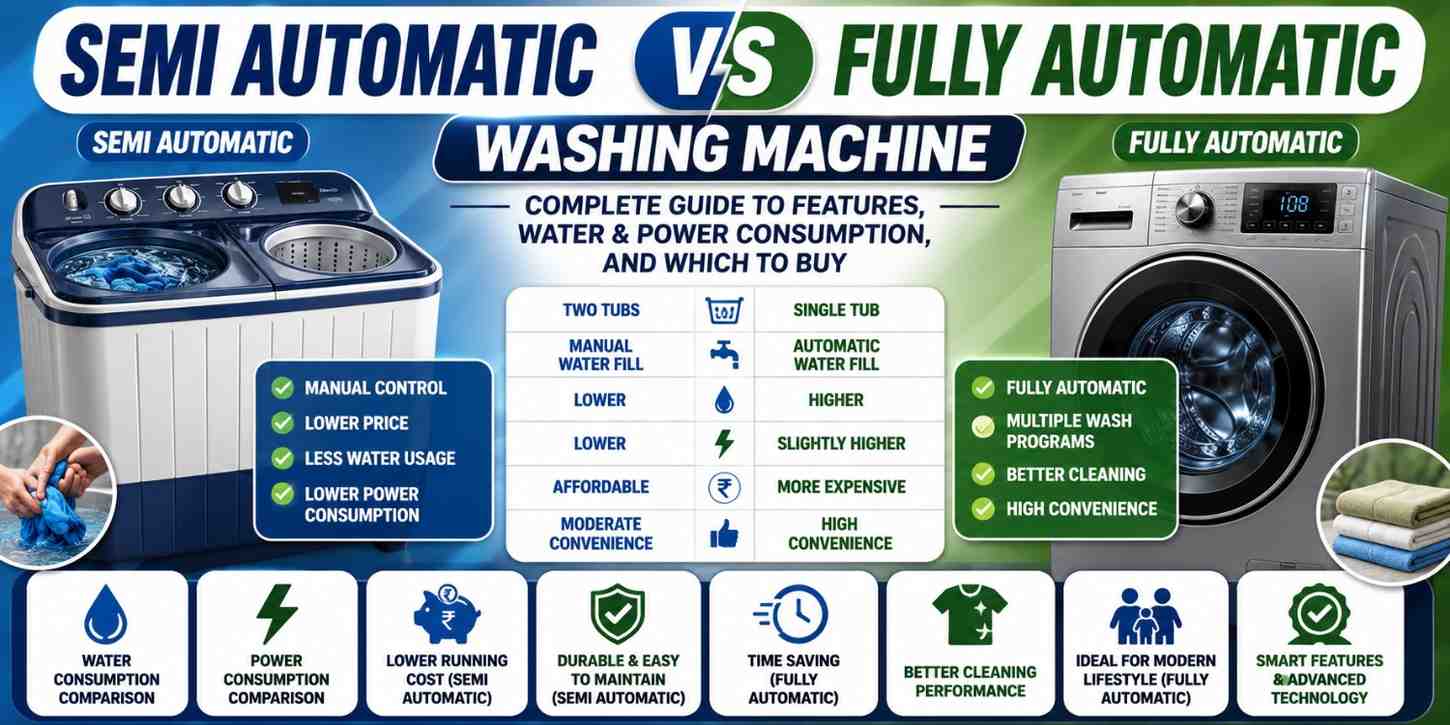
Deciding between a semi-automatic and a fully automatic washing machine could pose some challenges due to their distinct benefits. While the former boasts of lower prices and greater flexibility in controlling water consumption, the latter presents unmatched convenience and sophisticated wash cycles. The following guide highlights the differences between the fully automatic and semi-automatic washing machines and provides an analysis of water and power consumption, among other factors that could help you choose between the two.
Semi Automatic vs Fully Automatic Washing Machine: Key Feature Comparison
Comparison between the two will be more insightful as far as understanding the differences that exist between the two is concerned. Both machines do an excellent job in cleaning the clothes, but the difference lies in the degree of convenience and automation.
| Feature | Semi Automatic Washing Machine | Fully Automatic Washing Machine |
| Operation | Requires manual intervention | Fully automated washing process |
| Tub Design | Two tubs (wash and spin) | Single tub |
| Water Filling | Manual | Automatic |
| Water Consumption | Lower | Higher |
| Electricity Consumption | Generally lower | Slightly higher |
| User Effort | More | Minimal |
| Installation | Flexible | Requires fixed water connection |
| Wash Programs | Limited | Multiple advanced programs |
| Initial Cost | Affordable | More expensive |
| Convenience | Moderate | High |
What is a Semi Automatic Washing Machine? Working, Features, and Benefits Explained
A semi automatic washing machine refers to a kind of washing machine that entails a certain amount of work on the part of the user. The device comes equipped with two tubs for washing and spinning clothes. Water needs to be filled manually in the washer, and the user has to move clothes from the washing tub to the spinning tub. These washers are common in places where there is an uncertain supply of water, as well as among economically conscious people.
How Does a Semi Automatic Washing Machine Work?
A semi-automatic washing machine consists of two tubs that function separately. The machine washes clothes once you place water, soap, and clothes in the wash tub. Once washing is done, the clothes have to be transferred manually from the wash tub to the spin tub.
- Manual addition of water in the washing tub
- Detergent and clothes added
- Wash time chosen
- Transfer of clothes in the spin tub
- Clothes taken out after spinning
Key Features of Semi Automatic Washing Machine
- Two tubs design
- Manual addition of water
- Less consumption of water
- Cost of purchasing is less
- Faster in wash cycle
- Maintenance becomes easier
- Operational during low water pressure
Pros of Semi Automatic Washing Machine
- Lower price compared to fully-automatic machines
- Consumption of water is less in semi-automatic washing machine than in a fully-automatic washing machine
- Consumes less electricity
- Easier control over wash cycles
- Suitable for places with water scarcity
- Simple to repair and maintain
Cons of Semi Automatic Washing Machine
- Uses labor for its operation
- Shifting of clothes in both tubs
- More labor involved
- Fewer wash modes available
- Inconvenience for people with busy schedules
- Large in size and consumes more floor space
What is a Fully Automatic Washing Machine? Working, Features, and Benefits Explained
In a fully automatic washing machine, washing, rinsing, and spinning take place automatically in one tub. There are no additional activities involved after the loading of clothes and detergent. The machine performs the whole process automatically. This machine is highly preferred in households where efficiency is key.
How Does a Fully Automatic Washing Machine Work?
Fully automatic washing machines are designed in such a way that all processes from loading of clothes, filling of water to washing and rinsing, and even draining take place automatically using programmed wash cycles inbuilt in the machine.
- Load Clothes in the Drum
- Detergent should be added
- Choose a wash cycle
- Fill Water Automatically
- Washes, rinses, and spins automatically
Key Features of Fully Automatic Washing Machine
- One tub system
- Automatic water inlet and drainage
- Various wash programs
- Sensor-based control
- Protection of fabrics
- Latest technology for cleaning
Pros of Fully Automatic Washing Machine
- 100% automation
- Saves time and energy
- Better washing results
- Various programs according to fabric types
- Energy efficient in new models
- Compact and stylish appearance
Cons of Fully Automatic Washing Machine
- Expensive in terms of purchasing
- Continuous water requirement
- High maintenance cost
- Uses slightly high electricity
- High repair costs
- Inflexibility during washing cycles
Water Consumption Comparison: Semi Automatic vs Fully Automatic Washing Machine
In the comparison between the water usage of semi-automatic washing machines and fully-automatic washing machines, semi-automatic washing machines tend to use less water because the water usage is manual. On the other hand, the use of water for fully automatic washing machines varies according to the wash cycle used.
| Factor | Semi Automatic Washing Machine | Fully Automatic Washing Machine |
| Water Filling | Manual | Automatic |
| Average Water Usage per Cycle | Lower | Higher |
| Water Control | User controlled | Program controlled |
| Suitable for Water Scarcity | Yes | Less suitable |
| Water Efficiency | High | Moderate to High |
| Dependency on Water Pressure | Low | Higher |
The semi-automatic washer will be preferred by those who want to save on water consumption and electric bills.
Semi Automatic vs Fully Automatic Washing Machine: Power Consumption Comparison
The other factor that makes the discussion between the two kinds of machines important is that of electricity consumption. The semi-automatic machine consumes lower levels of electricity due to its simpler design and shorter duration of operation.
| Feature | Semi Automatic Washing Machine | Fully Automatic Washing Machine |
| Motor Complexity | Basic | Advanced |
| Average Power Consumption | Lower | Moderate |
| Wash Cycle Duration | Shorter | Longer |
| Additional Features | Limited | Multiple |
| Overall Electricity Usage | Lower | Slightly Higher |
Estimated Annual Electricity Cost Comparison
The cost differs from one user to another due to usage frequency, machine size, and electricity prices. But most semi-automatic washing machines cost less annually than fully automatic ones.
| Monthly Usage Pattern | Semi Automatic Washing Machine (Annual Cost) | Fully Automatic Washing Machine (Annual Cost) |
| Light Usage (10–12 washes/month) | ₹800 – ₹1,200 | ₹1,500 – ₹2,200 |
| Moderate Usage (18–22 washes/month) | ₹1,300 – ₹1,900 | ₹2,400 – ₹3,500 |
| Heavy Usage (28–35 washes/month) | ₹2,000 – ₹2,800 | ₹3,800 – ₹5,200 |
Which Washing Machine Should You Buy: Semi Automatic or Fully Automatic?
The answer will depend on your budget, convenience needs, availability of water, and lifestyle. You may be wondering whether to buy a semi-automatic washing machine or a fully automatic washing machine; take into account the frequency with which you will be doing the laundry.
Buy a Semi Automatic Washing Machine If
- You have a small budget to spend
- Water supply is erratic
- Lower electricity bills are desired
- Manual water management is preferred
- Manual labor is acceptable
- Basic laundry tasks are involve
Buy a Fully Automatic Washing Machine If
- Convenience is essential
- You have a constant water supply
- Automatic wash cycle selection is required
- You are busy with your schedule
- Ease-of-use is important
- Effective washing and cleaning performance are needed
Tips to Choose the Right Washing Machine for Your Home
When choosing between a semi-automatic and a fully automatic washing machine, you should consider the following: number of family members, frequency of washes, budget, and water supply. By making the correct choice, one is sure to get maximum efficiency from the machine, minimal running cost, and satisfaction.
- Find out your laundry needs
- Compare water and electricity usage
- Look at the wash programs offered
- Installation area
- Maintenance cost
- Warranty and after sales services
- Capacity of the drum
- Operating cost
Final Thoughts
The comparison of semi-automatic washing machines and fully automatic washing machines revolves around issues relating to convenience versus money saving. A semi automatic washing machine gives advantages of economy, less water usage, and low electricity usage. In contrast, the advantage that a fully automatic washing machine holds is greater convenience and more efficient washing capabilities. The knowledge of the difference between fully and semi automatic washing machines will enable you to choose the right one.
Cities We Serve for Washing Machine Repair & Services
NoBroker provides expert washing machine repair services across major Indian cities, including Bangalore, Chennai, Hyderabad, Delhi, Mumbai, Noida, and more. Enjoy technician assistance within 15 minutes of booking, a 180-day service warranty, 100% genuine spare parts, and skilled professionals for reliable, hassle-free repairs at your doorstep.
Brands We Serve for Washing Machine Repair Services
NoBroker provides professional washing machine repair services for a wide range of leading brands, including Samsung, LG, Whirlpool, IFB, Bosch, Siemens, Haier, Godrej, Panasonic, and more. Our trained technicians are equipped to handle brand-specific issues, ensuring reliable repairs and efficient appliance performance.
Frequently Asked Questions
1. What is the difference between a fully automatic and semi automatic washing machine?
2. Which washing machine is best, semi-automatic or fully automatic?
3. Is a semi automatic machine better than an automatic washing machine?
4. What is a semi-automatic and a fully automatic washing machine?
5. Do semi-automatic washing machines save electricity?
6. Which machine consumes less water: semi-automatic or fully-automatic?
7. Is a fully automatic washing machine worth buying?
8. Can semi-automatic washing machines clean heavy laundry?
9. Does a fully automatic washing machine need a continuous water supply?
10. What points should I keep in mind before purchasing a washing machine?

Login / Sign up
Zero Brokerage.
Thousands of new listings daily.
100 Cr+ Brokerage saved monthly.
About the Author

Siri Hegde K
Senior Editor


Recent Blogs

Subscribe to our Newsletter
Get latest news delivered straight to your inbox