Why Your Refrigerator Is Leaking Water (Real Causes, Fixes & Diagnosis Guide)

281 Views
Table of Contents
Summary
A fridge leaking water is often caused by a frozen or clogged defrost drain, a cracked water tank, a broken door seal, or faulty water line connections. Fix it by clearing the drain tube with hot water or a wire, checking the drip pan, and ensuring the fridge is level to prevent future leaks.
Fridge Water Leakage - Quick Info
When you discover your refrigerator leaking water, finding the exact source quickly saves time. Use this simple table to identify the issue.
| Problem | Likely Cause | Quick Fix |
|---|---|---|
| Water under bottom drawers | Clogged defrost drain | Flush drain hole with warm water |
| Puddles behind the fridge | Loose water supply line | Tighten the connection valve at the back |
| Water on front kitchen floor | Cracked bottom drain pan | Replace the damaged plastic drain pan |
| Sweating around fridge door | Worn rubber door seal | Clean or replace the rubber gasket |
4 Most Common Signs of a Leaking Refrigerator
Identifying exactly where the water dripping from the refrigerator is coming from is the first step in solving the problem. Different signs point to different mechanical failures.
Internal Water Pooling
Finding a deep puddle of water collecting under the bottom crisper drawers or at the very base of the fridge section is a classic warning sign. This specific type of leaking water inside fridge almost always indicates that the main defrost drain is completely blocked by trapped food debris or thick ice. When the melted frost cannot escape through the intended tube, the liquid quickly backs up and eventually overflows directly into the fresh food compartment, ruining your stored vegetables.
Puddles on the Floor
If you clearly see water leaking from the fridge directly onto your kitchen floor, noticing the exact location matters a lot. A large puddle forming right in front usually indicates a cracked drain pan beneath the appliance. On the other hand, if the wetness is heavily concentrated behind the machine, it might lead to a loose connection or a damaged plastic water supply line that feeds the ice maker. Finding the exact spot speeds up the final repair process.
Excessive Condensation
When you notice heavy water droplets forming on the internal walls or thick sweating on the outside of the doors, your rubber door seal is failing. This broken seal allows warm room air to constantly enter the cold interior cabinet. As the warm and cold air mix, it creates excessive condensation that the machine cannot handle. This extra moisture eventually drips down as leaking water from fridge, leaving small puddles on your shelves and causing your fresh food to spoil.
Thick Ice Buildup
Finding a thick, solid layer of ice frozen directly to the floor of the freezer compartment or trapped under the bottom storage basket is a massive warning sign. This clearly indicates that the main defrost drain tube is completely frozen shut. Because the melting frost has no clear exit path, the water backs up into the freezer cavity, where it refreezes. This issue will force water out of the closed doors.
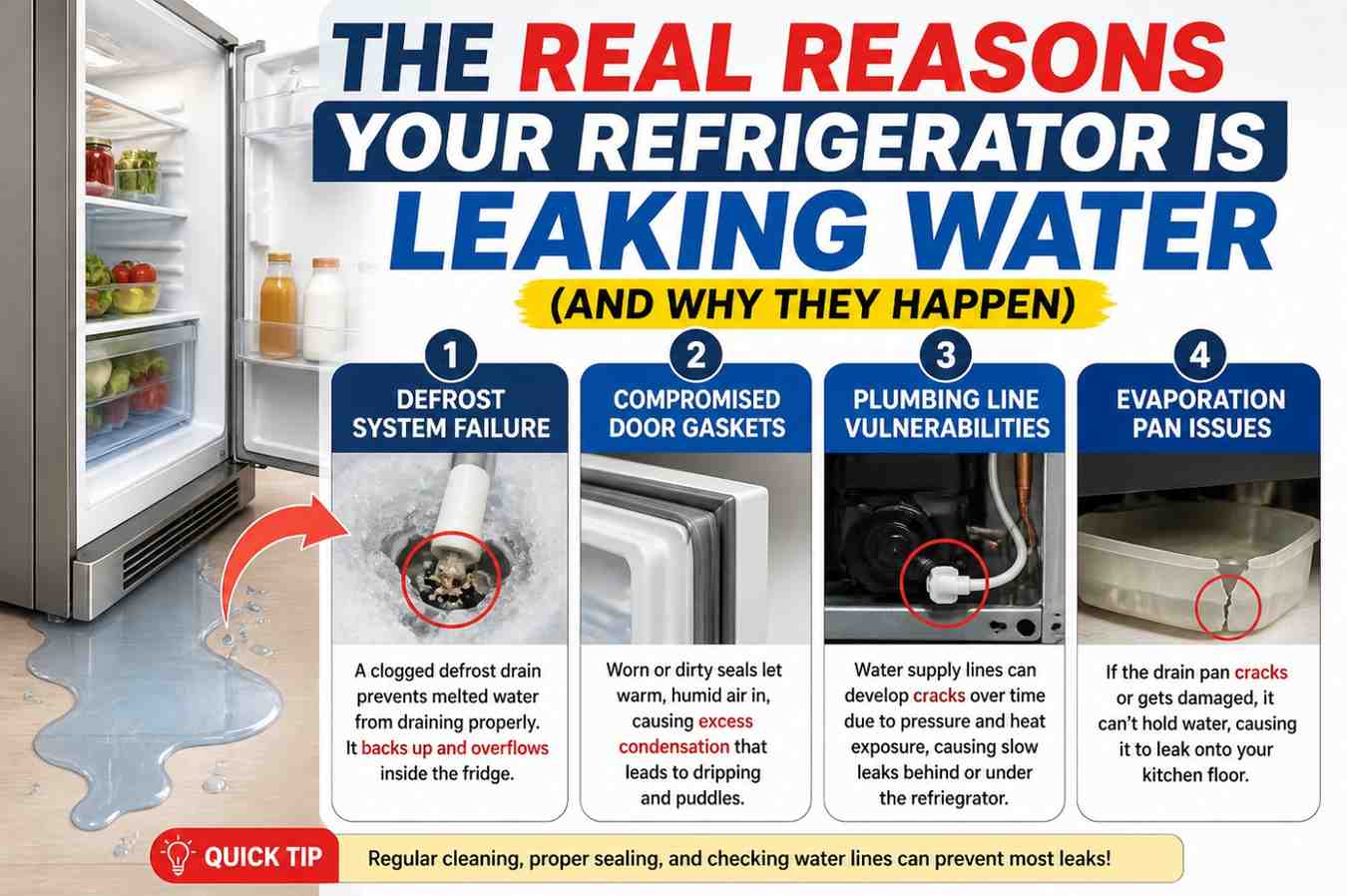
The Real Reasons Your Refrigerator Is Leaking Water (And Why They Happen)
Understanding why water dripping in the refrigerator occurs helps you prevent it. Most leaks stem from minor mechanical failures in the drainage or plumbing systems.
Defrost System Failure
Modern cooling appliances use a helpful automatic defrost cycle to prevent thick ice buildup on the hidden internal cooling coils. A small heating element periodically turns on to melt the accumulated frost into liquid water, which must travel safe down a narrow drain tube. However, if small food crumbs, tiny seeds, or general dirt clog this small opening, the melted water has nowhere to go. It quickly backs up, overflows inside the main compartment, and floods your bottom vegetable drawers.
Compromised Door Gaskets
The thick rubber seal wrapped around the edge of the door is the only secure barrier keeping cold air inside and warm, humid air outside. Over time, these important seals become very brittle or lose their strong magnetic grip due to sticky juice or milk spills. When warm air easily enters the cold zone, it creates rapid condensation that the machine cannot drain fast enough, resulting in constant dripping and tiny puddles forming everywhere.
Plumbing Line Vulnerabilities
Refrigerators equipped with automatic ice makers and built-in drinking dispensers rely heavily on external water lines made of thin plastic tubing. These connection lines are always under constant high water pressure. Because they sit very close to the hot compressor motor at the back, the plastic material becomes extremely brittle over the years. This prolonged heat exposure leads to tiny hairline cracks, which silently form a steady, dripping puddle on the floor behind your heavy kitchen machine.
Evaporation Pan Issues
Located safely at the very bottom of the unit, the shallow drain pan catches all the melting frost, allowing the natural heat from the working compressor to evaporate it slowly over time. However, if this basic plastic pan cracks due to age, general wear, or a hard impact during moving, it will lose its ability to hold liquid. As a result, the water is constantly leaking from the refrigerator onto your kitchen floor, creating a large, dangerous, and messy puddle.
How to Fix a Refrigerator Leaking Water (Step-by-Step)
Fixing a water leaking inside the refrigerator issue often requires just a few simple tools and some patience. Follow these steps for the most common repairs.
Unclogging the Defrost Drain
This is the fastest and most reliable fix for water pooling directly under the internal crisper drawers. First, always unplug the heavy appliance from the wall outlet to ensure total electrical safety. Next, carefully locate the small drain hole at the bottom of the back wall. Use a thin, flexible pipe brush to sweep away any visible food particles or trapped dirt. Finally, gently squirt warm water into the hole using a turkey baster to flush the stubborn blockage away entirely.
Repairing the Water Supply Line
Use this method if you find large puddles forming directly behind the refrigerator. Start by completely turning off the main water supply valve located on the wall behind the machine. Pull the fridge out slowly and carefully inspect the thin plastic tubing for any clear cracks or sharp bends. Use a small wrench to tighten the connection nuts gently. If the plastic line is cracked or feels stiff, you must replace the entire damaged section immediately.
Replacing a Damaged Door Gasket
If you notice heavy condensation or thick sweating forming constantly around the edges of the door frame, the rubber seal needs to be replaced. Begin by soaking the brand-new rubber gasket in a tub of warm water to soften it and make it more flexible. Firmly grip the top corner of the old seal and pull it completely out of the plastic channel. Press the new seal tightly into the empty groove, starting at the top corners and working downwards.
Leveling the Refrigerator
If your fridge is leaning forward, water may miss the drain pan entirely. Place a carpenter's level on top of the appliance to check its balance. Use a wrench to adjust the front levelling legs so the fridge tilts slightly backward. This ensures that melting water flows correctly backwards into the drain hole perfectly.
When a Simple Fix Isn’t Enough: Signs You Need a Professional
Sometimes, a fridge leaking water is a symptom of a much deeper mechanical failure. If you encounter any of the following severe issues, call a technician immediately.
- If the liquid on the floor feels slippery or oily, it is a serious refrigerant gas leak, not regular water.
- Hearing a constant hissing or bubbling sound from the back usually indicates that dangerous gas is escaping from a broken internal pipe.
- If you have water on the floor and the fridge completely stops cooling your food, the main compressor system has failed.
- Seeing water dripping directly onto electrical wires or the main control board creates a massive and immediate electrocution hazard in your home.
- If you have already cleared the drain and replaced the seals, but puddles still reappear constantly, an internal valve is broken.
How to Prevent Your Refrigerator From Leaking Again
Preventing a future water leak from fridge problems is mostly about keeping the drainage pathways clear. Regular basic maintenance stops major puddles from forming.
- Wipe down the rubber door seals once a month with a warm, damp cloth to remove sticky residue and prevent tearing.
- Test the seal strength by closing the door on a piece of paper; if it pulls out easily, the seal is too weak.
- Never push tall food items directly against the back wall, as this blocks air vents and leads to heavy ice buildup.
- Flush the internal defrost drain with warm water and baking soda every six months to prevent slimy algae from clogging the tube.
- Change your internal water filter exactly as the manufacturer recommends to prevent sudden changes in water pressure that can cause line drips.
- Vacuum the dusty condenser coils behind the fridge every quarter to keep the compressor from overheating and melting the plastic lines.
- Always ensure the front of your refrigerator sits slightly higher than the back so gravity forces the doors to close tightly.
Conclusion
A fridge leaking water is very annoying, but it is rarely a reason to throw out your appliance. Most of the time, the problem is just a clogged defrost drain, a broken door seal, or a cracked drip pan. By following the simple troubleshooting steps outlined above, you can quickly find the source of the leak and fix it yourself. Regularly cleaning your gaskets and carefully placing food will prevent water from leaking from the refrigerator in the future, keeping your kitchen floor completely dry. Don't let a broken fridge disrupt your day. Book fast, reliable fridge repair with NoBroker today. Get expert technicians, transparent pricing, and doorstep service. Schedule your repair now!
Cities We Cover for Refrigerator Repair Services
If your refrigerator is not cooling properly, making unusual noises, leaking water, facing compressor issues, experiencing thermostat malfunctions, or requiring gas refilling, NoBroker is here to help. We provide reliable refrigerator repair services across major Indian cities, including Bangalore, Mumbai, Chennai, Hyderabad, Delhi, Noida, and many more. Enjoy 15-minute technician assistance, a 180-day warranty, and 100% genuine spare parts for hassle-free doorstep repairs.
Brands We Serve for Refrigerator Repair Services
From Samsung, LG, and Whirlpool to Bosch, IFB, Haier, and more, NoBroker provides wide-ranging refrigerator repair services across all major brands. Our expert technicians ensure quick diagnosis, 100% genuine spare parts, and reliable doorstep repairs for long-lasting performance.
Frequently Asked Questions
1. Why Is My Fridge Leaking Water Inside?
2. Why Is Water Dripping From My Refrigerator?
3. Why Is My Refrigerator Leaking Underneath?
4. Is It Safe to Keep Using a Leaking Fridge?
5. Can I Fix a Leaking Refrigerator Myself?
6. Why is there an oily puddle behind my fridge?
7. How do I stop my fridge door from sweating?
8. Does a bad water filter cause leaking?
9. How often should I clean the defrost drain?
10. Can an unlevel fridge cause water leaks?

Login / Sign up
Zero Brokerage.
Thousands of new listings daily.
100 Cr+ Brokerage saved monthly.
About the Author

Siri Hegde K
Senior Editor


Recent Blogs

Subscribe to our Newsletter
Get latest news delivered straight to your inbox