Refrigerator Door Alarm: Complete Guide to Working, Types, Installation, Benefits & Buying Tips

55 Views
Table of Contents
A refrigerator door alarm is a simple but essential feature designed to alert you the moment your fridge or freezer is left ajar. Whether you are dealing with a built-in alarm on a modern Samsung or adding an aftermarket sensor to an older Whirlpool model, these alerts are crucial for maintaining consistent cooling. In this guide, we will break down exactly how these alarms work, the different types available, and how to troubleshoot them when they start beeping endlessly or stop working altogether.
What Is a Refrigerator Door Alarm?
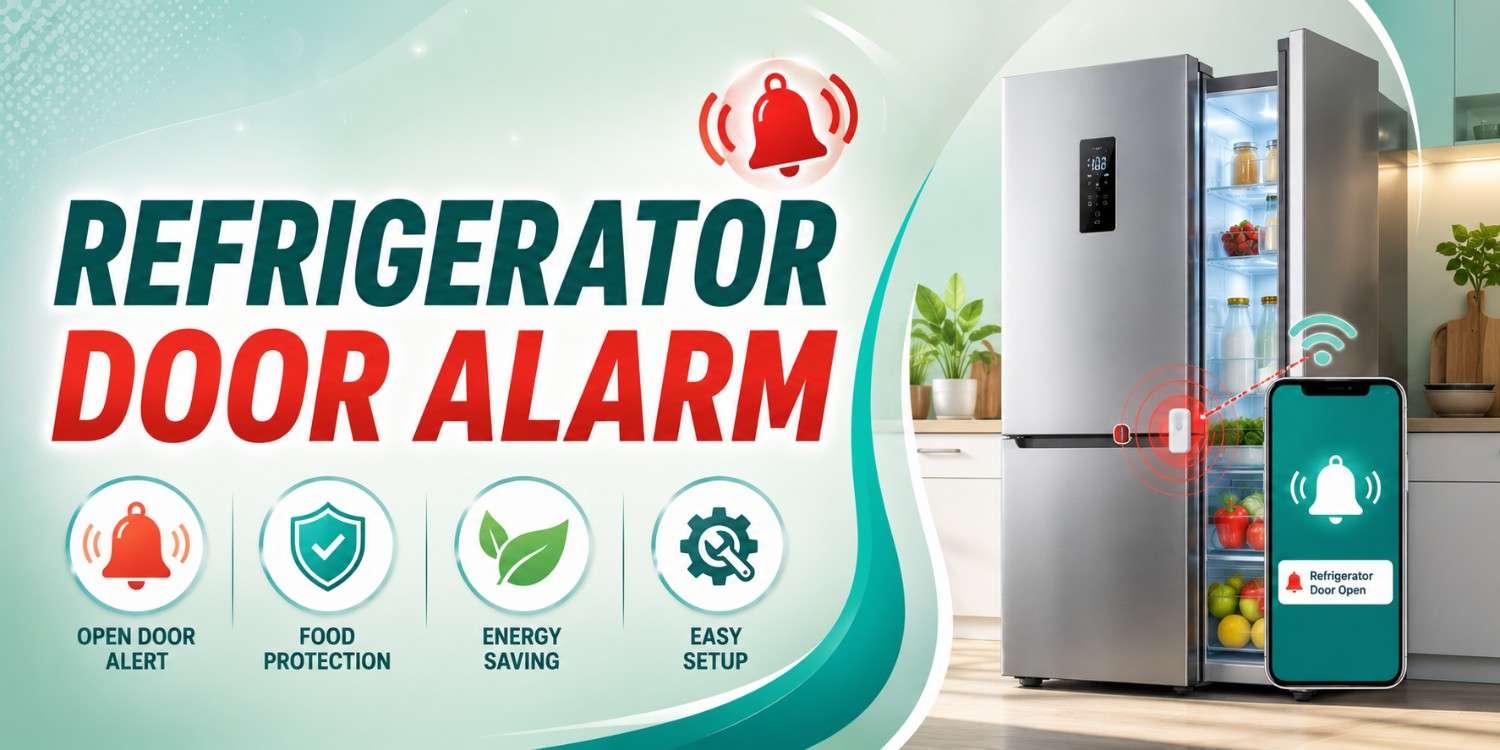
A refrigerator door alarm is a notification system designed to alert users when a refrigerator or freezer door is left open beyond a preset time. The alarm may use beeping sounds, flashing lights, or smartphone notifications. A fridge beeper helps ensure proper cooling while preventing unnecessary energy consumption and food spoilage.
Common Types of Refrigerator Door Alarms - Quick Overview Table
| Type of Alarm | How It Works | Power Source | Feature | Best For |
| Built-in Alarm | Integrated sensor triggers an alert | Refrigerator power | Seamless operation | Modern refrigerators |
| Magnetic Alarm | Magnet separation activates the alarm | Battery | Easy installation | Older refrigerators |
| Motion Sensor Alarm | Detects prolonged open-door status | Battery | Wireless setup | Rental homes |
| Smart Alarm | Sends app notifications | Battery/Wi-Fi | Remote monitoring | Smart homes |
| Freezer Alarm | Monitors the freezer compartment | Battery or appliance power | Dedicated freezer protection | Deep freezers |
Why Is a Refrigerator Door Alarm Important?
A refrigerator door alarm helps protect food quality, maintain proper cooling temperatures, and avoid energy wastage caused by accidentally leaving the refrigerator door open.
Benefits of a Refrigerator Door Alarm
- Prevents food spoilage
- Reduces electricity consumption
- Maintains consistent cooling performance
- Alerts users immediately
- Protects stored medicines and perishables
- Minimises compressor workload
- Improves appliance efficiency
How Does a Refrigerator Door Alarm Work?
A refrigerator door alarm uses sensors to monitor the position of the refrigerator door. When the door stays open longer than the programmed duration, the alarm system activates and alerts the user through sound or visual indicators.
Step-by-Step Process of How It Works
- Door Position Detection: A sensor continuously checks whether the refrigerator door is fully closed or remains open beyond normal usage duration.
- Timer Activation: Once the door remains open, an internal timer starts counting the open-door duration before triggering the alarm.
- Alarm Trigger: If the door stays open longer than the preset limit, the fridge beeper activates and generates an audible warning.
- User Notification: The alarm continues until the door is properly closed or the alarm is manually silenced, depending on the model.
Types of Refrigerator Door Alarms Explained in Detail
Different refrigerator door alarm systems are available based on installation requirements, budget, and monitoring preferences. Choosing the right alarm depends on refrigerator type and desired convenience features.
1. Built-in Refrigerator Door Alarm
A built-in refrigerator door alarm comes pre-installed by the manufacturer and works directly with the appliance's electronic control system for reliable operation.
Pros
- Factory-installed solution
- No additional setup required
- Reliable performance
- Clean appearance
Cons
- Not available in all models
- Repairs may require professional assistance
- Limited customization
When to Use
- Modern refrigerators
- Premium refrigerator models
- Households wanting integrated features
2. Magnetic Refrigerator Door Alarm
This type uses magnetic contact sensors that activate an alarm when the refrigerator door remains open beyond a specific duration.
Pros
- Affordable option
- Easy installation
- Compatible with most refrigerators
- Battery-operated
Cons
- Requires battery replacement
- Sensor alignment is important
- May need periodic maintenance
When to Use
- Older refrigerators
- Budget-friendly upgrades
- Rental properties
3. Smart Refrigerator Door Alarm
A smart alarm connects to mobile applications and provides notifications whenever a refrigerator door is left open.
Pros
- Remote monitoring
- Smartphone alerts
- Advanced customization
- Smart home integration
Cons
- Higher cost
- Requires internet connectivity
- Additional setup needed
When to Use
- Smart homes
- Frequent travelers
- Large households
4. Freezer Door Alarm
A freezer door alarm, when left open, provides alerts specifically for freezer compartments where temperature loss can quickly affect frozen food.
Pros
- Protects frozen food
- Dedicated monitoring
- Quick alerts
Cons
- Limited to freezer use
- Additional installation may be required
When to Use
- Deep freezers
- Commercial storage
- Homes storing frozen foods
Built-in vs External Refrigerator Door Alarms: Which One Should You Choose?
Both built-in and external alarms effectively alert users about open refrigerator doors. The right choice depends on budget, refrigerator type, and desired convenience.
| Feature | Built-in Alarm | External Alarm |
| Installation | Pre-installed | User-installed |
| Cost | Included in the appliance | Separate purchase |
| Maintenance | Low | Moderate |
| Customization | Limited | High |
| Compatibility | Model-specific | Universal |
| Reliability | High | Depends on installation |
How to Easily Install a Refrigerator Door Alarm
Installing an external refrigerator door alarm is generally simple and can be completed within minutes using basic tools and proper sensor placement.
Supplies You Need Before Installation
- Refrigerator door alarm kit
- Batteries
- Cleaning cloth
- Adhesive strips
- Measuring tape
- Marker
Step-by-Step Installation Process
- Clean the Surface: Wipe the installation area thoroughly to remove dust, grease, and moisture for better adhesive performance.
- Position the Sensors: Align the magnetic sensor and alarm unit according to the manufacturer's instructions near the refrigerator door edge.
- Secure the Components: Attach the sensor and alarm firmly using adhesive strips or mounting accessories provided in the package.
- Insert Batteries: Install fresh batteries and verify that the alarm unit powers on correctly before testing.
- Test the Alarm: Open the refrigerator door and ensure the alarm activates after the preset delay period.
How to Activate, Deactivate, and Reset a Refrigerator Door Alarm Easily
Most refrigerator door alarms can be controlled through dedicated buttons, touchscreen panels, or settings menus, depending on the refrigerator model.
Activating a Refrigerator Door Alarm
- Open the control panel menu
- Locate alarm settings
- Enable the door alarm feature
- Save the settings
- Test functionality
Deactivating a Refrigerator Door Alarm
- Access alarm settings
- Turn off the door alarm option
- Confirm changes
- Exit settings menu
Resetting the Alarm
- Close all refrigerator doors
- Press the reset button if available
- Power cycle the refrigerator
- Wait for the system reboot
- Check alarm status
Brand-Wise Steps to Activate, Deactivate & Reset Refrigerator Door Alarms
Different refrigerator brands use slightly different procedures for managing alarm settings.
| Brand | Activation Method | Deactivation Method | Reset Method |
| Samsung | Enable through the control panel | Disable alarm setting | Press the Alarm button |
| LG | Activate from the display menu | Turn off the alarm option | Power reset or menu reset |
| Whirlpool | Enable alarm mode | Disable through controls | Hold the reset key |
| Haier | Use the settings panel | Turn off the notification feature | Restart appliance |
| Bosch | Enable alarm function | Disable through the display | Alarm reset button |
Refrigerator Door Alarm Not Working? Common Problems & Quick Fixes
Like any electronic feature, a refrigerator door alarm may occasionally stop working because of sensor issues, battery problems, or incorrect settings.
1. Dead Batteries
Weak batteries often prevent external alarms from functioning correctly.
Signs
- No beeping sound
- LED indicators inactive
- Intermittent operation
Quick Fix
- Replace batteries
- Check battery orientation
- Clean battery contacts
2. Misaligned Sensor
Improper sensor positioning can stop alarm activation.
Signs
- The door opens without an alarm
- Delayed response
- Inconsistent alerts
Quick Fix
- Realign sensors
- Reduce the gap distance
- Reattach components securely
3. Disabled Alarm Settings
The alarm feature may have been accidentally turned off.
Signs
- No warning sounds
- The display shows alarm disabled
- System appears normal
Quick Fix
- Enable alarm setting
- Review control panel options
- Restart appliance
4. Faulty Door Switch
A damaged door switch may fail to detect door movement.
Signs
- Interior light issues
- Alarm never activates
- Door status not detected
Quick Fix
- Inspect switch
- Clean the surrounding area
- Replace the faulty component
Who Needs a Refrigerator Door Alarm and Who Doesn’t?
A refrigerator door alarm is beneficial for many households, but some users may not require additional monitoring depending on their appliance and usage habits.
Who Needs a Refrigerator Door Alarm
- Families with children
- Elderly users
- Large households
- Smart home users
- Commercial kitchens
- Deep freezer owners
- People storing medicines
Who Doesn’t Need a Refrigerator Door Alarm
- Users with built-in alarms already installed
- Single-person households with minimal usage
- Refrigerators located in constantly monitored spaces
- Users who rarely leave doors open
Conclusion
A refrigerator door alarm is a highly practical safeguard that prevents costly food spoilage, minimizes energy waste, and reduces the strain on your appliance's compressor. Whether you are relying on a built-in LG fridge door alarm, setting up a smart sensor for a deep freezer, or adding a simple magnetic alarm to an older model, the right system offers instant peace of mind. By keeping the sensors clean and replacing the batteries when needed, you can ensure your refrigerator stays tightly sealed and highly efficient for years to come.
NoBroker Refrigerator Repair Services Across Major Cities in India
NoBroker offers refrigerator repair services across major cities, including Bangalore, Chennai, Hyderabad, Delhi, Mumbai, Pune, Gurgaon, Noida, Ghaziabad, Greater Noida, and Faridabad. Our reliable service includes transparent pricing and expert doorstep support for all repair requirements.
Brands We Cover for Refrigerator Repair Services
NoBroker delivers trusted refrigerator repair services for major brands, including Samsung, LG, Whirlpool, Godrej, Bosch, and others, handling all refrigerator variants such as single-door, double-door, side-by-side, and French-door models. Our service includes a 180-day warranty for assured quality and durability.
Frequently Asked Questions
What is a refrigerator door alarm?
How long does it take for a fridge door alarm to activate?
Can I add a fridge door alarm to an older refrigerator?
What is a freezer door alarm when left open?
Why is my fridge beeper constantly sounding?
How do I reset the door alarm on the Samsung refrigerator?
Does an LG fridge door alarm work automatically?
Can a Haier fridge alarm be turned off?
What is a French door alarm?
Are external refrigerator door alarms reliable?

Login / Sign up
Zero Brokerage.
Thousands of new listings daily.
100 Cr+ Brokerage saved monthly.
About the Author

rahulsahani
Senior Editor


Recent Blogs

Subscribe to our Newsletter
Get latest news delivered straight to your inbox