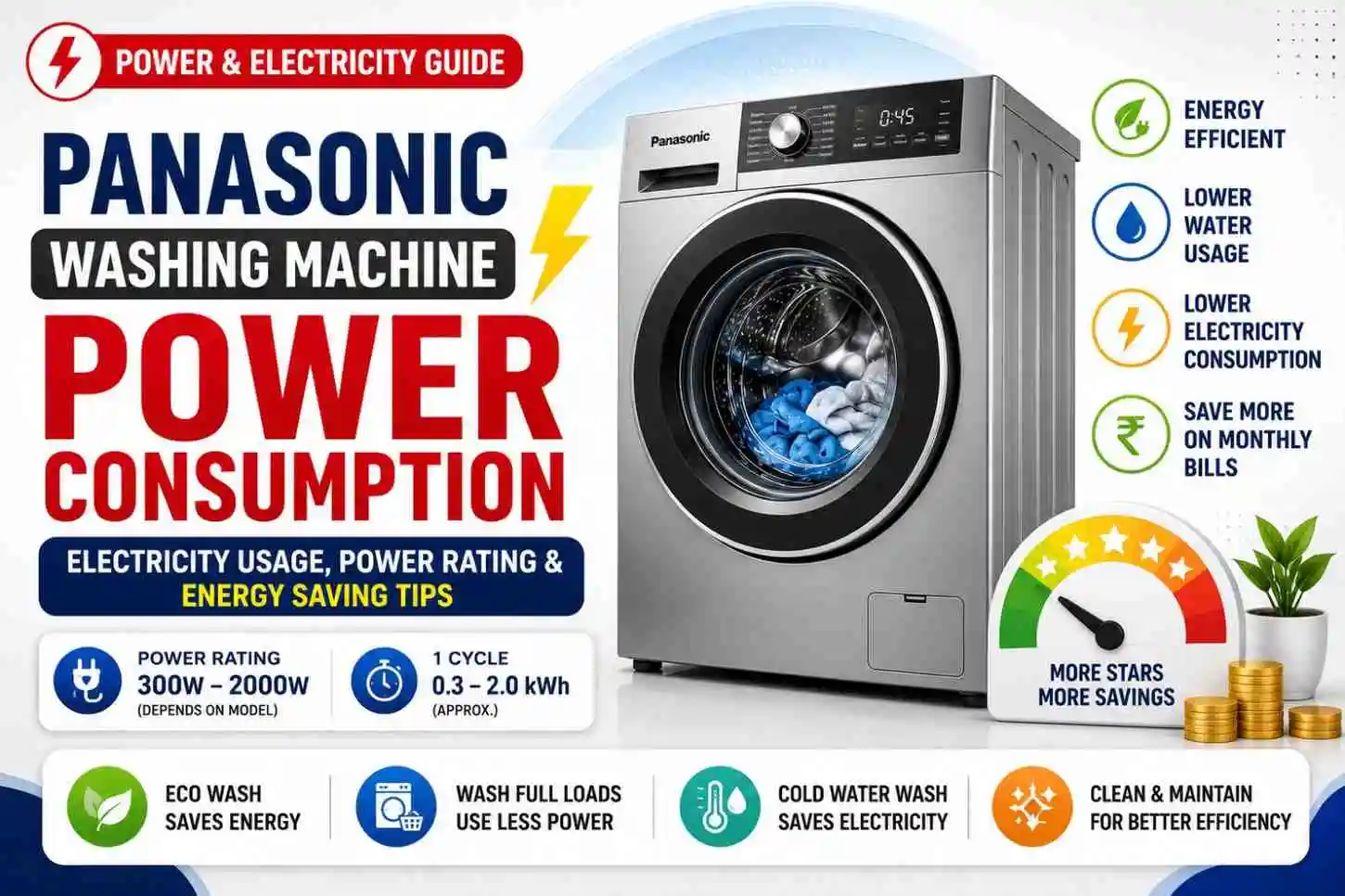
Panasonic Washing Machine Power Consumption: Electricity Usage, Power Rating & Energy Saving Tips

54 Views
Table of Contents
Washing machines have become an essential household appliance, making laundry faster and more convenient. However, many homeowners are concerned about rising electricity bills and often wonder how much power their washing machine actually consumes. If you own a Panasonic washing machine or are planning to buy one, understanding Panasonic washing machine power consumption can help you estimate running costs and use the appliance more efficiently.
In this guide, we will discuss Panasonic washing machine electricity consumption, power ratings, factors affecting energy usage, monthly electricity costs, and practical tips to reduce power consumption.
What Is Panasonic Washing Machine Power Consumption?
Panasonic washing machine power consumption refers to the amount of electrical energy the machine uses during its operation. The actual electricity usage depends on several factors, including the machine type, capacity, wash program, water temperature, and usage frequency.
Modern Panasonic washing machines are designed with energy-efficient technologies that help reduce electricity consumption while maintaining effective cleaning performance.
Whether you use a fully automatic top-load model or a front-load washing machine, knowing the washing machine's power consumption can help you make informed decisions about energy usage.
Understanding Panasonic Washing Machine Power Rating
The washing machine's power rating indicates how much electrical power the appliance requires during operation. It is usually measured in watts (W).
Here are the approximate power ratings of common Panasonic washing machine models:
| Panasonic Washing Machine Type | Approximate Power Rating |
| Semi-Automatic Washing Machine | 300–500 W |
| Fully Automatic Top Load | 350–700 W |
| Fully Automatic Front Load | 700–2000 W |
| Inverter Washing Machine | 300–1000 W |
The washing machine's power rating may vary depending on the model and selected wash cycle.
Panasonic Automatic Washing Machine Electricity Consumption
The Panasonic automatic washing machine's electricity consumption depends on the duration and type of wash cycle selected.
| Washing Machine Type | Average Consumption Per Wash Cycle |
| Top Load Automatic | 0.3–0.8 kWh |
| Front Load Automatic | 0.5–2.0 kWh |
| Eco Mode Cycle | 0.2–0.6 kWh |
| Quick Wash Cycle | 0.15–0.5 kWh |
As a result, Panasonic's automatic washing machine electricity consumption can remain relatively low when energy-saving wash modes are used.
Panasonic Washing Machine Electricity Consumption Per Month
To estimate monthly electricity usage, you can use a simple formula:
Electricity Consumption (kWh) = Power Rating (W) × Operating Hours ÷ 1000
Example Calculation
Suppose your Panasonic washing machine has a power rating of 500 W and runs for 1 hour per wash cycle.
- Power Rating = 500 W
- Usage = 20 wash cycles per month
- Duration = 1 hour per cycle
Monthly Consumption:
(500 × 20 × 1) ÷ 1000 = 10 kWh
If your electricity tariff is ₹8 per unit:
10 × ₹8 = ₹80 per month
This shows that Panasonic washing machine electricity consumption is generally affordable for most households.
Factors Affecting Panasonic Washing Machine Power Consumption
Several factors influence the amount of electricity your washing machine uses:
- 1. Wash Cycle Selection: Heavy-duty and intensive wash cycles consume more electricity than quick or eco wash programs.
- 2. Water Temperature: Hot water washing requires additional energy, increasing washing machine electricity consumption significantly.
- 3. Load Size: Running multiple small loads can consume more power than washing a full load efficiently.
- 4. Machine Type: Front-load washing machines often use less water but may consume more electricity when water heating functions are used.
- 5. Spin Speed: Higher spin speeds generally require more power but can reduce drying time later.
- 6. Machine Age: Older machines typically consume more electricity than newer energy-efficient Panasonic models.
Panasonic Front-Load vs Top-Load Washing Machine Electricity Consumption
Many users compare front-load and top-load washing machines to understand their energy efficiency.
| Feature | Front Load | Top Load |
| Water Usage | Lower | Higher |
| Wash Quality | Better | Good |
| Electricity Consumption | Moderate | Low to Moderate |
| Wash Time | Longer | Shorter |
| Energy Efficiency | Higher Overall | Moderate |
Although front-load machines may have higher power ratings, they are often more efficient in terms of overall water and energy usage.
How to Calculate Washing Machine Electricity Consumption
You can calculate the electricity usage of any Panasonic washing machine using the following steps:
Step 1: Check the Power Rating
Look for the wattage mentioned on the product label or user manual.
Step 2: Calculate Operating Time
Estimate how many hours the machine runs each month.
Step 3: Apply the Formula
Electricity Consumption (kWh) = Power Rating × Hours Used ÷ 1000
Step 4: Calculate Cost
Electricity Cost = Units Consumed × Local Electricity Tariff
This method helps determine the actual washing machine electricity consumption and monthly running expenses.
Tips to Reduce Panasonic Washing Machine Power Consumption
Reducing electricity usage does not mean compromising on cleaning performance.
- Use Eco Wash Mode: Eco programs are specifically designed to reduce water and energy consumption.
- Wash Full Loads: Avoid washing very small loads whenever possible.
- Use Cold Water: Cold-water washing significantly reduces energy consumption compared to heated wash cycles.
- Maintain the Machine Regularly: Cleaning filters and drums improves efficiency and prevents unnecessary power usage.
- Choose Appropriate Wash Cycles: Avoid using heavy-duty cycles for lightly soiled clothes.
- Avoid Excessive Rewashing: Sorting clothes properly helps reduce repeat wash cycles and unnecessary electricity usage.
Are Panasonic Washing Machines Energy Efficient?
Yes, Panasonic washing machines are known for incorporating energy-saving technologies and intelligent wash programs. Many modern models feature inverter technology, load-sensing systems, and eco-wash modes that optimise electricity consumption.
These features help reduce washing machine power consumption while delivering effective cleaning results.
Common Power Consumption of Popular Panasonic Washing Machine Capacities
| Capacity | Approximate Power Consumption |
| 6 kg | 350–500 W |
| 7 kg | 400–600 W |
| 8 kg | 500–700 W |
| 9 kg | 600–900 W |
| 10 kg and Above | 700–2000 W |
Actual consumption varies depending on model specifications and selected wash programs.
Conclusion
Understanding Panasonic washing machine power consumption helps homeowners manage electricity usage more effectively and estimate monthly operating costs. The actual Panasonic washing machine electricity consumption depends on factors such as machine type, wash cycle, water temperature, and usage frequency.
Fortunately, modern Panasonic washing machines are designed with energy-efficient features that help reduce power usage without compromising washing performance. By choosing eco-friendly settings, washing full loads, and maintaining the machine properly, you can further minimise washing machine electricity consumption and keep your energy bills under control.
Frequently Asked Questions
1. How much power does a Panasonic washing machine consume?
2. What is the average Panasonic washing machine electricity consumption per cycle?
3. Does a Panasonic front-load washing machine consume more electricity?
4. How can I calculate my washing machine's electricity consumption?
5. Does Eco Mode reduce Panasonic washing machine power consumption?
6. Which Panasonic washing machine consumes less electricity?
7. Does washing clothes in hot water increase electricity consumption?
8. How much does it cost to run a Panasonic washing machine monthly?
9. Does washing a full load save electricity?
10. How can I reduce my washing machine's power consumption?

Login / Sign up
Zero Brokerage.
Thousands of new listings daily.
100 Cr+ Brokerage saved monthly.
About the Author

avneen kaur
Senior Editor


Recent Blogs

Subscribe to our Newsletter
Get latest news delivered straight to your inbox