Why Is Your Microwave Sparking? Causes, Fixes, and When It Becomes Dangerous

41 Views
Table of Contents
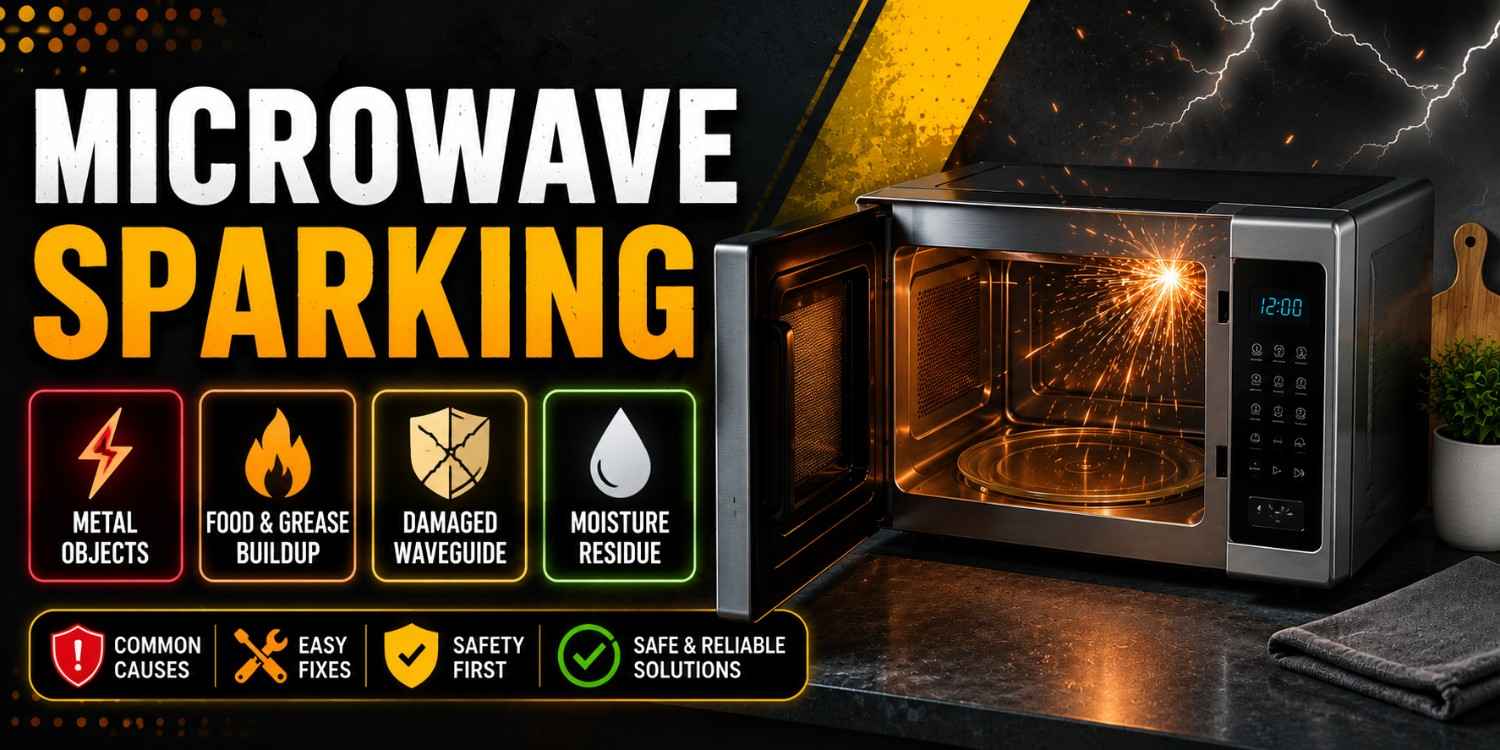
Sparks coming out of your microwave can be quite worrying, especially if you are just trying to warm up food. Even though sparks occasionally occur due to small things, like food particles or metal items getting into the microwave, persistent sparking from your microwave may be a sign of a deeper problem. Getting acquainted with the reasons behind your sparking microwave, learning about microwave oven arcing, and finding out how to fix it is important not only for the preservation of your appliance but also for your safety.
Microwave Sparking Troubleshooting Table: Causes and Quick Fixes
The reasons for sparks in microwaves could be many, including problems related to cleanliness and also faulty internal components of the microwave oven. A brief outline of these is given in the table below.
| Symptom | Possible Cause | Recommended Fix |
| Microwave sparking during operation | Metal object inside the microwave | Remove metal and inspect the interior |
| The microwave oven is sparking inside near the wall | Damaged waveguide cover | Replace the waveguide cover |
| Microwave sparking after cleaning | Excess moisture inside the cavity | Allow the microwave to dry completely |
| Microwave sparking and popping | Food debris or grease buildup | Clean the interior thoroughly |
| Microwave sparking and smoking | Burnt waveguide or internal damage | Stop using and seek repair |
| Empty microwave sparking | Running without food | Avoid operating empty |
| The metal plate in the microwave is sparking | Incorrect rack placement or damage | Reposition or replace the rack |
| Microwave sparking on top | Damaged waveguide area | Inspect and repair immediately |
| Microwave sparking, no metal present | Damaged paint or component failure | Professional inspection recommended |
| Microwave sparking outside | Electrical fault | Disconnect power and call a technician |
What Causes Microwave Sparking? Understanding the Most Common Reasons
The reasons for sparking from most microwaves usually come down to the interaction of microwaves with metals, carbon, grease, or broken parts within the unit. This process is referred to as microwave arcing, which involves electric current moving between surfaces and resulting in sparks.
- Metal objects or aluminium foil in the microwave
- Cracked waveguide cover
- Splattered food and grease build-up
- Water residue after cleaning
- Problems with metal racks or plates
- Cracked interior paint
- Operating the microwave with nothing inside
- Busted internal electrical parts
What to Do Immediately If Your Microwave Starts Sparking
However, when your microwave starts sparking, acting promptly is the right thing to do since doing so will minimise any harm to your unit and ensure that you are safe from potential hazards.
- Press the Stop/Cancel button
- Shut down the microwave
- Pull out the plug if sparking persists
- Take out food after it is safe to do so
- Look for metal items and any burn marks inside the microwave
- Check whether there is any apparent damage inside
- Wait before turning on the microwave again
8 Common Causes of Microwave Sparking and How to Fix Each One
Microwave sparking can originate from different sources. Identifying the exact cause is essential because the appropriate fix depends on the specific issue.
1. Metal Objects Causing Arcing in a Microwave
Arcing in a microwave can occur due to several reasons, but the most common reason is due to the presence of metal objects inside it. Things like spoons, forks, aluminium foil, twist ties, or dishes that have metallic edges may cause the microwaves to reflect and create sparks.
How to Fix
- Stop the microwave immediately
- Remove all metal objects
- Inspect the cavity for burn marks
- Test the microwave with a microwave-safe container
Quick Tips
- Use only microwave-safe cookware
- Avoid metallic decorations on dishes
- Check food packaging before heating
2. Microwave Waveguide Sparking Due to a Damaged Cover
The function of the waveguide is to protect the internal microwave parts from any food spatter. The waveguide tends to get burnt or cracked during use. A sparking waveguide usually occurs around the sides or walls of the cavity.
How to Fix
- Inspect the waveguide cover for burns
- Replace damaged covers immediately
- Clean the surrounding grease buildup
Quick Tips
- Never operate a microwave with a damaged waveguide cover
- Replace covers with manufacturer-approved parts
- Clean the cover regularly
3. Food Splatter and Grease Causing Microwave Oven Sparking Inside
The food residue may soak up microwave energy to carbonise. After the burnt residues form in the microwave oven, they can make electrical connections that result in sparking within the microwave oven.
How to Fix
- Clean all interior surfaces thoroughly
- Remove stubborn grease with a mild cleaner
- Dry the cavity completely before use
Quick Tips
- Wipe spills immediately after cooking
- Use microwave-safe covers to reduce splatter
- Schedule regular cleaning
4. Microwave Sparking After Cleaning Because of Excess Moisture
Homeowners also realise that their microwave sparks when it is cleaned. Sometimes moisture gets stuck around the vents, seams, or the area surrounding the wave guide.
How to Fix
- Leave the door open for proper drying
- Wipe away excess moisture
- Wait several hours before use if necessary
Quick Tips
- Avoid excessive water during cleaning
- Dry all surfaces carefully
- Never spray cleaners directly into vents
5. Metal Rack or Metal Plate in Microwave Sparking
Some microwaves come with metal trays, which are meant for use at particular cooking settings. But if the metal tray is not properly placed, or if it is used under the wrong settings, it will start sparking.
How to Fix
- Verify rack compatibility
- Reinstall according to the manufacturer's instructions
- Replace damaged racks
Quick Tips
- Use racks only when recommended
- Avoid bent or damaged accessories
- Check the user manual before use
6. Empty Microwave Sparking Due to Running Without Food
In an empty microwave, there is no material available to absorb the microwaves produced. Due to this, the waves may reflect back internally in the machine and lead to sparking, heating, or even damage.
How to Fix
- Stop the microwave immediately
- Allow the appliance to cool
- Test it with a cup of water before regular use
- Monitor for unusual sounds or sparks
Quick Tips
- Never run a microwave empty
- Use a microwave-safe container when testing
- Supervise children using the appliance
7. Damaged Interior Paint Causing the Microwave to Keep Sparking
The inner surface lining of a microwave prevents electric sparks. In case the lining gets damaged due to scratches and wear and tear, then the underlying metal surface creates sparks. This explains the cause behind a sparking microwave when there are no metals inside.
How to Fix
- Inspect the walls, ceiling, and floor of the cavity
- Remove loose paint carefully
- Apply microwave-safe touch-up paint if appropriate
- Replace the microwave if damage is extensive
Quick Tips
- Avoid abrasive scrubbers
- Address small paint chips early
- Inspect the cavity regularly
8. Faulty Internal Components Causing Microwave Sparking and Smoking
Sparking and smoking from the microwave could be an indication that the problem lies in internal parts like the magnetron, diode, capacitor, or wiring. Professional diagnosis and maintenance are normally required in such situations.
How to Fix
- Stop using the microwave immediately
- Disconnect power
- Contact a qualified technician
- Replace severely damaged appliances if necessary
Quick Tips
- Never attempt high-voltage repairs yourself
- Watch for burning smells
- Seek professional assistance promptly
Is Microwave Sparking Dangerous? When You Should Be Concerned
Not all sparks indicate a serious problem, but some situations can quickly become dangerous. Understanding the level of risk helps you decide whether a simple fix is sufficient or professional attention is needed.
| Situation | Danger Level | What It Means |
| Small spark from foil or metal utensil | Low | Remove metal and inspect |
| Food is sparking in the microwave | Low to Medium | Often caused by minerals or residue |
| Butter sparking in the microwave | Low | Minerals or uneven heating may be responsible |
| Microwave waveguide sparking | Medium | Cover may need replacement |
| Microwave sparking and popping | Medium | Often indicates arcing or buildup |
| Microwave sparking on top | Medium to High | The waveguide area may be damaged |
| Microwave sparking and smoking | High | Stop use immediately |
| Microwave sparking outside | Very High | Potential electrical fault requiring repair |
Can You Use a Microwave After It Sparks?
Depending on the reason for the sparking, whether or not you can keep using your microwave would differ greatly. While it's one thing to have a spark from accidentally putting in something metallic, it's another to experience repeated sparks due to damaged interior parts.
When It's Safe to Use the Microwave Again
- Spark came from the use of a removable metal object
- Burn marks are not present in the machine
- Normal heating process post-spark
- No strange noises and/or smells
- No damage seen on interior components
When You Should Stop Using Your Microwave Immediately
- Sparking continues after removing the metal
- Smoke is present
- You notice burning odours
- The waveguide cover is damaged
- The microwave sparks repeatedly
- The appliance sparks externally
Brand-Specific Microwave Sparking Problems
Despite the similarity in the reasons for sparks, there have been cases of sparking issues that are brand-specific and relate to maintenance, wear, or damage.
LG Microwave Oven Sparking Inside
An LG microwave oven sparking inside is most often caused by food residues on the waveguide cover or damage to the coating in the cavity. Cleaning and timely replacement of worn parts can be effective preventive measures.
Panasonic Microwave Sparking
The most frequent cause of Panasonic microwave spiking issues is the presence of grease and food on the waveguide cover. Regular inspection of this part of the appliance is recommended.
Samsung Microwave Sparking
Sparks in Samsung microwaves can be caused by worn interior paint, food splashes, or broken accessories. Adhering to the cleaning instructions provided by the manufacturer can help to avoid such problems.
Whirlpool Microwave Sparking
Whirlpool microwave sparking issues are frequently associated with waveguide damage or neglected interior cleaning. Early inspection can prevent more expensive repairs.
Warning Signs Your Microwave May Start Sparking Soon
Often, some signs will precede any sparking from your microwave. The following signs are common signs of problems within a microwave.
- Burn spots inside the cavity
- Buzzing sound
- Dark spots around the waveguide cover
- Unusual odour when operating
- Smoke is coming from the unit
- Peeling paint inside the microwave
- Overheating in some areas
- Popping sound
When to Call a Technician for Microwave Sparking Issues
While some issues with microwaves can be easily sorted out through cleaning and routine maintenance, others require technical expertise. The inner electrical parts of the microwave work on a very high voltage and thus cannot be tinkered with without proper training.
- Microwave still sparks despite cleaning.
- There is a sparking in the microwave from the outside.
- The wave guide cover keeps burning.
- Smoke emanates from the appliance.
- Components inside seem damaged.
- The microwave stops heating up.
- Spark even without any food or metal inside.
If the cost of repairs is much higher than that of the appliance itself, replacing the device would be a wiser move. Professional service providers like NoBroker can assist you in assessing the issue and choosing an optimal approach to its solution.
How to Prevent Microwave Sparking and Extend Appliance Life
The best method for preventing microwave sparking is to practice preventative maintenance. Simple measures may be taken to avoid arcing and expensive repairs.
- Regularly clean your microwave
- Clean up splatters of food immediately
- Only use microwave-safe containers
- Do not use metal cookware or aluminium foil
- Never run an empty microwave
- Check your waveguide cover
- Fix any chips in your paint
- Read the manufacturer's recommendations for use
- Don't slam the door of your microwave
Microwave Maintenance Checklist
To ensure the safe functioning of your microwave:
- Clean interior surfaces every week
- Look out for burnt areas every month
- Inspect the waveguide cover after some months
- Check the door seals regularly
- Change damaged components immediately
- Tackle strange noises without delay
Conclusion
Microwave sparking must never be taken lightly. Even simple things, such as the presence of metal objects, leftover food items, or water inside the appliance, can easily be solved; however, persistent sparking could mean that there is something more serious happening within the appliance, such as an issue with the waveguide cover, the lining inside, or even the electronic components of the appliance. Knowing the reasons behind the occurrence of microwave arcing is very important, as it helps protect not only the appliance but also your safety.
Our Microwave Repair & Services Across Major Cities
NoBroker provides reliable microwave repair services in major cities like Bangalore, Chennai, Hyderabad, Delhi, Mumbai, Pune, Gurgaon, Noida, Ghaziabad, Greater Noida, and Faridabad. Our trained technicians offer quick doorstep assistance within 15 minutes of booking, along with transparent pricing and hassle-free repair solutions.
Brands We Serve for Microwave Repair Services
NoBroker offers expert microwave repair services for leading brands like Samsung, LG, IFB, Whirlpool, Panasonic, Bosch, Haier, and more. Our skilled technicians repair all types of microwaves, including solo, grill, and convection models, with quality solutions backed by a 180-day warranty for reliable performance.
Frequently Asked Questions
1. What would cause my microwave to spark without metal?
2. Is microwave sparking dangerous?
3. What makes my microwave arcing?
4. Does any kind of food make sparks in the microwave?
5. Why is my butter sparking in the microwave?
6. Why does my microwave waveguide spark?
7. Is it okay if my microwave has sparked only once?
8. Why is my microwave sparking and making popping sounds?
9. What can I do if my microwave is sparking and smoking?
10. At what point should I replace a microwave that sparks constantly?

Login / Sign up
Zero Brokerage.
Thousands of new listings daily.
100 Cr+ Brokerage saved monthly.
About the Author

Siri Hegde K
Senior Editor


Recent Blogs

Subscribe to our Newsletter
Get latest news delivered straight to your inbox