How to Install a Refrigerator Safely: Step-by-Step Guide Every Homeowner Should Know

22 Views
Table of Contents
Putting together a fridge may seem easy, but following the proper steps guarantees efficiency and effectiveness in its performance. Regardless of whether you are trying to figure out how to install a refrigerator at home or install an entirely new unit, taking the proper measures is crucial. From positioning and leveling to power safety, in this guide, we will discuss how to install your new fridge effectively while avoiding common mistakes homeowners often overlook.
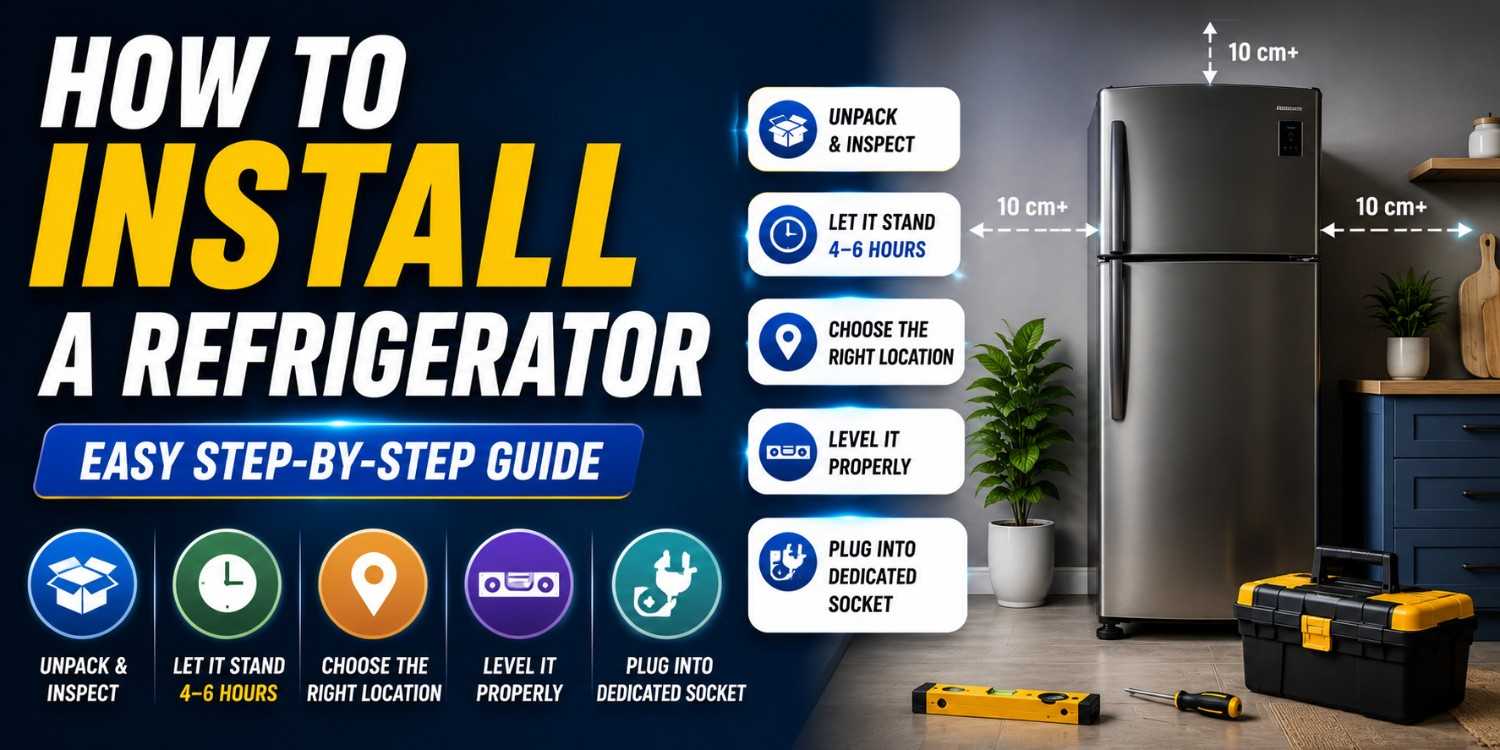
How to Install a Refrigerator (Step-by-Step Instructions)
Correct installation techniques for fridges prevent problems during usage. Although many prefer the Do It Yourself (DIY) approach, the professional installation services provided by companies such as NoBroker make it easy to install a fridge efficiently, especially when dealing with modern brands like Samsung, LG, Bosch, Whirlpool, or other branded refrigerators.
Step 1: Unpacking and Inspecting the Refrigerator
Unpack the fridge and examine it for any damage due to the delivery. Make sure that all packaging materials, tapes, and protective films have been removed before starting the installation.
- Examine the exterior and interior for any damages
- Make sure to remove all packaging material carefully
- Make sure you have the necessary accessories and shelves
- Clean the interior before usage
Inspection will help prevent installation problems and make sure you are getting a working refrigerator.
Step 2: Leave Upright for Several Hours Before Plugging In
Once the transport is done, leave the fridge standing upright for some time before connecting it. This enables the oil in the compressor and refrigerant to settle in the right way to avoid cooling problems after installation.
- Leave the fridge standing erect when installing
- Wait for 4–6 hours before plugging it in
- Do not keep moving it
- Ensure that it stands erect
This will ensure optimal performance of your fridge and prevent any possible damage to its internal parts.
Step 3: Position It in the Desired Location
It is important that the refrigerator be placed in a ventilated location without direct sunlight and/or near any source of heat. This will allow for effective operation as well as ease of power connection.
- Spacing must be maintained around the refrigerator
- Avoid areas near sources of heat
- Door opening should not be hindered
- A leveled surface should be chosen
Correct positioning improves energy efficiency and helps maintain consistent cooling performance.
Step 4: Level the Refrigerator Using Adjustable Legs
Utilize the height adjustment legs present on the refrigerator in order to ensure its even standing. Leveling is necessary since it helps avoid vibrations and noise and ensures proper door closure without any openings left.
- Perform checking by means of a spirit level
- Level front legs, if required
- Make sure there are no vibrations
- Verify that the fridge door closes evenly
The properly leveled fridge will perform optimally and efficiently.
Step 5: Plug Into a Dedicated Power Socket
The refrigerator must be connected to a power source via a properly grounded socket to ensure that the device is operating safely. Extension cords and other power sockets may interfere with voltage stability, leading to problems with the machine.
- Properly grounded socket
- Do not use an extension cord or an adapter
- Ensure compatibility of voltage
- Power on after setup
Safe electrical connection ensures stable performance and protects your refrigerator from power-related damage.
Quick Setup Breakdown
- Unpack the fridge safely
- Wipe clean before using for the first time
- Ensure enough space between the fridge and the wall
- Level the refrigerator properly before switching it on
- Do not plug in immediately after unpacking
Proper fridge installation enhances efficiency and durability.
Things to Consider Before Installing a Refrigerator
Before installing a refrigerator, make sure your kitchen space, power connection, and ventilation setup are suitable for safe operation and efficient cooling performance.
- Measure the kitchen space before buying the refrigerator.
- Keep enough space around the fridge for airflow.
- Avoid placing the fridge near stoves or heat sources.
- Make sure the floor is flat and strong.
- Use a separate grounded power socket for safety.
- Check if the fridge doors can open fully.
- Confirm the voltage matches your home power supply.
- Keep the refrigerator away from direct sunlight.
- Do not use extension cords or adapters.
- Place the fridge where cleaning is easy.
Tools Required for Installation
Simple tools will guarantee that the right leveling and placement are done when installing your fridge. The use of the correct tools means that mistakes are minimized and efficiency is guaranteed right from the start.
| Tool | Why It’s Needed |
| Spirit Level | To ensure the fridge is balanced |
| Measuring Tape | To check spacing |
| Adjustable Wrench | To adjust legs |
| Screwdriver | For minor fittings |
Tip: Always double-check alignment before powering on the appliance.
Common Mistakes to Avoid During Refrigerator Installation
Some mistakes in installation can affect the effectiveness of the cooling process and the lifetime of your refrigerator. Thus, knowing how to install a refrigerator correctly will ensure good work, safety, and longevity of the device.
- Plugging in the appliance right away- You have to wait for some time before turning on the refrigerator because the liquid inside needs time to settle.
- Improper leveling- An uneven surface may result in vibrations and noisy operation.
- Improper air circulation- Lack of sufficient space prevents proper airflow and leads to overheating.
- Wrong placement- Putting the fridge too close to heating elements is not recommended.
How to Check If Your Refrigerator Is Installed Correctly
Once the refrigerator is installed, you should be able to determine if it has been installed correctly. Correct installation means that your refrigerator will run smoothly while saving you money on bills and reducing energy loss.
Signs of Proper Refrigerator Installation
- The refrigerator is straight and steady: This ensures efficient functionality and avoids excessive pressure on the interior parts.
- Doors are sealing: This ensures constant interior temperature and saves energy.
- There is no unusual noise: Any unusual sound implies that the appliance isn't positioned properly.
- It reaches the required temperature in just a couple of hours: This guarantees effective cooling without any problems.
Signs of Improper Refrigerator Installation
- The fridge wobbles: Such behavior may lead to damage to internal components.
- Doors aren't sealing: This affects energy consumption and cooling capacity.
- It produces unnecessary noise: The appliance isn't balanced enough.
- Inefficient or irregular cooling: It implies that the fridge lacks proper ventilation.
Pros and Cons of Installing a Refrigerator Yourself
Self-installation of a refrigerator can appear practical and economical, but it entails certain considerations. It involves technical knowledge and precision in doing the job. Although it may work well for some individuals, even minor inaccuracies can compromise functionality, safety, and durability.
Advantages of Installing a Refrigerator Yourself
- Reduction of installation fees: Service fees are saved since there is no need to pay for the installer’s services.
- Convenience of immediate setup: Installation can be done once the refrigerator is delivered to the place of use.
- Suitable for basic models: Simple single-door and compact refrigerators are manageable to set up independently.
Disadvantages of Installing a Refrigerator Yourself
- Leveling errors: Inaccurate balancing can cause vibrations and noise, as well as compromised efficiency.
- Electrical safety risks: The risk of electrical hazards due to insufficient knowledge about wiring and earthing.
- Warranty implications: Some manufacturers require professional installation to maintain the warranty validity.
- Time-intensive task: Installation takes more time when done without sufficient experience.
Expert Tips for Installing a Refrigerator
Some recommendations from experts will guarantee that you install the appliance successfully, safely, and effectively, particularly if you are installing it for the first time.
- Make sure that the appliance gets to cool down first: Leave it standing up for several hours before turning it on to keep its parts intact.
- Refer to the user manual: Each brand may have different installation processes, such as Samsung, LG, or Whirlpool.
- Keep sufficient room between the device and walls: This ensures the right circulation of air inside the fridge.
- Plug the appliance into a wall socket: Extension cords are discouraged as they pose risks of electrical hazards.
- Contact an expert for complicated installations: Some appliances are better left to experts for proper installation.
Conclusion
The proper installation of a refrigerator significantly contributes to its performance, effectiveness, and longevity. Although self-installation may work well in simple cases, special care should be taken to ensure the refrigerator is leveled and has enough spacing. To have the most convenient experience without any problems, consider using professional services such as NoBroker that guarantee a perfect installation of your refrigerator.
Cities We Serve for Refrigerator Repair Services
NoBroker provides refrigerator repair services across Bangalore, Chennai, Hyderabad, Delhi, Mumbai, Pune, Gurgaon, Noida, Ghaziabad, Greater Noida, and Faridabad. Enjoy quick 15-minute technician assistance, expert diagnosis, and reliable doorstep repairs for all refrigerator types.
Brands We Serve for Refrigerator Repair Services
Whether it’s a Samsung, LG, Whirlpool, Godrej, Bosch, or IFB refrigerator, NoBroker provides dependable repair services backed by skilled technicians, genuine spare parts, and a seamless doorstep service experience.
Frequently Asked Questions
1. How to install a Samsung refrigerator? 
2. How to fit a fridge in a fitted kitchen?
3. How to install your new refrigerator safely?
4. How to install an LG fridge?
5. How is a fridge installed for the first time?
6. How to install a Bosch refrigerator properly?
7. Should one employ a professional to install a refrigerator?
8. How to install the new Whirlpool refrigerator?
9. How to install a fridge properly in small kitchens?
10. How to install the Haier refrigerator?

Login / Sign up
Zero Brokerage.
Thousands of new listings daily.
100 Cr+ Brokerage saved monthly.
About the Author

Siri Hegde K
Senior Editor


Recent Blogs

Subscribe to our Newsletter
Get latest news delivered straight to your inbox