Fridge Not Cooling But Light Is On: Causes, Troubleshooting Tips and Easy Fixes


Appliance Tips & Guides

243 Views
Table of Contents
A refrigerator is one of the most important appliances in any home. When the fridge light turns on, but the refrigerator compartment is not cooling properly, it can be confusing. Since the appliance still has power, many homeowners assume everything is working normally. However, a refrigerator can receive electricity and illuminate the interior light while still experiencing cooling-related issues.
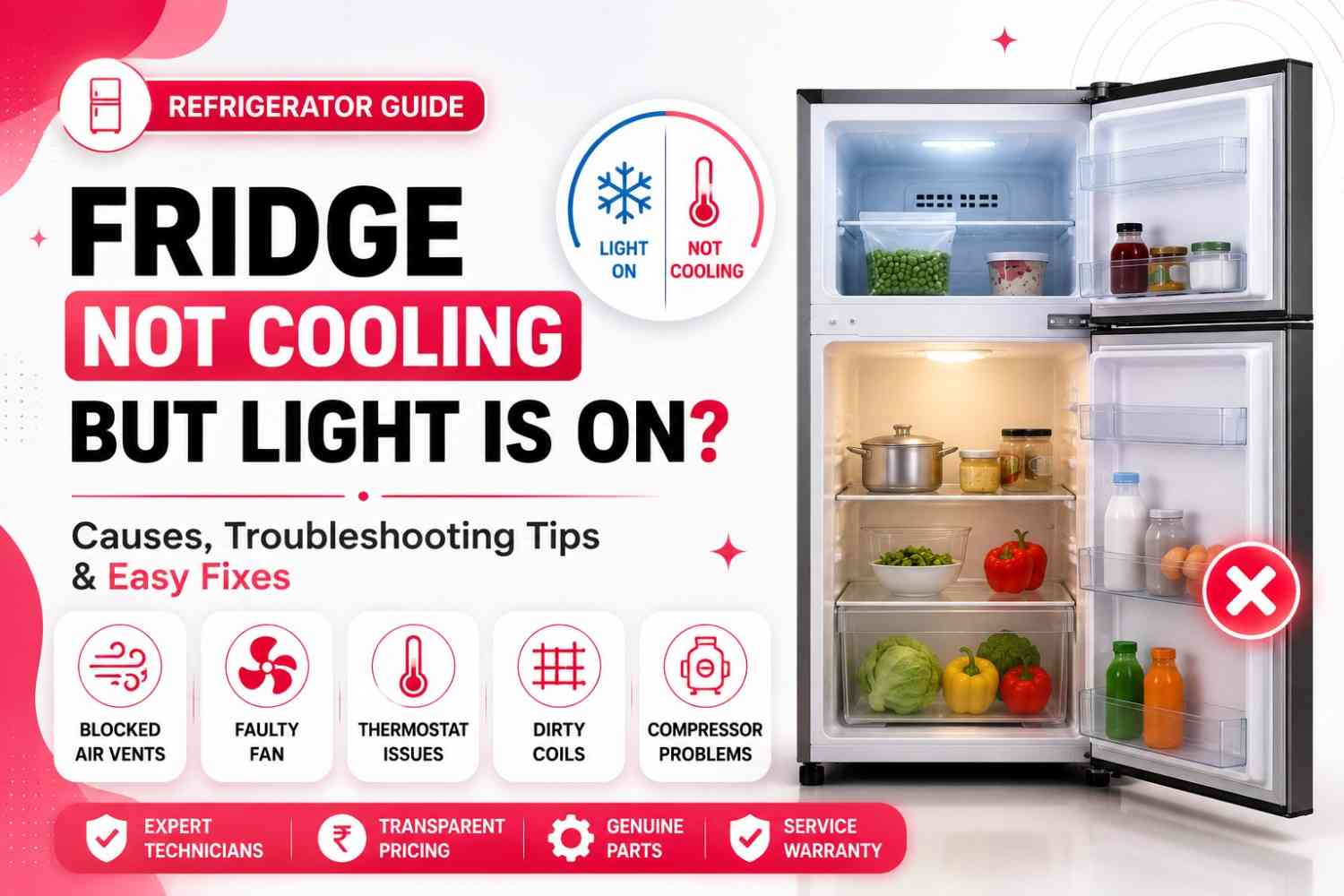
If your fridge is not cooling but the light is on, several factors could be responsible, ranging from dirty condenser coils and blocked vents to faulty fans, thermostat problems, or compressor issues. Understanding the possible causes can help you identify whether it is a simple fix or if professional refrigerator repair is required.
Why Is My Fridge Not Cooling But the Light Is On?
The refrigerator light and cooling system operate through different components. The light requires only a small amount of electricity, whereas cooling depends on the compressor, condenser coils, evaporator fan, thermostat, and refrigerant system working together.
If any of these cooling components malfunction, you may notice that the fridge light works normally while the refrigerator fails to maintain the required temperature.
Signs Your Refrigerator Is Not Cooling Properly
Before diagnosing the issue, look for these common symptoms:
- Food is spoiling faster than usual
- The refrigerator compartment feels warm
- Freezer not freezing properly
- Excessive frost buildup
- Compressor not running
- Strange noises from the refrigerator
- Water leakage inside the fridge
- The refrigerator is constantly running without cooling
Common Reasons Why Your Fridge Is Not Cooling, But the Light Is On
Several issues can prevent proper cooling even when the refrigerator appears to have power.
Dirty Condenser Coils
Condenser coils release heat from the refrigerator. Over time, dust, pet hair, and dirt accumulate on the coils, reducing their efficiency. When the coils cannot release heat effectively, the refrigerator struggles to maintain the desired temperature.
Solution:
- Unplug the refrigerator
- Locate the condenser coils
- Clean them using a soft brush or vacuum cleaner
- Repeat every 6 months for better performance
Faulty Evaporator Fan Motor
The evaporator fan circulates cold air throughout the refrigerator compartment. If the fan stops working, cold air remains trapped in the freezer section.
Common signs include:
- Freezer remains cold
- The refrigerator compartment becomes warm
- Unusual clicking or grinding noises
Blocked Air Vents
Cold air moves from the freezer to the refrigerator through air vents. Food containers or excessive frost can block these vents. Blocked airflow often causes uneven cooling and warm spots inside the refrigerator.
Incorrect Temperature Settings
Sometimes the issue is surprisingly simple.
Accidental changes to the thermostat settings can reduce cooling performance.
Recommended refrigerator settings:
- Refrigerator compartment: 3°C to 5°C
- Freezer compartment: -18°C
Damaged Door Gasket
The rubber door seal prevents cold air from escaping. A worn-out gasket allows warm air to enter continuously, making it difficult for the refrigerator to cool efficiently.
Signs of a damaged gasket include:
- Visible cracks
- Loose seal
- Moisture around the door edges
- Higher electricity consumption
Frost Build-Up on Evaporator Coils
Excessive frost can block airflow and reduce cooling efficiency. This usually happens when the automatic defrost system malfunctions.
Common causes include:
- Defrost timer failure
- Defrost heater failure
- Defrost thermostat issues
Faulty Thermostat
The thermostat controls the cooling cycle. If it fails, the compressor may not receive the signal to start cooling, even though the fridge light continues to work.
Compressor Problems
The compressor is the heart of the refrigeration system. A faulty compressor can prevent the refrigerator from cooling altogether.
Common symptoms include:
- Clicking sounds
- Compressor overheating
- Refrigerator not cooling at all
- Compressor not running
In most cases, compressor repairs require professional assistance.
How to Troubleshoot a Fridge That Is Not Cooling
Before scheduling a refrigerator repair service, try these simple troubleshooting steps.
Step 1: Check the Power Supply
Even if the light is on, ensure the refrigerator is receiving stable power.
Check:
- Wall socket
- Power cord
- Extension boards
- Voltage fluctuations
Step 2: Verify Temperature Settings
Make sure the thermostat has not been accidentally adjusted to a warmer setting. Allow 24 hours after changing settings to observe cooling improvements.
Step 3: Clean the Condenser Coils
Dust-covered coils are one of the most common causes of refrigerator cooling issues. Regular cleaning can significantly improve performance.
Step 4: Inspect Air Vents
Ensure food items are not blocking internal air vents. Proper airflow is essential for maintaining uniform cooling.
Step 5: Check Door Seals
Close a piece of paper between the door and the refrigerator. If the paper slides out easily, the gasket may need replacement.
Step 6: Listen for Fan and Compressor Operation
Pay attention to:
- Fan noises
- Compressor humming sounds
- Clicking noises
These sounds can help identify the faulty component.
When Should You Call a Refrigerator Repair Technician?
While some issues can be fixed through basic troubleshooting, certain problems require professional attention.
Call a technician if:
- The compressor is not running
- The refrigerator is leaking refrigerant
- Cooling does not improve after cleaning coils
- Fan motors have failed
- Defrost system components are defective
- The refrigerator repeatedly trips the power
Professional diagnosis helps prevent further damage and ensures accurate repairs.
How to Prevent Refrigerator Cooling Problems
Routine maintenance can significantly improve refrigerator performance and lifespan.
Follow These Maintenance Tips
- Clean condenser coils every 6 months
- Check door seals regularly
- Avoid overloading the refrigerator
- Leave space around the appliance for ventilation
- Keep temperature settings at recommended levels
- Schedule professional servicing when required
Proper maintenance not only improves cooling but also reduces energy consumption and repair costs.
How Can NoBroker Help with Refrigerator Repair Services?
When your fridge is not cooling, but the light is on, identifying the exact problem can be difficult without technical expertise. NoBroker provides access to verified refrigerator repair professionals who can diagnose and fix issues such as faulty compressors, damaged thermostats, fan motor failures, refrigerant leaks, and cooling inefficiencies. With doorstep service, transparent pricing, genuine spare parts, and service warranty support, NoBroker helps restore your refrigerator's performance quickly and conveniently.
Why Choose NoBroker Home Services?
Your refrigerator is a major household appliance, and timely repairs can prevent food spoilage and expensive component failures.
- Verified Experts – Skilled technicians trained to handle various refrigerator brands and models.
- Transparent Pricing – Upfront pricing with no hidden charges.
- Instant 15 minutes service – Skilled technician arrives at your doorstep within 15 minutes of booking.
- Service Warranty – Warranty support on eligible repair services.
- Easy Online Booking – Convenient appointment scheduling from home.
Final Verdict
If your fridge is not cooling but the light is on, the problem usually lies within the cooling system rather than the power supply. Issues such as dirty condenser coils, blocked vents, faulty fans, damaged door seals, thermostat malfunctions, or compressor problems can all affect cooling performance. Start with basic troubleshooting and maintenance checks before assuming a major fault. However, if the refrigerator continues to stay warm, professional diagnosis and repair are the safest ways to restore efficient cooling and prevent further damage.
Frequently Asked Questions
Why is my fridge not cooling, but the light is working?
Can dirty condenser coils cause a refrigerator to stop cooling?
Why is my freezer cold but the fridge compartment warm?
How long should I wait after changing refrigerator temperature settings?
How do I know if my refrigerator compressor is bad?
Can a faulty thermostat stop my fridge from cooling?
Is it safe to keep using a refrigerator that is not cooling?
How often should refrigerator condenser coils be cleaned?
Why does my fridge stop cooling during the summer?
When should I call a refrigerator repair technician?

Login / Sign up
Zero Brokerage.
Thousands of new listings daily.
100 Cr+ Brokerage saved monthly.
About the Author

avneen kaur
Senior Editor


Recent Blogs
Subscribe to our Newsletter
Get latest news delivered straight to your inbox