Fridge Light Not Working? Causes, Symptoms, DIY Fixes & When to Call a Technician

31 Views
Table of Contents
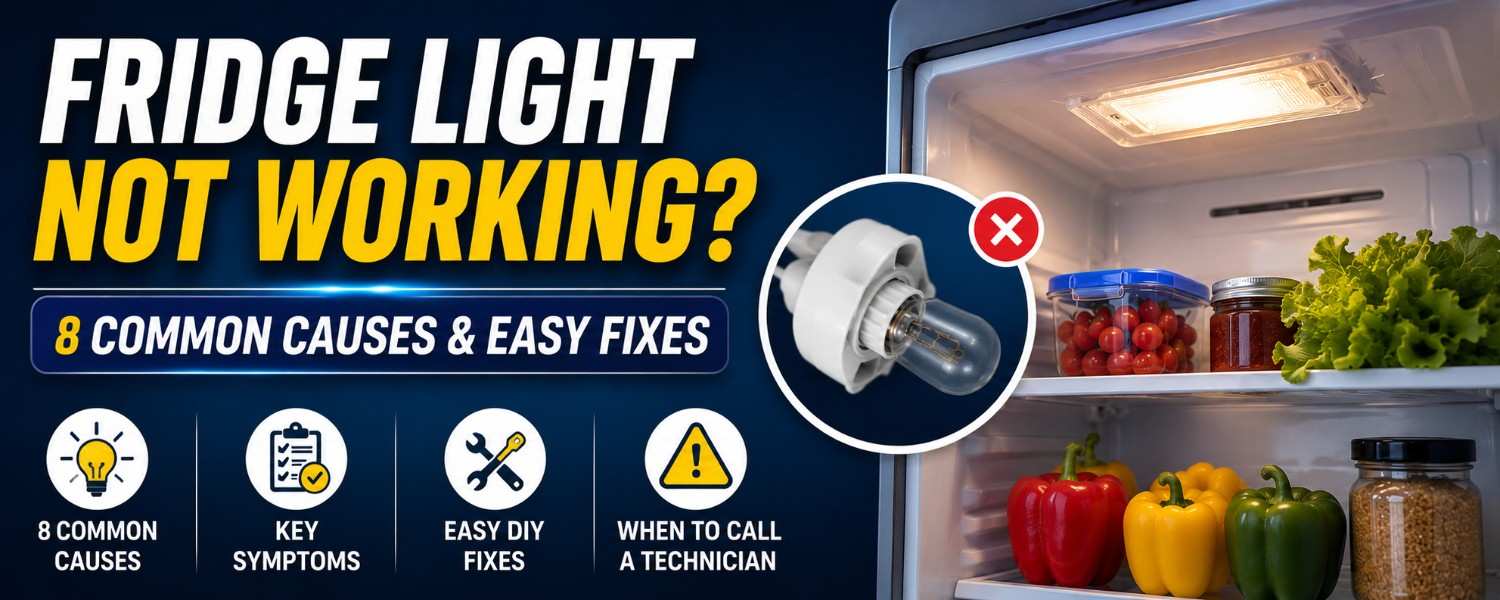
When you suddenly start having problems with your fridge light not working, it can be quite perplexing, particularly if you are experiencing no problem with the cooling function. This problem can come up when you have a fridge light not working, a freezer light not working, or even a newly installed fridge light not working. There is always an explanation behind why your fridge light will not turn on.
Common Reasons Why the Fridge Light Is Not Working
When it comes to refrigerator LED lights not functioning, or even an old light bulb not working, it is a consequence of simple problems. Problems such as light bulbs not working in the fridge are usually caused by wear and tear, electrical problems, or malfunctioning door switches. Knowing the actual problem leads to fast repair.
| Problem | Possible Cause | Quick Solution |
| Fridge light not turning on | Burnt bulb | Replace bulb |
| Fridge bulb not working | Loose fitting | Tighten bulb |
| Freezer light not working | Faulty door switch | Replace switch |
| New fridge light not working | Wiring issue | Check connections |
| Fridge light not working after changing the bulb | Socket fault | Inspect holder |
Fridge Light Not Working: Every Cause Explained With Symptoms & Step-by-Step Fixes
If it's the fridge light not working that you are worried about, knowledge about each cause will prevent any guessing games. Whether it is as easy as a problem with the bulb or something more complex like electrical problems, find out how.
1. Burnt-out Bulb
In time, the fridge bulb may wear out because of normal operation and heat accumulation. When the filament burns out, the bulb fails to produce any light, although the refrigerator keeps functioning normally.
Symptoms
- Sudden non-operation of the fridge light
- Dark appearance of the bulb
- No flickering prior to the problem
- Normal operation of the freezer light
How to Fix
- Power off the refrigerator
- Unscrew the old burnt-out bulb
- Screw in a new matching bulb
- Restore the power supply and check the bulb
2. Loose or Improperly Tightened Bulb
When the bulb is not tightened appropriately or gets loose through movement of the door and vibrations, it may fail to make adequate contact with the socket.
Symptoms
- Light flickers occasionally
- Light operates intermittently
- The bulb appears loose upon touching
- Light comes on when you adjust the bulb
How to Fix
- Switch off the power supply to your refrigerator
- Remove and fit the bulb appropriately
- Tighten the bulb firmly but not too hard
- Check if the light operates after plugging in
3. Faulty Door Switch
A door switch in your refrigerator controls when the light comes on by turning it on every time the door is opened. When the door switch malfunctions, the light may fail to come on.
Symptom
- The light fails to come on when you open the door
- Lack of clicking sound coming from the switch
- Light operates when you press the switch manually
- Loose feeling in the door area
How to Fix
- Find the location of the door switch
- Press it manually to see how it reacts
- Clean any dirt around the switch
- Replace the switch if it is faulty
4. Damaged or Worn-out Socket
The bulb socket could be broken by moisture, corrosion, or heat, making it impossible to establish electrical contact between the bulb and the source of electricity.
Symptoms
- The replacement bulb does not work
- Burnt areas around the socket
- The bulb feels unstable in the socket
- Flashing of the light bulb
How to Fix
- Turn off the power supply to the refrigerator
- Look out for any physical damage
- Carefully clean the corrosion
- Replace the socket if it is badly damaged
5. Internal Wiring Issue
Loose, damaged, or burnt wires can interfere with the supply of electricity to the light bulb of the fridge.
Symptoms
- Complete failure of the light bulb
- Flickering of the light bulb with problems with cooling
- A burning smell is coming from inside the fridge
- The light keeps failing even after being fixed
How to Fix
- Do not attempt to fix the wires yourself
- Look out for any loose wires
- Disconnect the fridge immediately in case of a burning smell
- Consult an electrician for help
6. Power Fluctuation Affecting LED Light
Voltage fluctuations can lead to damage in the LED lighting system in modern refrigerators, thereby causing the refrigerator's LED light not to function correctly.
Symptoms
- The LED light turns off abruptly
- Flickering light when power fluctuates
- Dim or inconsistent illumination
- Electrical problems affect other home appliances
How to Fix
- Install a voltage stabilizer for protection
- Restart the refrigerator once power is restored
- Replace the faulty LED lighting system component
- Seek professional help in checking electrical connections
7. Faulty Control Board (modern refrigerators)
Control boards in modern refrigerators regulate the functions in a refrigerator. The control board problem may cause the light not to receive electricity.
Symptoms
- Light and display panel malfunction simultaneously
- The fridge behaves erratically
- Buttons become non-responsive
- Light problems persist even after replacing the bulb
How to Fix
- Restart the refrigerator power supply
- Look out for error codes on the display
- Do not open the control board yourself
- Seek help from professionals to check the PCB
8. Loose Internal Connections (More Common in New Fridges)
Internal connections within a newly bought fridge could loosen during transit or installation, thus causing lighting issues shortly after installation.
Symptoms
- The new fridge’s light does not work right away
- The light works, but in an intermittent manner
- The bulb shows no signs of damage
- The cooling system operates normally
How to Fix
- Ensure proper installation of the fridge
- Inspect fittings of visible connections
- Do not force open any panel
- Seek technical support
Does a Fridge Work If the Light Is Not Working?
Indeed, in most cases, the refrigerator will function perfectly well despite the non-functionality of the light bulb. This is because the cooling process is entirely separate from the lighting process, meaning that the preservation of food inside the unit will not be affected. Nevertheless, if the problem is associated with electricity, the appliance must be checked to prevent future complications.
- Cooling works fine– The compressor and cooling process function normally.
- It only affects visibility– Finding things inside the fridge can be challenging.
- Not a big problem– In most cases, the problem is easily fixed.
- Watch out for electric signs– A burning smell or continuous failure could mean more.
When a Fridge Light Not Working Indicates a Serious Problem
In some cases, the failure of the fridge light could mean that there is a deeper problem. Failure of the fridge light, together with unusual smells, frequent damage to the bulb, or cooling troubles, call for urgent inspection. Neglecting such symptoms could cause further harm to the appliance and even costly repairs later on.
- Cooling trouble and light failure– If cooling problems occur together with light failure, then there could be electrical problems.
- Burning smell around bulb location– A burning smell could mean that there is an electrical fault.
- Frequent bulb replacement– This could happen due to faulty voltage or the light socket itself.
- Wiring damage– Damaged or exposed wires require immediate attention.
When to Call a Technician for a Fridge Light Not Working
In case simple troubleshooting fails to fix the problem, professional inspection might be needed. Electrical problems that involve wires, sockets, or even control boards need to be taken seriously in order to avoid electrical damage or even additional malfunction of the appliance.
- Replacement of the bulb didn't work– There might be something more serious behind the problem.
- The door switch doesn't work– The broken switch needs to be replaced properly.
- There were sparks or a burning smell– It's time for a professional inspection.
- Wires are supposed to be faulty– Wire replacement should be done by professionals.
- Need fast doorstep repair– The NoBroker service will help you get an appliance technician within 15 minutes of booking.
Expert Tips to Prevent Fridge Light Problems
Proper maintenance and responsible use can be used to avoid the most common problems with refrigerator lights. Proper practices, such as installation of the right bulb, avoidance of abuse, and protection from voltage fluctuation, can extend the life of your refrigerator bulb and make it less likely to fail.
- Do not slam the door– The repeated slamming will eventually lead to the bulb loosening or damage the door switch.
- Install the right type and power of bulb– Incorrect bulbs can cause overheating and damage the socket or wiring.
- Maintain cleanliness in the socket area– Dust and moisture accumulation can interfere with electrical contacts.
- Protect the refrigerator from voltage fluctuation– This is important for preventing LED damage.
Conclusion
Problems with the fridge light not working are quite minor, but one should never ignore them totally. From basic solutions such as screwing the bulb firmly to recognizing faulty switches, all kinds of problems can be easily solved on your own. But when it comes to problems related to the fridge light not working after changing the bulb or anything else that may involve wiring, it's best to seek professional assistance. Your fridge will then continue to function efficiently and safely.
Cities We Serve for Refrigerator Repair Services
Looking for refrigerator repair services in your city? NoBroker serves major locations including Bangalore, Chennai, Hyderabad, Delhi, Mumbai, Pune, Gurgaon, Noida, Ghaziabad, Greater Noida, and Faridabad with professional technicians and transparent pricing.
Brands We Serve for Refrigerator Repair Services
NoBroker covers a broad range of refrigerator brands, from Samsung and LG to Whirlpool, Godrej, Bosch, and more. Get fast 15-minute technician assistance and reliable repair solutions tailored to your appliance.
Frequently Asked Questions
1. Why is the light in my fridge not working, while cooling is still okay?
2. How can I fix a sudden malfunction in my fridge bulb?
3. Why does my freezer light not work?
4. Is it okay to use my fridge if its light stops working?
5. Why is my fridge light not working even after replacing the bulb?
6. How can I tell that the door switch is malfunctioning?
7. Are fridge LED lights costly to repair if they are broken?
8. Can voltage changes affect fridge bulbs?
9. How frequently should I change my fridge lights?
10. When do I need to call a technician about fridge light problems?

Login / Sign up
Zero Brokerage.
Thousands of new listings daily.
100 Cr+ Brokerage saved monthly.
About the Author

Siri Hegde K
Senior Editor


Recent Blogs

Subscribe to our Newsletter
Get latest news delivered straight to your inbox