Freezer Working, but Fridge Not Working: Causes, Fixes, and When to Call a Technician


Appliance Tips & Guides

54 Views
Table of Contents
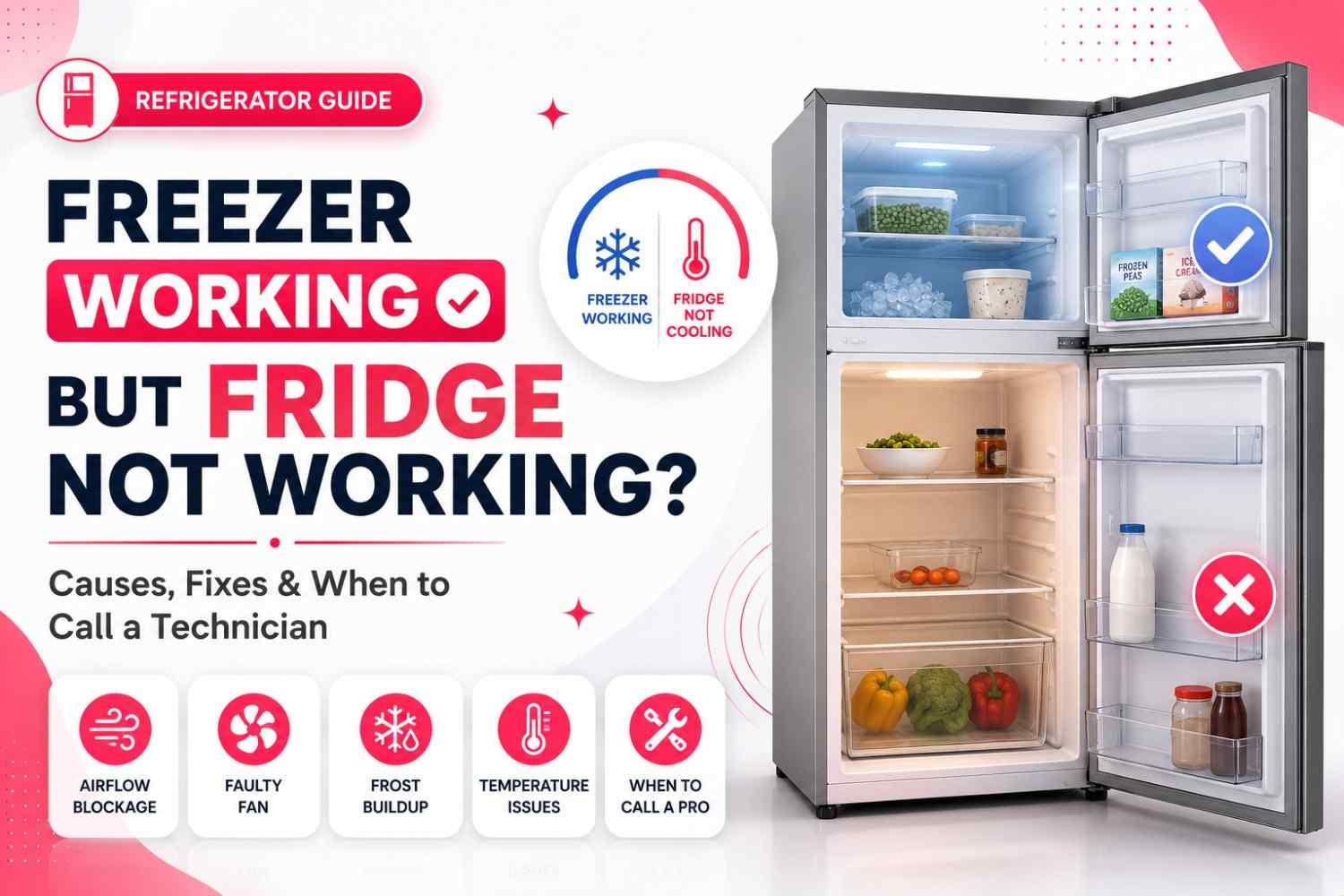
The refrigerator is one of the most essential household appliances, and hence it is very disappointing to realise that while the freezer is working perfectly, the fridge is not working. Although this may appear puzzling, considering the fact that the two parts share the same cooling mechanism, there are some refrigerators where the freezer makes the cold air, and this air is then distributed to the fridge compartment. Therefore, any problem with the circulation process will make the freezer freeze while the fridge part remains warm.
If your fridge is not working but the freezer works fine, do not get alarmed. There are times when the problem is easily detected and fixed without having to buy a new appliance. This blog explains the reasons for the non-working fridge while the freezer works.
How Does a Refrigerator Cool Both Compartments?
It will be easier to diagnose the problem if we first understand how the typical fridge operates.
The cold air is created by the evaporator coils inside the freezer. The evaporator fan blows the cold air into the refrigerator via the vents. In case everything works as intended, then both parts are maintained at their respective temperatures.
But when there is a blockage of the airflow or a certain part is broken, then the fridge will not cool, but the freezer will still operate normally.
Signs That the Freezer Is Working but the Fridge Is Not Cooling
If you're unsure whether you're facing this specific issue, look for the following symptoms:
- Ice cream and frozen foods remain solid in the freezer.
- Milk, vegetables, and beverages in the fridge feel warm.
- The refrigerator compartment temperature rises above safe levels.
- Excess frost builds up in the freezer.
- The refrigerator runs continuously.
- Airflow from fridge vents feels weak or nonexistent.
These signs often indicate that the freezer is working, but the fridge is not cooling properly.
Common Reasons Why the Freezer Works but the Fridge Is Not Cooling
Several issues can cause a fridge not to cool, including freezer working situations. Understanding these causes can help narrow down the problem quickly.
Blocked Air Vents
Cold air travels from the freezer to the refrigerator through dedicated vents. If food containers, ice buildup, or debris block these vents, cold air cannot reach the fridge compartment effectively.
As a result, the freezer works, but the fridge is not cooling even though the cooling system itself remains operational.
Faulty Evaporator Fan Motor
The evaporator fan distributes cold air throughout the appliance. If the fan motor stops working, the freezer may stay cold while the refrigerator receives little to no cooled air.
This is one of the most common reasons the fridge is not cold, but the freezer is working.
Frost-Clogged Evaporator Coils
When the automatic defrost system fails, frost accumulates around the evaporator coils. Eventually, the frost blocks airflow.
In such cases, the refrigerator freezer is working, but not the fridge, because cold air becomes trapped within the freezer compartment.
Damaged Damper Control Assembly
Many modern refrigerators use a damper to regulate airflow between the freezer and refrigerator sections.
If the damper becomes stuck closed, the freezer is working, but the fridge is not cooling, regardless of how cold the freezer gets.
Dirty Condenser Coils
Dust and debris can accumulate on condenser coils over time, reducing cooling efficiency.
While the freezer may continue operating adequately, the refrigerator does not cool, but the freezer works because the system struggles to maintain proper temperatures throughout the appliance.
Defective Temperature Control Thermostat
The thermostat controls cooling cycles and airflow distribution.
If it malfunctions, the refrigerator may not cool, freezer may work in a situation where the fridge compartment does not receive adequate cooling.
Failed Defrost System Components
A refrigerator's defrost system typically includes:
- Defrost heater
- Defrost thermostat
- Defrost control board
If any of these components fail, frost buildup can eventually prevent airflow, causing the fridge freezer to work, but not the fridge.
Quick Troubleshooting Steps Before Calling a Technician
Before scheduling a repair service, try these simple checks.
Step 1: Check Refrigerator Temperature Settings
Sometimes temperature controls are accidentally adjusted.
Recommended settings:
| Compartment | Ideal Temperature |
| Refrigerator | 3°C to 5°C |
| Freezer | -18°C |
Incorrect settings can sometimes make it seem like the fridge is not cooling properly when the solution is simply adjusting controls.
Step 2: Inspect Air Vents
Ensure no food containers, bottles, or packaging materials block air circulation.
Blocked vents frequently cause the freezer to work, but the refrigerator is not cooling.
Step 3: Clean Condenser Coils
Dirty condenser coils reduce cooling efficiency and increase energy consumption.
Use a vacuum or coil brush to clean the coils every six months.
Step 4: Listen for the Evaporator Fan
Open the freezer and listen carefully for the fan.
If the fan is silent or making unusual noises, it may need replacement.
Step 5: Defrost the Refrigerator
If excessive frost is visible, unplug the refrigerator for 24 hours and allow all ice to melt completely.
This temporary fix often confirms a defrost system problem when the refrigerator is not cooling, but the freezer works.
Components That Commonly Cause This Problem
The following table highlights the major components responsible when the freezer is working, but the fridge is not working.
| Component | Function | Symptoms of Failure |
| Evaporator Fan | Circulates cold air | Warm fridge, cold freezer |
| Air Damper | Controls airflow | The refrigerator section stays warm |
| Defrost Heater | Prevents frost buildup | Heavy frost accumulation |
| Defrost Thermostat | Controls defrost cycle | Cooling imbalance |
| Condenser Coils | Releases heat | Reduced cooling efficiency |
| Temperature Thermostat | Regulates cooling | Inconsistent temperatures |
Top Freezer vs Bottom Freezer vs Side-by-Side Refrigerators: Which Is More Likely to Face Airflow Issues?
Different refrigerator designs distribute cold air differently, which can affect how often cooling imbalances occur.
| Refrigerator Type | Cooling Method | Common Airflow Issues |
| Top Freezer | Cold air moves downward naturally | Least prone to airflow issues |
| Bottom Freezer | Air must travel upward | Moderate airflow problems |
| Side-by-Side | Multiple vents and channels | Higher risk of airflow blockages |
Like front-load and top-load washing machine comparisons, understanding refrigerator design can help homeowners identify recurring cooling problems more effectively.
Single Door vs Double Door vs Side-by-Side Refrigerators
The cooling layout differs significantly between refrigerator types, which influences troubleshooting when the freezer works, but the fridge is not cooling.
| Refrigerator Type | Cooling System | Ease of Maintenance | Risk of Cooling Imbalance |
| Single Door | Shared cooling chamber | Easy | Low |
| Double Door | Separate freezer and fridge sections | Moderate | Medium |
| Side-by-Side | Complex airflow channels | Moderate to High | Higher |
This comparison helps readers understand why some refrigerator types experience cooling distribution issues more frequently than others.
When Should You Call a Refrigerator Repair Technician?
Some refrigerator problems require professional diagnosis and repair.
Contact a technician if:
- The evaporator fan has stopped working.
- Frost returns shortly after defrosting.
- The compressor runs continuously.
- Electronic control boards fail.
- The refrigerator remains warm after basic troubleshooting.
- Water leakage accompanies cooling issues.
Professional inspection can prevent further damage when the refrigerator is not cooling, but the freezer works despite repeated troubleshooting attempts.
How to Prevent Future Cooling Problems
Preventive maintenance can significantly reduce refrigerator breakdowns.
- Keep Air Vents Clear: Avoid overloading shelves and blocking airflow channels.
- Clean Condenser Coils Regularly: Cleaning every six months improves cooling efficiency and extends appliance lifespan.
- Check Door Seals: Damaged gaskets allow warm air inside, increasing strain on cooling components.
- Avoid Frequent Door Openings: Repeated door openings force the refrigerator to work harder to maintain temperatures.
- Schedule Periodic Maintenance: Routine servicing can identify worn parts before major failures occur.
How Can NoBroker Help with Home Services?
A refrigerator that is warm while the freezer remains cold often requires expert diagnosis. NoBroker offers professional refrigerator repair services with experienced technicians, genuine spare parts, transparent pricing, and convenient online booking. Whether the issue involves an evaporator fan, defrost system, thermostat, or airflow blockage, trained professionals can quickly identify the root cause and restore proper cooling. With timely repairs and reliable service support, homeowners can avoid food spoilage and extend the lifespan of their refrigerator.
Final Verdict
When you notice a freezer working, but the fridge is not working, the issue is usually related to airflow restrictions, frost buildup, faulty fans, or malfunctioning control components. While simple fixes such as cleaning vents or defrosting may solve minor problems, persistent cooling issues often require professional attention. Identifying the cause early can prevent food spoilage, reduce energy waste, and extend your refrigerator's lifespan. Regular maintenance remains the best way to avoid situations where the refrigerator is not cooling, but the freezer works.
Frequently Asked Questions
Frequently Asked Questions
Why is my freezer cold but my fridge warm?
Can a refrigerator compressor work if only the freezer is cooling?
How do I fix a fridge not cooling while the freezer works?
Why is my fridge not cooling properly after a power outage?
Is it safe to keep using a refrigerator if only the freezer works?
How long should I unplug my refrigerator to remove frost buildup?
Can dirty condenser coils cause the fridge section to stop cooling?
Why do I hear the refrigerator running constantly, but the fridge stays warm?
How much does it cost to repair a refrigerator that is not cooling?
When should I replace my refrigerator instead of repairing it?

Login / Sign up
Zero Brokerage.
Thousands of new listings daily.
100 Cr+ Brokerage saved monthly.
About the Author

avneen kaur
Senior Editor


Recent Blogs
Subscribe to our Newsletter
Get latest news delivered straight to your inbox