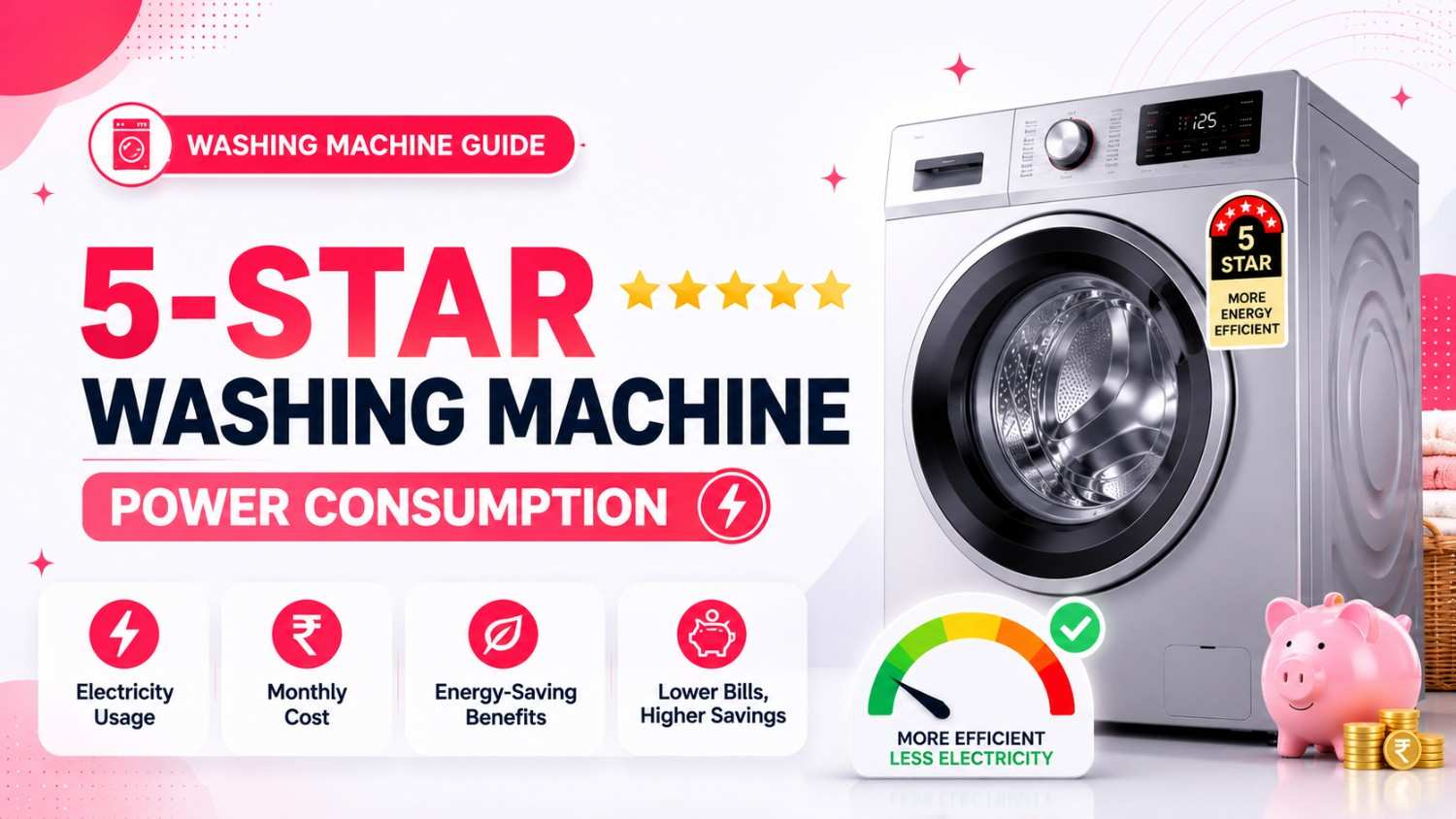
5 Star Washing Machine Power Consumption: Electricity Usage, Monthly Cost and Energy-Saving Benefits


Appliance Tips & Guides

105 Views
Table of Contents
The primary aim behind designing a 5-star washing machine is to provide efficient cleaning with reduced consumption of both energy and water compared to other lower-ranked models. Considering the growing cost of energy and awareness among people regarding energy saving, many households have started using 5-star rated washing machines to minimise their operating costs.
Nevertheless, most buyers remain uncertain about the actual electricity consumption of the 5-star rated washing machine, the extent of savings, and whether it justifies its relatively higher price. Knowing the energy consumption and its operating costs will assist you in selecting an energy-saving washing machine.
What Is the Power Consumption of a 5 Star Washing Machine?
The 5-star washing machine's electricity consumption varies depending on its capacity, technology, wash cycle, and machine type. However, compared to lower-rated models, a 5-star machine is specifically designed to consume less electricity while delivering the same or better washing performance.
On average, a 5-star washing machine consumes:
- 0.2 to 1.2 kWh per wash cycle
- 300W to 2,000W power rating, depending on model
- 20%–40% lower electricity consumption compared to 2-star or 3-star models
Machines equipped with inverter technology and intelligent load sensing generally offer the best energy efficiency.
What Does a 5 Star Rating Mean in a Washing Machine?
A 5-star rating indicates that the appliance meets high energy-efficiency standards and consumes less electricity than lower-rated alternatives.
The star rating is assigned based on annual energy consumption tests conducted under standard operating conditions.
Generally:
| Star Rating | Energy Efficiency |
| 1 Star | Lowest Efficiency |
| 2 Star | Below Average |
| 3 Star | Average Efficiency |
| 4 Star | Good Efficiency |
| 5 Star | Highest Efficiency |
A higher star rating means lower electricity bills over the appliance's lifespan.
How to Check the Energy Label on a Washing Machine
Before purchasing a washing machine, it is important to understand the information displayed on the energy label. The label helps consumers compare models based on electricity consumption and overall efficiency.
The following details are typically mentioned on the label:
| Label Information | What It Means |
| Star Rating | Indicates the machine's energy efficiency level |
| Annual Energy Consumption | Estimated electricity usage over a year under standard conditions |
| Brand Name | Manufacturer details |
| Model Number | Specific washing machine model |
| BEE Certification | Confirms compliance with energy-efficiency standards |
A higher star rating and lower annual energy consumption generally indicate a more economical appliance. Checking the energy label before purchase can help you estimate long-term operating costs and select the most suitable model for your household.
What Determines the Power Consumption of a 5 Star Washing Machine?
The electricity used by a washing machine depends on much more than its star rating. While a 5-star machine is designed to be energy efficient, actual consumption varies based on usage patterns.
- Motor Type: Machines equipped with inverter motors generally consume less electricity than conventional motors because they adjust speed according to load requirements.
- Wash Programme: Quick wash cycles consume less energy than intensive or heavy-duty wash programmes.
- Water Heating: Machines with built-in heaters use significantly more electricity because heating water requires additional power.
- Machine Type: Front-load, top-load, semi-automatic, and fully automatic machines all have different energy requirements.
- Frequency of Use: Running multiple loads every day naturally increases monthly electricity consumption.
- Load Size: Washing full loads is generally more efficient than repeatedly washing small loads.
Average Power Consumption of a 5 Star Washing Machine
The power rating of a washing machine is usually measured in watts (W). The actual energy consumed is measured in kilowatt-hours (kWh), which directly impacts your electricity bill.
| Washing Machine Type | Typical Power Rating | Average Power Consumption Per Cycle | Estimated Monthly Consumption* |
| Top Load 5 Star | 350–500 W | 0.2–0.6 kWh | 6–18 kWh |
| Front Load 5 Star | 500–2000 W | 0.3–1.2 kWh | 9–36 kWh |
| Semi Automatic 5 Star | 300–450 W | 0.2–0.4 kWh | 6–12 kWh |
| Fully Automatic 5 Star | 350–2000 W | 0.3–1.2 kWh | 9–36 kWh |
*Estimated for one wash cycle per day.
The actual washing machine units consumed per wash depend on factors such as load size, selected wash programme, water temperature, and motor technology. Inverter-equipped models generally offer the lowest electricity consumption.
Front-Load Washing Machine Power Consumption
Front-load washing machines are generally among the most energy-efficient models available. They use less water and detergent while providing superior cleaning performance.
Advantages
- Lower electricity consumption
- Better wash quality
- Lower water usage
- Gentle on fabrics
Limitations
- Higher purchase price
- Longer wash cycles
- Heater-based programmes consume more electricity
Top Load Washing Machine Power Consumption
Top-load washing machines offer convenience and shorter wash cycles while maintaining good energy efficiency.
Advantages
- Easy loading and unloading
- Faster wash cycles
- Lower upfront cost
- Good energy savings
Limitations
- Higher water consumption than front-load models
- Slightly lower efficiency
Semi-Automatic Washing Machine Power Consumption
Semi-automatic washing machines remain among the most economical options in terms of electricity consumption.
Advantages
- Lowest power consumption
- Affordable pricing
- Lower maintenance costs
- Suitable for areas with water supply issues
Limitations
- Requires manual intervention
- Less convenient than automatic machines
Fully Automatic Washing Machine Power Consumption
Fully automatic 5-star washing machines combine convenience with energy efficiency.
Advantages
- One-touch operation
- Smart sensors
- Multiple wash programmes
- Reduced electricity consumption
Limitations
- Higher purchase cost
- Premium models may consume more power during advanced cycles
Brand-Wise 5 Star Washing Machine Power Consumption
Different brands use different motor technologies, wash programmes, and energy-saving features. While actual consumption varies by model, the table below provides a general comparison.
| Brand | Common Models Available As | Approximate Power Rating | Typical Power Consumption Per Cycle | Energy Efficiency |
| LG | Front Load & Top Load | 350–2000 W | 0.2–1.2 kWh | Very High |
| Samsung | Front Load & Top Load | 350–2000 W | 0.2–1.2 kWh | Very High |
| Whirlpool | Top Load & Semi Automatic | 350–500 W | 0.2–0.7 kWh | High |
| IFB | Front Load & Top Load | 500–2000 W | 0.3–1.2 kWh | Very High |
| Bosch | Front Load | 500–2200 W | 0.3–1.3 kWh | Very High |
| Siemens | Front Load | 500–2200 W | 0.3–1.3 kWh | Very High |
| Haier | Front Load & Top Load | 350–2000 W | 0.2–1.2 kWh | High |
| Godrej | Top Load & Semi Automatic | 350–500 W | 0.2–0.6 kWh | High |
| Panasonic | Top Load & Front Load | 350–2000 W | 0.2–1.2 kWh | High |
| Electrolux | Front Load | 500–2000 W | 0.3–1.2 kWh | Very High |
| Lloyd | Top Load & Semi Automatic | 350–500 W | 0.2–0.6 kWh | High |
| Onida | Top Load & Semi Automatic | 350–500 W | 0.2–0.6 kWh | High |
| Voltas | Front Load & Top Load | 350–2000 W | 0.2–1.2 kWh | High |
| Toshiba | Front Load & Top Load | 350–2000 W | 0.2–1.2 kWh | Very High |
| Hitachi | Top Load | 350–600 W | 0.2–0.8 kWh | High |
How Much Does a 5 Star Washing Machine Add to Your Electricity Bill?
The exact cost depends on your local electricity tariff and washing frequency.
For example:
- Power consumption per wash: 0.5 kWh
- Washes per week: 5
- Monthly consumption: 10 kWh
- Electricity rate: ₹8 per unit
Monthly Cost = 10 × ₹8 = ₹80
For comparison:
- 3-star machine monthly cost: ₹120–₹180
- 5-star machine monthly cost: ₹80–₹140
Over several years, these savings can become substantial.
Signs Your Washing Machine May Be Consuming Excess Power
A sudden increase in electricity consumption could indicate a maintenance issue.
Common Warning Signs
- Unusually long wash cycles: If your machine takes much longer than usual to complete a cycle, it may be struggling with a faulty sensor, clogged filter, or motor issue.
- Excessive vibration during operation: Strong shaking or movement can indicate an unbalanced load, worn-out parts, or internal mechanical problems.
- Motor overheating: If the motor becomes too hot, it may be working harder than normal due to overloading, poor ventilation, or wear and tear.
- Frequent stopping during operation: A machine that pauses or stops repeatedly may have electrical faults, sensor errors, or drainage problems.
- Increased electricity bills without increased usage: A sudden rise in power bills can mean the washing machine is consuming more energy because of inefficiency or a developing fault.
- Water heating taking longer than normal: If hot water cycles take too long, the heating element may be weak, scaled, or consuming extra power to reach the required temperature.
Professional inspection can help identify and resolve these issues before they worsen.
How to Reduce a 5 Star Washing Machine's Power Consumption
Reducing electricity usage does not always require purchasing a new machine. Small changes in washing habits can make a noticeable difference.
- Use Full Loads Whenever Possible: Running a full load maximises energy efficiency because the same amount of electricity is used for more clothes.
- Choose Eco Wash Programmes: Eco modes are designed to reduce electricity and water consumption while maintaining effective cleaning performance.
- Avoid Hot Water Cycles Frequently: Water heating is one of the biggest contributors to power consumption. Use cold water whenever suitable for the fabric type.
- Maintain the Washing Machine Regularly: Clean filters, drums, and water inlets periodically to ensure efficient operation and prevent unnecessary energy usage.
- Invest in an Inverter Washing Machine: Inverter technology optimises motor performance according to load size, helping reduce electricity consumption over time.
- Schedule Laundry Efficiently : Combining loads rather than running multiple small cycles can significantly reduce electricity usage and improve efficiency.
Is a 5 Star Washing Machine Energy Efficient?
Yes, a 5-star washing machine is generally considered highly energy efficient. It offers lower electricity consumption, reduced operating costs, and better long-term savings compared to lower-rated models.
Choosing a machine with inverter technology and advanced load-sensing features can further improve energy efficiency.
Things to Consider Before Buying a 5 Star Washing Machine
- Capacity Requirements: Choose a capacity that matches your household size and laundry needs.
- Inverter Technology: Inverter motors improve efficiency, reduce noise levels, and increase machine longevity.
- Water Consumption: A machine that saves water often contributes to lower overall utility expenses.
- Wash Programmes: Multiple wash modes allow better optimisation for different fabric types and load sizes.
- Maintenance Requirements: Choosing a model with easy maintenance can reduce long-term ownership costs.
- Warranty and After-Sales Service : Reliable service support and longer warranties can provide peace of mind and reduce future repair expenses.
Final Verdict
A 5-star washing machine is one of the most energy-efficient choices available for modern households. The lower 5-star washing machine electricity consumption, combined with advanced technologies such as inverter motors and eco wash programmes, helps reduce monthly utility expenses without compromising cleaning performance.
Whether you choose a front-load, top-load, semi-automatic, or fully automatic model, understanding power consumption and adopting energy-saving habits can help maximise long-term savings while ensuring excellent washing results.
Frequently Asked Questions
Frequently Asked Questions
How much electricity does a 5-star washing machine consume?
Does a 5-star washing machine reduce electricity bills?
Is a 5-star washing machine better than a 3-star washing machine?
Which type of 5-star washing machine consumes the least electricity?
Do inverter washing machines save more electricity?
Does using hot water increase power consumption?
How much can I save annually with a 5-star washing machine?
Is a 5-star washing machine suitable for large families?
Does washing machine capacity affect electricity consumption?
What should I prioritise when buying a washing machine: wattage or star rating?

Login / Sign up
Zero Brokerage.
Thousands of new listings daily.
100 Cr+ Brokerage saved monthly.
About the Author

avneen kaur
Senior Editor


Recent Blogs
Subscribe to our Newsletter
Get latest news delivered straight to your inbox