What Is a Notary Acknowledgement: Purpose, Documents, Validity and Legal Acceptance


Notary Guides

203 Views
Table of Contents
Summary
Property deals, affidavits, rental agreements, and legal declarations often get delayed because one important verification step is missing or done incorrectly. Many people only realise the importance of notarisation when a document is rejected during registration, banking, or legal procedures. Understanding what is a notary acknowledgement can help you avoid such last-minute complications and ensure your documents are legally recognised. Whether you are signing a property agreement, authorising a legal document, or completing official paperwork, knowing its purpose, validity, accepted documents, and legal value can save time, reduce confusion, and make the entire process smoother and more reliable.
Notary Acknowledgement Meaning
The notary acknowledgement meaning is a certification that the individual signing the document appeared before the notary, was identified by the notary, and confirmed they signed the document of their own free will. It is a specific type of notarial act, distinct from other acts like a Jurat (where the signer swears to the truthfulness of the contents). In simple terms, an acknowledgement verifies the signer's identity and their volition (free will) at the time of signing.
Purpose and Importance of Notary Acknowledgement
The primary purpose of securing a notary certificate of acknowledgement is to ensure the legal validity of a transaction that involves the transfer of rights or obligations. Here are the key purposes and legal benefits of obtaining a notary certificate of acknowledgement:
Recommended Reading

Different Types of Notary Stamps in Indi...
5.1K Views

Passport Annexure Formats: Notary Attest...
3.6K Views

Who Can be a Notary: Types, Eligibility,...
2.5K Views

Duties of a Notary Public in India: Role...
1.8K Views

Notary vs Lawyer: Differences, Duties, L...
1.7K Views
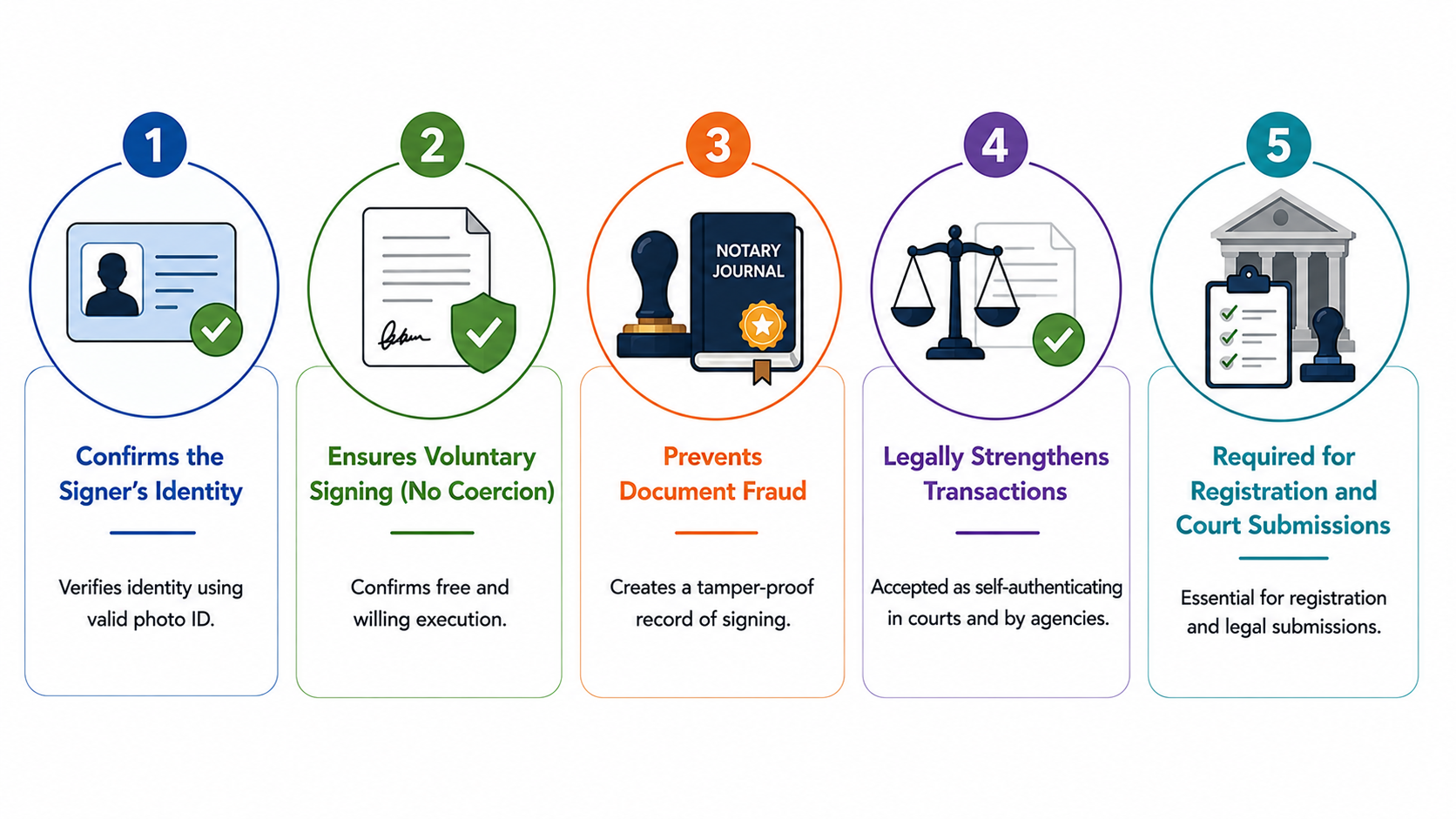
- Confirms the Signer’s Identity: The notary verifies the signer's identity using valid government-issued photo identification, ensuring the individual executing the document is who they claim to be.
- Ensures Voluntary Signing (No Coercion): The act of appearing and acknowledging before the notary constitutes a solemn declaration that the signer is executing the document freely, preventing claims of duress or coercion in the future.
- Prevents Document Fraud: By attaching the notary's signature, seal, and official journal entry, the process creates an indisputable record of the signing event, significantly deterring the possibility of forgery or back-dating the document.
- Legally Strengthens Transactions: Documents with a proper notary acknowledgement are accepted as self-authenticating in court and by government agencies. This legally strengthens all property and financial transactions.
- Required for Registration and Court Submissions: Many high-value documents, particularly those dealing with the transfer of immovable assets, require a notarised acknowledgement before they can be registered with the Sub-Registrar's Office or submitted as evidence in a legal proceeding.
Documents That Require Notary Acknowledgement
A notary acknowledgement is required for any legal document where the verification of the signer's voluntary consent and identity is essential. Here are the required documents for a successful notary acknowledgement:
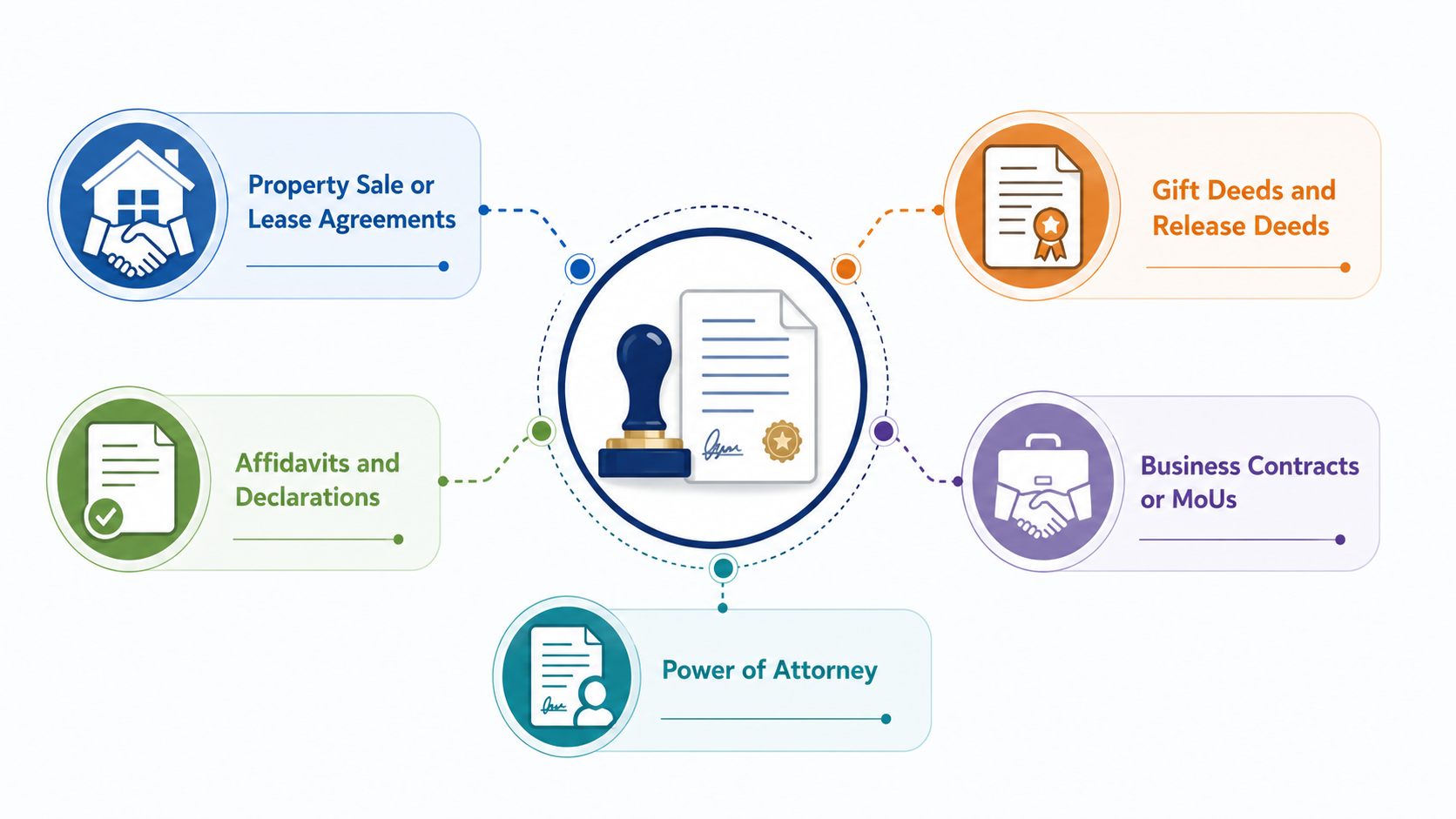
- Property Sale or Lease Agreements: Deeds and agreements involving the transfer of real estate rights often require acknowledgement to certify the consent of both the transferor and the transferee.
- Affidavits and Declarations: While affidavits primarily require a Jurat, an acknowledgement is sometimes used for declarations of fact when an oath is not strictly required.
- Power of Attorney: The execution of a Power of Attorney (POA), which grants a third party legal authority, must be acknowledged by the principal (the person granting power) to prove their intent.
- Gift Deeds and Release Deeds: These documents, which involve the voluntary transfer or relinquishment of rights, require acknowledgement to ensure the donor/releasor acted without compulsion.
- Business Contracts or MoUs: Certain high-stakes contracts or Memorandums of Understanding (MoUs) may require an acknowledgement confirming that the business signatory is authorised and has willingly entered into the agreement.
How to Get a Notary Acknowledgement?
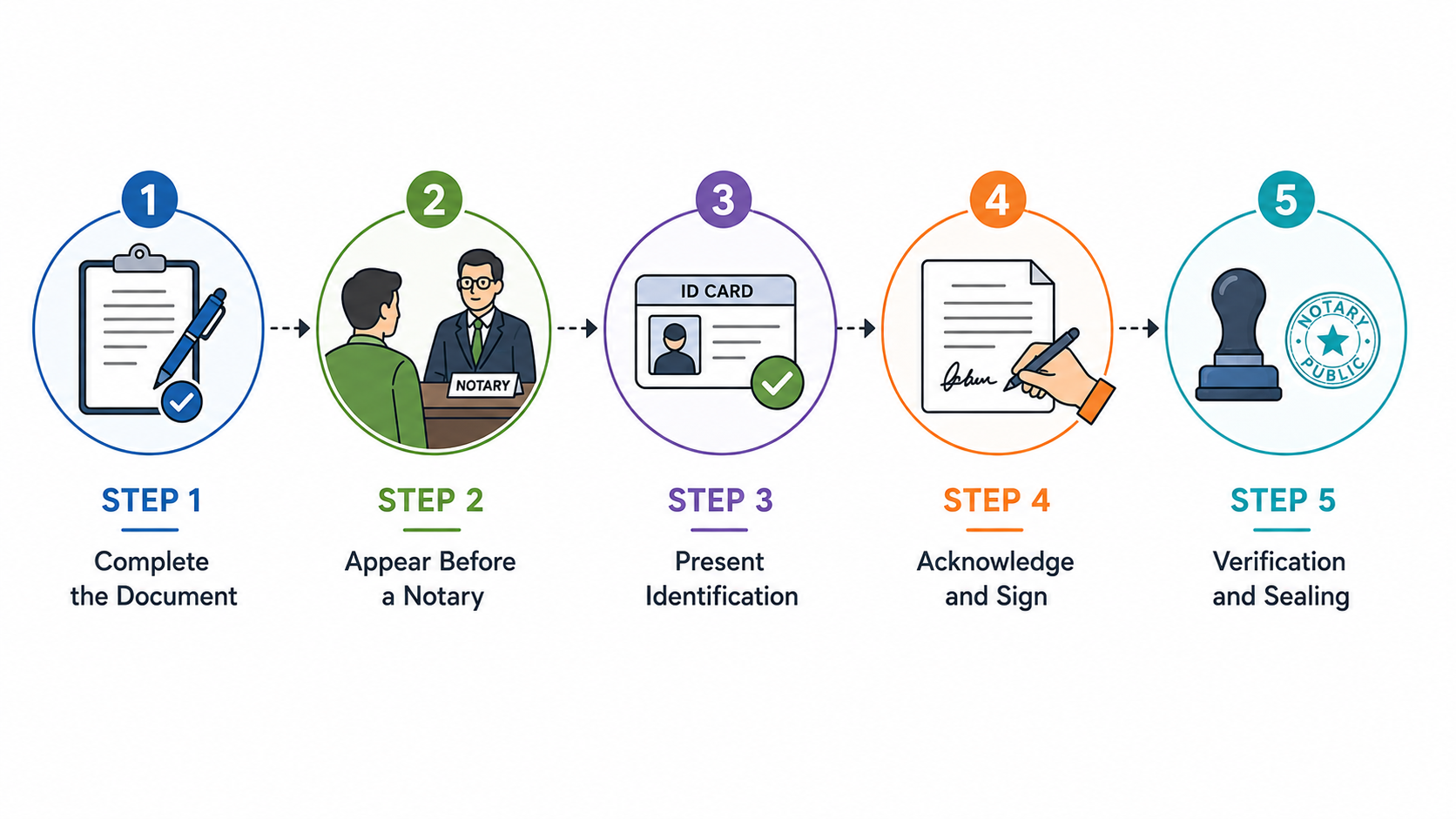
Securing a notary acknowledgement form is a procedural step involving direct interaction between the signer and the authorised official.
- Step 1: Complete the Document: The document requiring acknowledgement (e.g., a deed or contract) must be fully completed but not yet signed.
- Step 2: Appear Before a Notary: The signer must personally appear before a licensed Notary Public. The duties of a notary public mandate this physical presence for verification.
- Step 3: Present Identification: The signer must present a valid government-issued photo ID (like a Passport or Aadhaar) to the notary for identity verification.
- Step 4: Acknowledge and Sign: The notary will ask the signer to formally acknowledge that they understand the document's content and are signing it willingly. The signer then executes the document.
- Step 5: Verification and Sealing: The notary completes the acknowledgement certificate, signs and dates it, and affixes their official seal and stamp, recording the act in their journal.
What Is a Notary Acknowledgement Certificate?
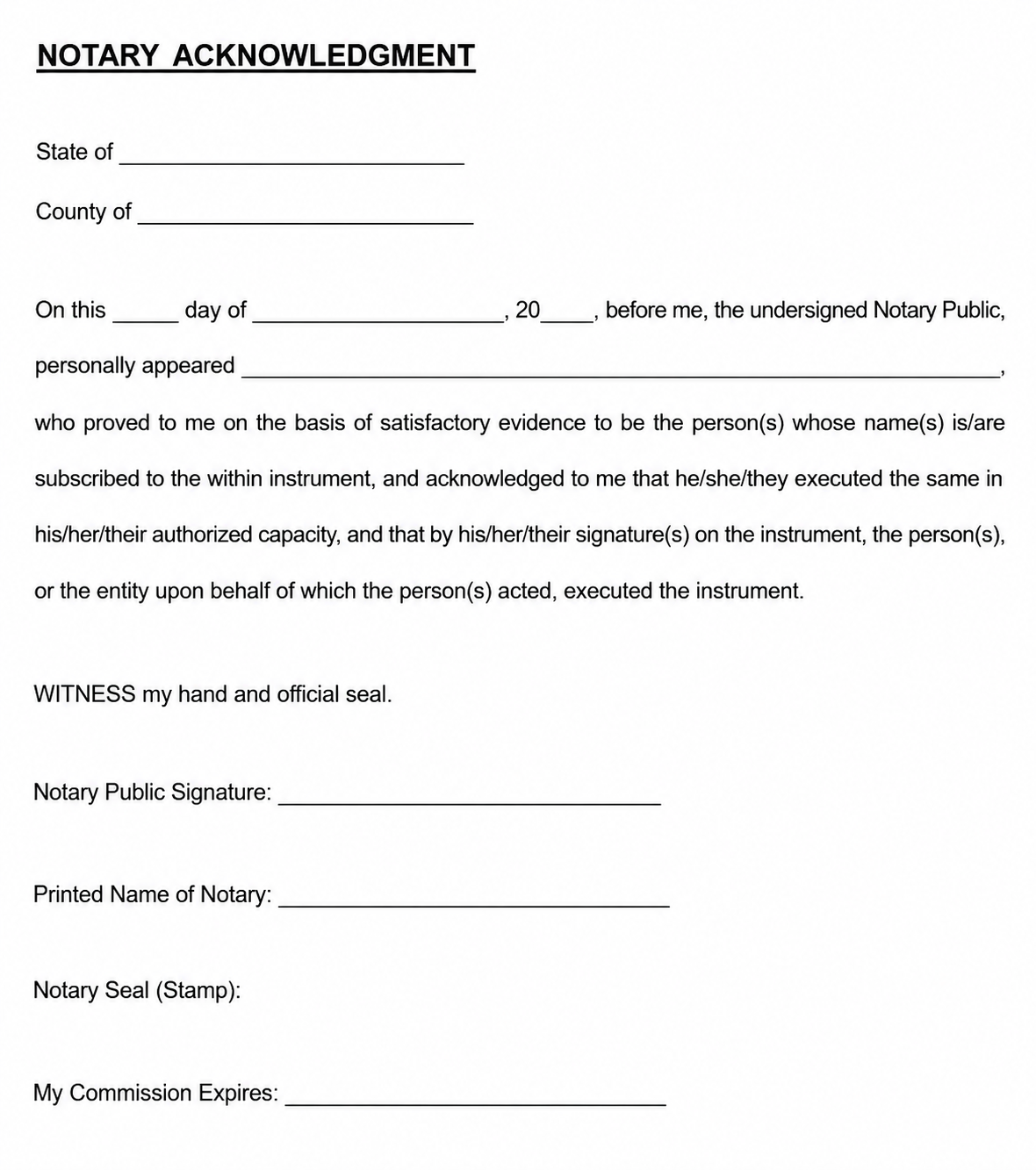
Sample Notary Acknowledgement Certificate
A notary acknowledgement certificate, also known as a notary public certificate of acknowledgement, is a notarial formal declaration issued by a notary public confirming that the signer personally appeared, verified their identity, and signed the document willingly. It contains details such as the date, place, signer’s name, notary signature, official seal, and registration number. Without this certificate, the acknowledgement is generally not considered legally valid. The format and wording may differ slightly between Indian states.
What Does a Complete Notarial Acknowledgement Include?
A notary acknowledgement certificate contains important details that verify the authenticity of a signed document and the identity of the signer. It typically includes:
- A notary acknowledgement certificate includes the date and location where the notarization process was completed.
- It contains the signer's full name along with the identity proof used for verification.
- The certificate includes a statement confirming that the signer personally appeared before the notary public.
- It also confirms that the document was signed willingly and without any pressure or coercion.
- The notary’s signature, official seal, and stamp are added to authenticate the acknowledgement.
- In many cases, the certificate also mentions the notary registration number and commission expiry date.
Difference Between Notary Acknowledgement and Jurat
The distinction between Acknowledgement and Jurat is often confused, but it lies in what the notary is certifying: the person or the content. The table below provides a detailed comparison of Acknowledgement vs Jurat for better legal understanding:
| Aspect | Notary Acknowledgment | Jurat |
|---|---|---|
| Purpose | To certify that the signer voluntarily executed the document. (Verification of Identity & Consent). | To certify that the signer swore or affirmed the truthfulness of the document's contents. (Verification of Truth/Oath). |
| Signer’s Role | The signer acknowledges signing the document. | The signer takes an oath and swears to the truth of the document's contents. The person making the affidavit is the affiant. |
| Used For | Property Deeds, Powers of Attorney, Contracts. | Affidavits, Sworn Statements, and legal depositions. |
| Witness Requirement | Signer must be identified by the notary. | Signer must be under oath administered by the notary. |
| Legal Use | Proves the document is validly signed and executed. | Proves the document is a legally binding sworn statement of fact. |
Can You Get a Notary Acknowledgement Online?
Yes, a notary acknowledgement can be completed online through Remote Online Notarization (RON), allowing the signer and notary to connect through a secure video call without physical presence. The signer’s identity is verified electronically using a government-issued ID, and the notary applies a digital seal after witnessing the acknowledgement. Online notarization is accepted by banks, courts, and government offices in India for many standard documents. NoBroker simplifies the process further by offering reliable digital and doorstep notarization services across India with quick document handling and expert assistance.
Validity and Legal Acceptance
A notarised acknowledgement, once properly executed and sealed, is legally sound. Notarization is a type of notary attestation that carries significant legal weight across India. Because the process verifies identity and consent, the document is readily accepted as valid evidence in all courts, banks, and government offices. The legal effect of a notarised document remains effective indefinitely unless the underlying document (such as a contract or deed) contains a specific expiration date.
Common Mistakes to Avoid with Notary Acknowledgements
Avoiding common errors is essential to ensure authorities do not reject the acknowledgement. Here are some common mistakes you should avoid during the process. Understanding what is a notary acknowledgement and avoiding these errors is essential to prevent delays, disputes, or rejection by authorities:
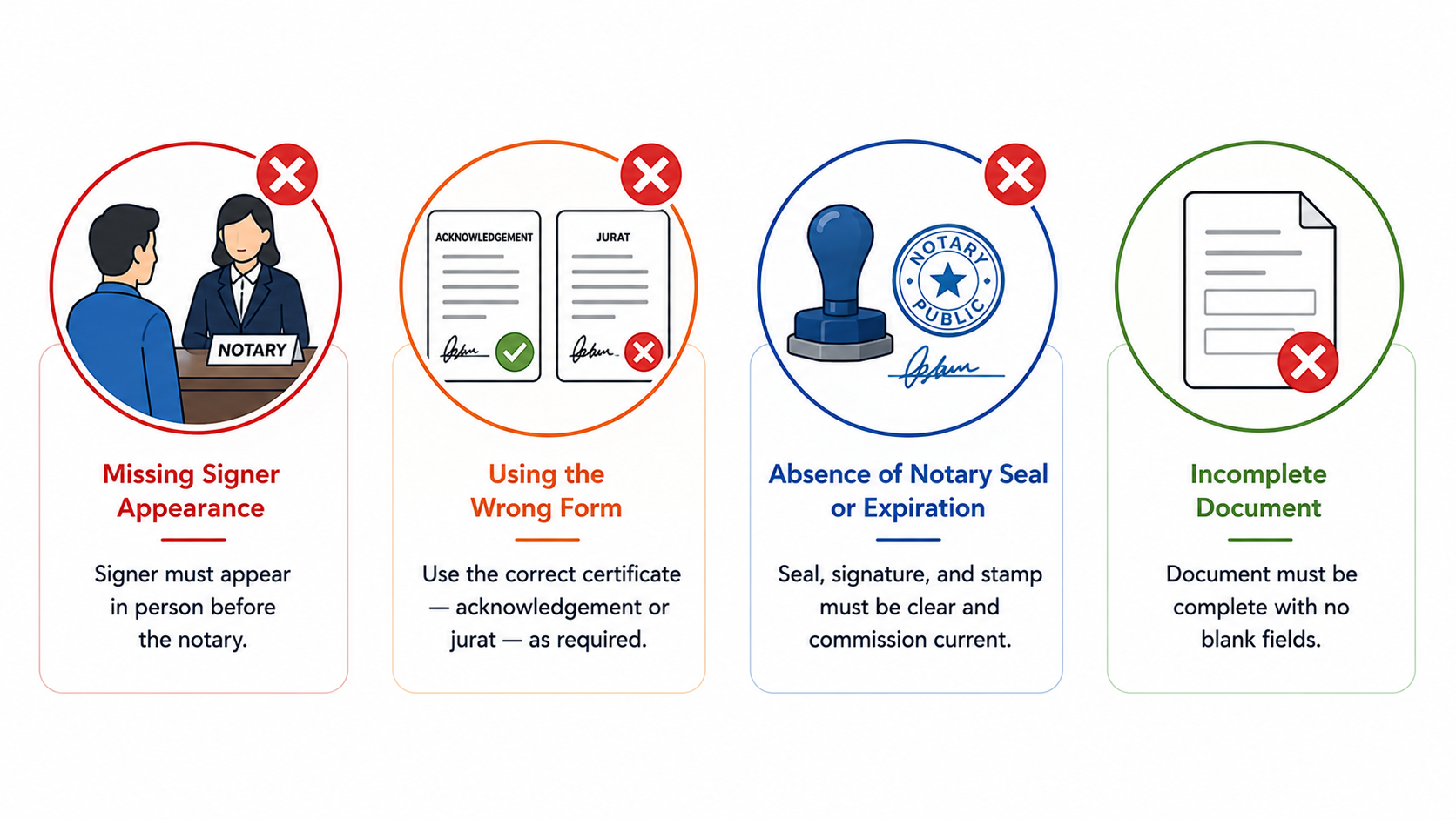
- Missing Signer Appearance: The most critical mistake is failing to appear in person before the notary. The notary cannot acknowledge a signature made outside their presence.
- Using the Wrong Form: Using a Jurat certificate when an acknowledgement is required, or vice versa. The attached certificate must be for the document.
- Absence of Notary Seal or Expiration: The notary's seal, signature, and stamp must be clearly visible, and the notary's commission must be current. The types of notary stamps used must be official and recognised.
- Incomplete Document: The notary cannot proceed if the document has blank fields or is missing necessary exhibits.
How NoBroker Can Help with Notary Services?
Understanding what is a notary acknowledgement and securing it correctly is crucial for validating legal documents. NoBroker Notary Services simplifies this process by providing comprehensive digital and physical notarization services. We facilitate the creation of legally valid deeds and agreements, ensure they are printed on the correct e-stamp paper, and arrange for the necessary in-person or remote notarization by licensed professionals, ensuring compliance and peace of mind.f mind.
Frequently Asked Questions
Do all documents require a notary acknowledgment?
Can I get a notary acknowledgment online or remotely?
Is an acknowledgment the same as notarization?
What happens if the acknowledgment certificate is missing?
Can I reuse a notary acknowledgment for multiple documents?
What is the difference between a notary acknowledgement and a notary certificate?
Can a notary acknowledgement be done after the document has already been signed?
What is a notarial acknowledgement?
About the Author

Sanjay A
Senior Editor


Recent Blogs
Subscribe to our Newsletter
Get latest news delivered straight to your inbox