Apostille vs Notary in India: Meaning, Purpose, Documents and Validity


Notary Guides

1.6K Views
Table of Contents
Summary
Many people preparing documents for overseas education, jobs, business, or immigration often get confused about the difference between notarisation and apostille procedures. A small misunderstanding at this stage can lead to document rejection, travel delays, or repeated verification visits. Understanding the difference between apostille and notary is essential when dealing with legal, educational, or personal documents that require official authentication. Whether you are applying for a visa, studying abroad, or handling international paperwork, knowing their meaning, purpose, validity, and accepted documents can help you complete the process smoothly. The right verification method can save time, reduce stress, and prevent costly documentation errors later.
What is a Notary?
A notary is a government-authorised legal professional who verifies identities, witnesses signatures, and certifies documents to prevent fraud. Notaries play an important role in validating agreements, affidavits, property papers, and other legal documents under the Notaries' Act, 1952 [1]. Their seal and signature help confirm that the document was signed willingly and is legally authentic for official and legal use.
What is an Apostille?
An Apostille is an official certification issued by the Ministry of External Affairs in India that verifies the authenticity of public documents such as degree certificates, marriage certificates, and legal papers. It is used for documents submitted in countries that are parties to the Hague Apostille Convention [2], allowing them to be legally accepted abroad without additional attestation by an embassy or consulate.
Recommended Reading

Different Types of Notary Stamps in Indi...
5.1K Views

Passport Annexure Formats: Notary Attest...
3.6K Views

Who Can be a Notary: Types, Eligibility,...
2.5K Views

Duties of a Notary Public in India: Role...
1.7K Views

Notary vs Lawyer: Differences, Duties, L...
1.7K Views
Apostille vs Notary - Quick Comparison
Understanding the difference between an apostille and notary helps choose the right document process. A notary is used within India, while an apostille is required for International purposes such as employment, education, and immigration.
| Factor | Notary | Apostille |
|---|---|---|
| Purpose | Domestic document validation and fraud deterrence. | International document authentication for legal use abroad. |
| Issued By | A government-appointed Notary Public (an authorised lawyer). | The Ministry of External Affairs (MEA), Government of India. |
| Valid In | Only within the territory of India. | All member countries of the Hague Apostille Convention. |
| Format | A stamp and signature directly on the document. | A computer-generated sticker with a unique QR code attached to the document. |
| Common Documents | Degree certificates, birth certificates, and marriage certificates. | Degree certificates, birth certificates, marriage certificates. |
| Processing Time | Usually the same day. | Typically, 3 to 7 working days. |
| Need for Attestation | May require further attestation for specific official uses. | No further attestation is needed for use in Hague Convention countries. |
When Do You Need a Notary vs an Apostille?
Understanding the difference between apostille and notary helps you determine whether a document needs notarization or apostille certification based on where it will be used. In India, notarization confirms a signature for domestic purposes, while an apostille is issued under the Hague Apostille Convention, which India follows, for international acceptance of documents abroad.
Below are a few real-world examples to keep an eye on:
- Study Abroad: Degree certificates require an apostille for universities in Hague Convention countries.
- Property Abroad: A Power of Attorney requires an apostille for legal use in foreign property transactions.
- Domestic Affidavits: Rental, name change, or income affidavits usually require only notarization within India.
Documents That Commonly Require Notarization
Notarization is a frequent requirement for many types of documents used for domestic transactions and legal filings in India.
- Affidavits and Declarations
- Power of Attorney documents for use within India
- Rental and Lease Agreements
- Sale Deeds and Gift Deeds for property
- Indemnity Bonds and other legal bonds
- Bank Loan Agreements
Documents That Commonly Require Apostille
An Apostille is necessary when you need to prove the authenticity of your official Indian documents to a foreign government or organisation.
- Birth Certificates for visa or immigration purposes
- Marriage Certificates for spousal visas or residency
- Death Certificates for international inheritance claims
- Educational Documents (Degrees, Diplomas, Transcripts) for higher education or employment abroad
- Police Clearance Certificates (PCC) for residency applications
- Power of Attorney documents for use in a foreign country
What is an Apostille Stamp and Notary Seal?
An apostille stamp is an official authentication sticker issued by the Ministry of External Affairs in India for documents used in Hague Convention countries. It contains details like the issuing authority, document reference number, QR code, digital verification information, and MEA seal for international validation.
A notary seal, on the other hand, is issued by a licensed notary public to verify signatures, identities, and document authenticity within India. While apostille certification is meant for international legal acceptance, a notary seal is mainly used for domestic legal and administrative purposes.
Key Differences in Legal Validity
The core difference lies in their jurisdiction. A notarised document is legally valid and recognised only within India. An Apostille, however, gives a document international legal validity, making it acceptable in over 100 countries without any further need for embassy legalisation.
Can a Document Be Both Notarised and Apostilled?
Yes, and in many cases, this is a required sequence of steps. For personal documents like a birth or marriage certificate, the process often starts with getting a copy notarised. This notarised document is then submitted for state-level attestation before the Ministry of External Affairs can finally apostille it.
Where to Get Apostille and Notary Services in India?
Understanding where to obtain document authentication in India is important for legal use domestically and internationally. Under the Apostille Convention of India [3], notarization and apostille services are handled by different authorities and agencies.
- Notary Services: Available through a local licensed Notary Public appointed under the Notaries Act 1952. Many platforms, like NoBroke, also offer online notary assistance for basic documentation.
- Apostille Services: Issued by the Ministry of External Affairs (MEA) through authorised centres for documents intended for Hague Convention countries.
- Outsourced MEA Agencies: The MEA has authorised service providers (like outsourced agencies) to collect and process apostille applications on its behalf. These agencies handle document submission, verification, and delivery for convenience.
Cost and Time Comparison
The financial and time commitments for apostille vs notary public services are vastly different, reflecting the difference in their scope and complexity.
| Service | Estimated Time | Estimated Cost |
|---|---|---|
| Notary | Same day, often within minutes | ₹50 – ₹200 per document |
| Apostille | 3–7 working days | ₹50– ₹1,000+ per document |
How to Verify Whether an Apostille or Notary Is Genuine?
Verifying legal documents before submission helps prevent fraud, delays, and document rejection. Here are the simple steps to check whether an apostille certificate or a notary seal is genuine:
Steps to Verify an Apostille Certificate:
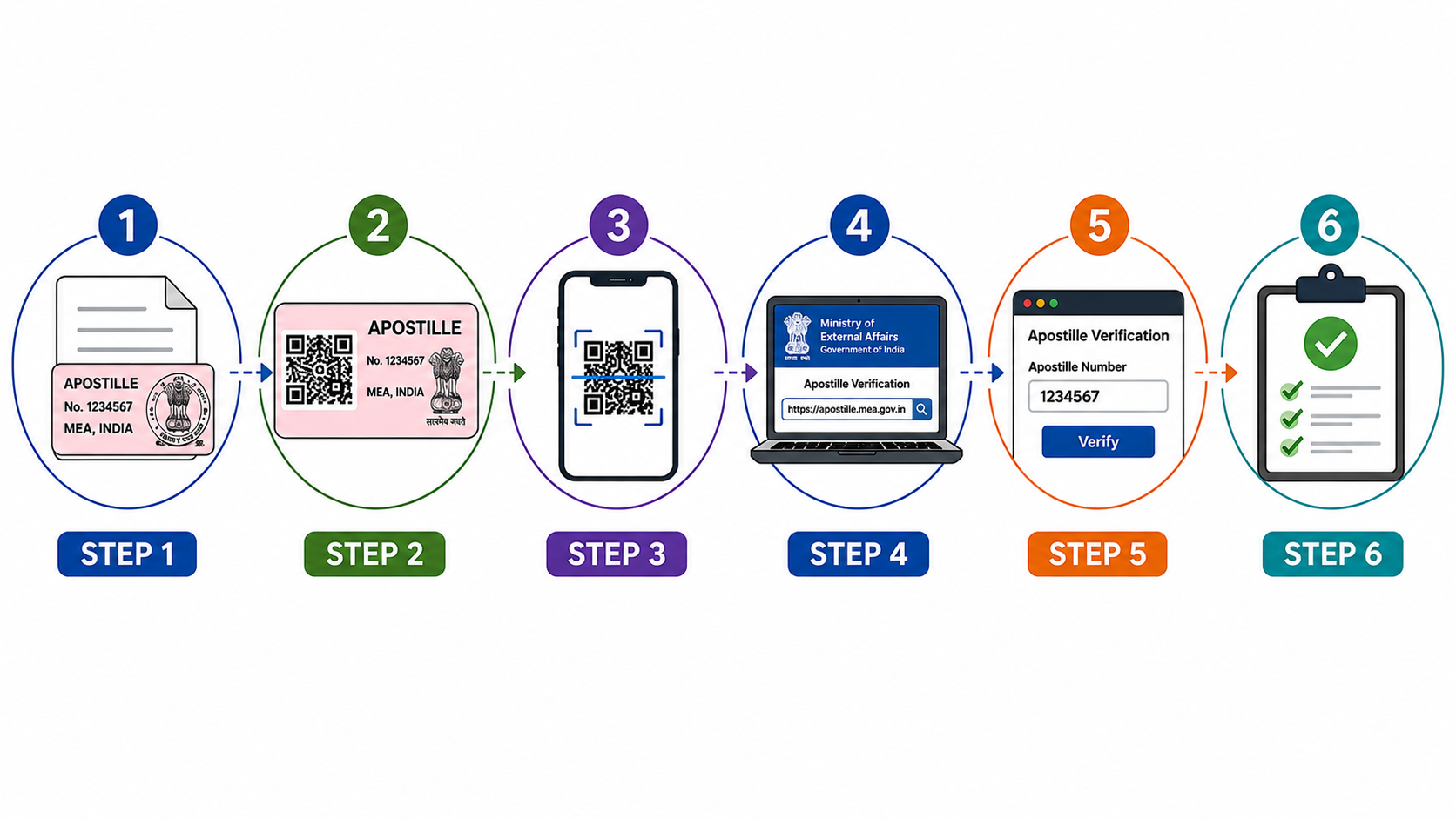
- Step 1: Find the apostille sticker attached to the document.
- Step 2: Check the QR code, apostille number, and MEA seal.
- Step 3: Scan the QR code using your phone camera or scanner app.
- Step 4: Visit the official MEA verification website if needed.
- Step 5: Enter the apostille number to check the document details.
- Step 6: Match the verification details with your original document.
Steps to Verify a Genuine Notary Seal:
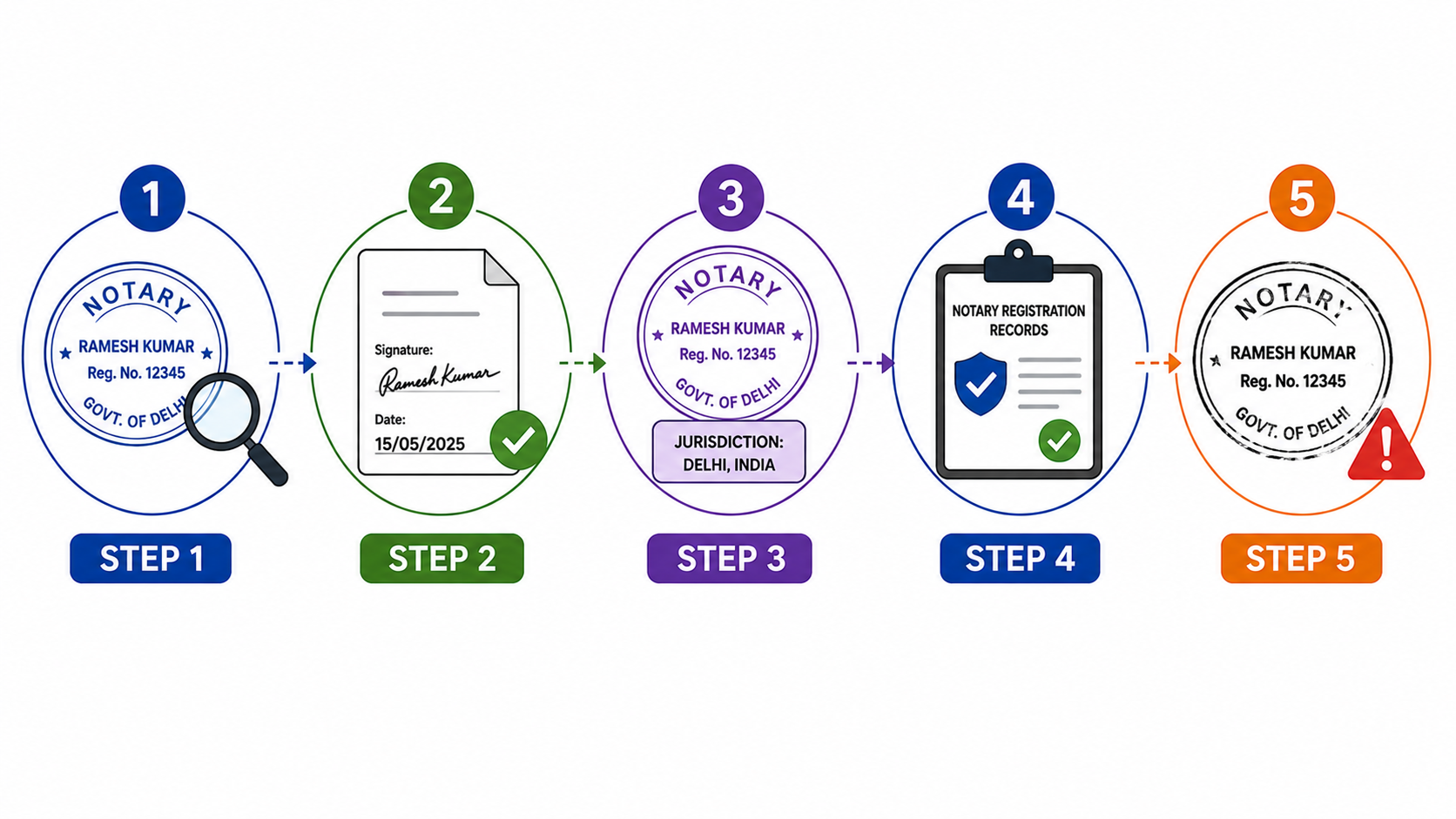
- Step 1: Check the notary’s name and registration number on the seal.
- Step 2: Verify the signature and notarisation date on the document.
- Step 3: Confirm the seal clearly mentions “Notary” and jurisdiction details.
- Step 4: Cross-check the notary registration with authorised records if required.
- Step 5: Look for spelling mistakes or unclear seal details that may indicate fraud.
Note: Always verify apostilles through the official MEA QR code system and check licensed notary seals, signatures, and registration details to avoid fraud or document rejection.
Common Mistakes to Avoid During Apostille and Notarization
Before applying for apostille or notarization, it is important to avoid common documentation mistakes that can lead to delays, rejection, or unnecessary legal complications. Here are some common mistakes to avoid during apostille and notarization:
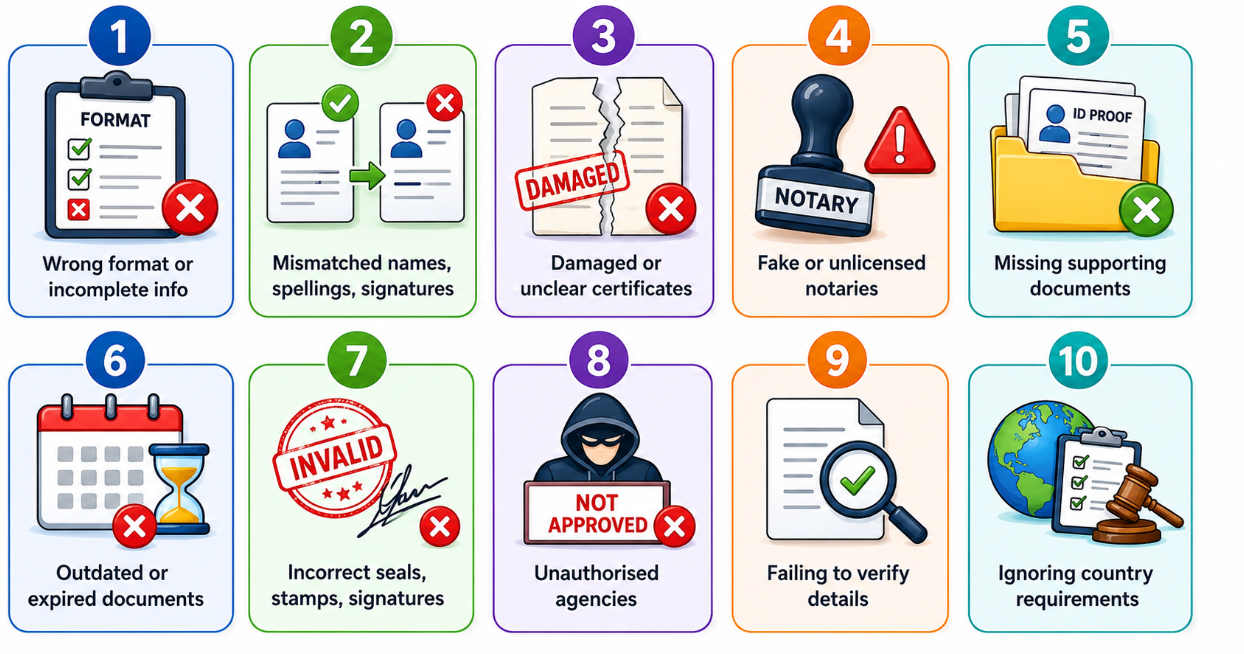
- Submitting documents in the wrong format or with incomplete information
- Using documents with mismatched names, spellings, or signatures
- Providing damaged, torn, laminated, or unclear certificates
- Choosing fake or unlicensed notaries for attestation services
- Missing mandatory supporting documents like ID proofs or affidavits
- Using outdated or expired documents for apostille processing
- Applying incorrect seals, stamps, or unauthorised signatures
- Selecting unauthorised agencies that are not approved for apostille assistance
- Failing to verify document details before submission
- Ignoring country-specific documentation and legalisation requirements
How NoBroker Can Help With Notary Services?
At NoBroker Notary Services, we offer reliable and hassle-free notary services for affidavits, rental agreements, power of attorney, and apostille-related documents. Our team connects you with our verified legal professionals who help you to verify document accuracy and ensure smooth processing without unnecessary delays. With our convenient online support, doorstep assistance, transparent pricing, and quick turnaround times, we simplify the entire documentation process. We focus on making notarisation fast, secure, and convenient while helping you avoid common errors that may lead to rejection.
Frequently Asked Questions
Is a document notarised in India valid outside the country?
Who is the official authority to issue an Apostille in India?
What if I need to use a document in a country not part of the Hague Convention?
Can I get a document apostilled directly without any prior attestation?
Is an online or e-notary legally accepted in India?
What is a notarised copy, and when is it required?
Is the apostille accepted in all countries?
Can an apostille be used for documents in non-Hague Convention countries?
Is notarisation mandatory before getting a document apostilled in India?
What is a notarised copy?
What is an apostille stamp?
What is a notary stamp?
About the Author

Sanjay A
Senior Editor


Recent Blogs
Subscribe to our Newsletter
Get latest news delivered straight to your inbox