Transportation Modes for Shifting in India

170 Views
Table of Contents
The transportation modes for shifting include rail, road, air, sea and shared transport. Selecting the right transportation option can help you get speedy, cost-effective and safe delivery of your goods, with the right option depending on the distance of your move, budget, and the size or weight of your belongings. Each mode has its own advantages, limitations and considerations, which can either increase the total cost or convenience of your move. This blog explains the available transportation options and helps you choose the right one for your move.
What Are the Different Transportation Modes for Shifting?
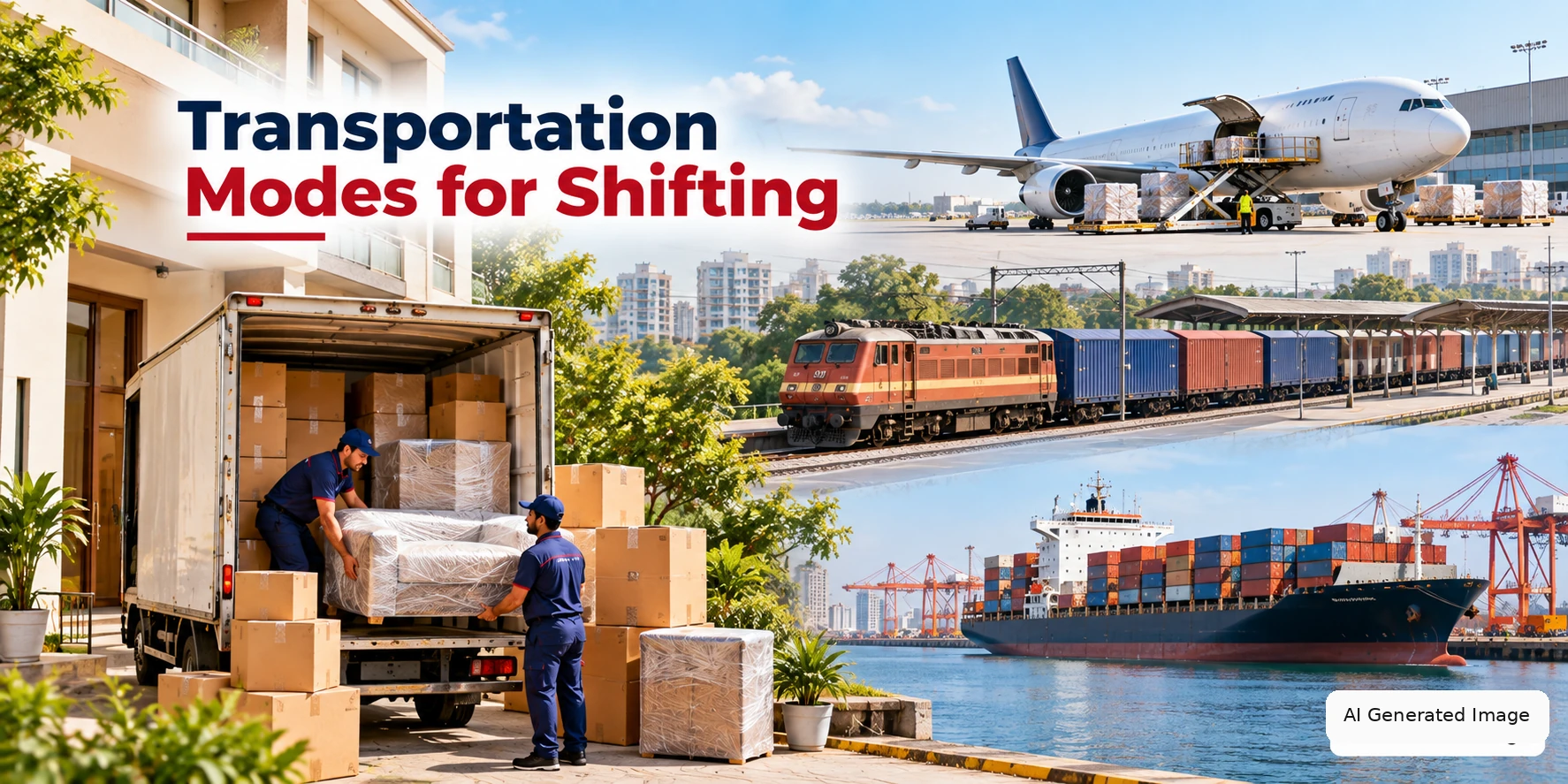
The different transportation modes for shifting include rail, road, air, sea and shared transport, with each having different speeds, capacities, and costs. Here’s what each mode has to offer:
- Rail Transport: Available via Indian Railways, rail transport is considered best for heavy and long-distance moves. It is very economical and preferred for moving large volumes of goods across different cities and states
- Road Transport: Road transport is often the most convenient transportation method for shifting. Moves here are carried out using vehicles like trucks, vans, and cars, and it's best for local, regional, and door-to-door household shifting.
- Air Transport: Though costly, air transport is best for urgent and time-sensitive moves. It offers faster delivery via cargo and passenger aeroplanes and is the best choice when speed is more important than cost.
- Sea Transport: Sea transport uses cargo ships and container vessels and is best for international relocation, particularly for large or bulk shipments. It is considered the cheapest method for transporting items over long international distances but takes a lot of time.
- Shared Transport: Through shared transport, you have the option to transport your belongings in shared vehicle spaces with another person’s shipments. This helps you save on your total moving costs and is best when you do not have enough items that require an entire truck for shifting.
How Do You Choose the Right Transportation Mode?
Now that you know all the transportation methods, you can choose the best mode for yourself based on the factors that matter most to you.
Recommended Reading
Railway Parcel Charges in India 2026: Pe...
8K Views

Guide to Choosing the Best Packers and M...
5.3K Views
Types of Packers and Movers in India: Se...
4.1K Views

How To Transport Furniture By Train
1.4K Views
Packers and Movers Per KM Charges in Ind...
1.1K Views
- Distance and scope: Knowing how far and where you’re moving can help you narrow down the transportation modes that fit your route. For local and domestic moves, road transport is the most convenient; for long-distance domestic moves, rail transport can work, while sea transport is most preferred for international relocation.
- Shipment volume: Check the volume of items you need to move. If you have a large household shipment, modes such as road, rail, and sea transport can accommodate more goods, while smaller shipments with air or shared transport offer more flexibility.
- Budget or speed: Decide whether you want to spend less or get your belongings delivered faster. If keeping costs low is your priority, rail or shared transport is more economical, while air transport is preferred for faster delivery.
- Nature of the items: Consider the items you need to move, especially if they're fragile, bulky, or sensitive. For regular household goods, road or rail transport works well. But for fragile or time-sensitive items, air transport works well, while bulky or heavy shipments are best by road, rail, or sea.
Road vs Rail vs Air vs Sea: Which Transportation Mode Is Best?
Road, rail, air and sea transport modes each suit different types of moves. You can choose the best option for your move based on the comparison listed in the table below:
| Difference | Road Transport | Rail Transport | Air Transport | Sea Transport |
| Cost | Medium | Low | High | Low for large shipments |
| Speed | Moderate to fast | Moderate | Fastest | Slowest |
| Shipment size | Small to large | Large and bulky | Small to medium | Large and bulky |
| Best for | Local and intercity moves | Heavy and long-distance shipments | Urgent | Large international shipments. |
Full Truck vs Shared Transportation: Which Is Better?
While full truck gives you dedicated space for your items along with better safety, shared transportation means your shipment travels alongside another customer's belongings. The better option depends on your preferences, budget, shipment size, and how much control you want over the process.
| Difference | Full Truck | Shared Transportation |
| Cost | Higher | Lower |
| Truck space | Entire truck is dedicated to your belongings | Truck space is shared with other shipments |
| Delivery | More direct | Can take longer depending on other shipments |
| Best for | Large household moves and valuable belongings | Smaller shipments and budget-friendly moves. |
What Can You Do to Keep Your Belongings Safe During Transportation?
While your belongings stay with the movers during transportation, you can take these precautions to remove the risk of damage, loss, or mix-ups:
- Keep electronics, jewellery, cash, and important documents with you
- Use heavy-duty locks and padlocks on suitcases and personal bags
- Place a Bluetooth tracker or smart tag inside important bags or boxes
- Wrap fragile items such as picture frames and electronics properly with bubble wrap or soft clothing
- Place fragile items at the centre of the box and away from the edges
- Label boxes clearly with your name, contact details, and how to handle items
- Take photos of valuable and fragile items before loading
- Keep an inventory of the belongings being transported
- Check your belongings for damage or missing items immediately after delivery.
Door-to-Door Relocation with NoBroker Packers & Movers
Moving your belongings safely requires proper packing, handling, and safety during transportation. With NoBroker Packers & Movers, you get trained professionals, quality packing materials, and assistance with packing, loading, transportation and unloading. Here's why NoBroker is preferred for its services:
- Our services have helped customers complete over 15 lakh relocations across India
- Our relocation services are available across 100+ cities and 10,000+ localities
- We bring over a decade of experience in handling household and other relocation requirements
- 100% damage & delay protection against covered damage and delays during your move.
Frequently Asked Questions
Can I change the transportation mode after booking my move?

How long does it take to transport household goods?
Can I transport my car or bike along with my household belongings?
What items cannot be transported through certain modes?
About the Author

Sourabh
Senior Editor
Reviewed By

Bramha Maity
Reviewer


Recent Blogs
Subscribe to our Newsletter
Get latest news delivered straight to your inbox