Eco-Friendly Packaging: Materials, Benefits and Sustainable Ideas

3.7K Views
Table of Contents
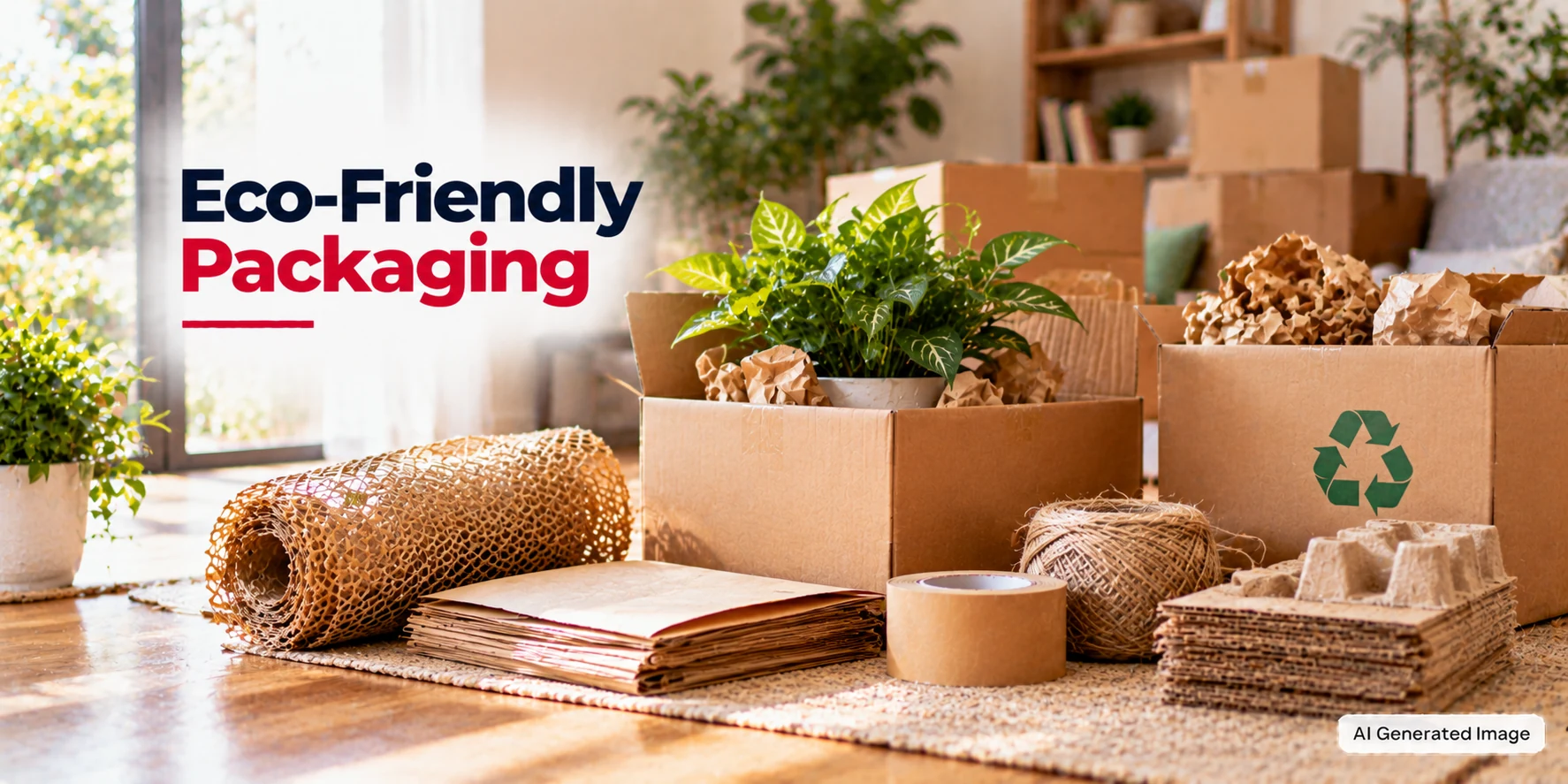
Packaging protects products and belongings during shipping, storage, and moving, but the wrong materials can create a large amount of unnecessary waste. Eco-friendly packaging offers a more responsible approach by using recyclable, reusable, renewable, biodegradable, or compostable materials where suitable. From recycled cardboard boxes and kraft paper to reusable packing materials, several options can help reduce packaging waste without compromising basic protection. The right choice depends on what you are packing, how it will be transported, and how the material can be disposed of after use.
What Is Eco-Friendly Packaging and Why Is It Important?
Eco-friendly packaging uses materials and designs that reduce environmental impact across their lifecycle, from production and use to disposal. It can be reusable, recyclable, biodegradable, or compostable, depending on the material and how it is disposed of.
Choosing the right packaging while house shifting can reduce waste, lower the use of virgin resources, and encourage materials that can be reused or recovered after use. Its impact should therefore be considered across the entire lifecycle, not just by whether it carries an eco-friendly label.
Recommended Reading
2026 Guide on How to Pack Kitchen Items ...
6.5K Views

How to Pack a Mattress While Moving: Ste...
6.3K Views
How to Pack a TV for Moving
6.2K Views
Best Way to Pack Framed Pictures for Mov...
6.1K Views

How to Pack a Monitor for Moving: What Y...
6.1K Views
- Reduce Packaging Waste: Choose suitable materials and avoid unnecessary packaging to reduce waste.
- Reduce Dependence on Virgin Resources: Recycled paper and cardboard reduce the need for new raw materials.
- Meet Changing Consumer Preferences: Sustainable packaging helps businesses respond to customers who prefer eco-friendly choices.
- Support Responsible Moving and Shipping: Reusable and recyclable materials can make packing and transportation more sustainable.
Eco-Friendly vs Traditional Packaging
Eco-friendly packaging while moving reduces waste through recyclable, reusable, or renewable materials, while traditional packaging often relies more on virgin materials and plastic.
| Aspect | Eco-Friendly Packaging | Traditional Packaging |
| Materials | Often uses recycled, renewable, or lower-impact materials | Often relies on virgin or non-renewable materials |
| Waste | Can reduce waste through reuse and recyclable materials | Can generate more disposal waste, especially when used once |
| Reusability | Can often be reused for storage or future moves | Often designed for single use |
| Recyclability | May use materials that can be recycled after use | Recycling depends on the material and local facilities |
| After use | May be reused, recycled, or composted | Disposal options depend on the material |
10 Eco-Friendly Packaging Ideas for Moving
1. Recycled Cardboard and Corrugated Boxes
Use recycled cardboard and corrugated boxes for books, clothes, appliances, and other household items. They provide good protection and can usually be recycled after use.
2. Kraft Paper Packaging
Kraft paper works well for wrapping glassware, crockery, small items, and lightweight belongings. It can also provide basic cushioning during a move.
3. Compostable Packaging
Compostable packaging can break down into compost under suitable composting conditions. Check the disposal requirements before throwing it away.
4. Biodegradable Packaging
Biodegradable packaging can break down naturally through biological processes. It does not always break down quickly or in every environment, so check how the material should be disposed of.
5. Reusable Packaging
Reusable boxes, bags, and containers can be used for multiple moves or household storage. They can reduce the need for single-use packaging.
6. Sustainable Paper
Choose paper made from responsibly sourced materials or certified sources such as FSC-certified paper. It works well for wrapping and general packing.
7. Bamboo Packaging
Bamboo is a renewable material that can work for selected packaging applications. Choose it where its strength and form suit the item being packed.
8. Paper-Based Cushioning
Paper cushioning can protect fragile items while reducing the need for plastic bubble wrap and foam. Use enough cushioning to prevent movement inside the box.
9. Recyclable Packaging Designs
Packaging made from fewer and easily separable materials can make sorting and recycling easier after use. Avoid unnecessary layers and mixed materials where possible.
10. Seed Paper Packaging
Seed paper contains seeds that can grow when planted under suitable conditions. It works better for small products, branded packaging, and special-purpose uses than for regular household moving.
How to Choose the Right Eco-Friendly Packaging for Moving?
The best eco-friendly packaging is not simply the material that looks sustainable. Choose it based on what you are moving, how much protection it needs, and what you can reuse or recycle after the move.
- For clothes and soft items: Use reusable bags, cloth bags, or boxes that you can use again instead of single-use plastic bags.
- For books and heavier items: Choose strong cardboard boxes that will not tear under the weight. Avoid oversized boxes because they need more material and become harder to carry.
- For glassware and fragile items: Use kraft paper, paper cushioning, or corrugated sheets to prevent breakage. Reducing packaging is not useful if it leaves the item exposed to damage.
- For furniture: Reusable moving blankets and corrugated sheets can protect surfaces without wrapping every piece in multiple layers of plastic.
- For long-distance moves: Choose packaging that can withstand repeated handling and changing weather conditions during transit.
- Before disposing of packaging: Check whether your local recycling facility accepts the material. Avoid materials that combine paper with plastic coatings or other layers that make recycling difficult.
- Reuse where possible: Keep good quality boxes, bags, and protective materials for future moves, storage, or other household needs.
Benefits and Limitations of Eco-Friendly Packaging:
Eco-friendly packaging can reduce waste and plastic use, but the right option depends on the item, cost, durability, and what happens after use.
| Benefits | Things to Consider |
| Recycled cardboard can reduce the need for new paper fibres | Recycled material may cost more or have lower strength than some new materials |
| Reusable boxes and bags can be used for future moves or storage | You need enough space to store them between uses |
| Paper cushioning can replace some bubble wrap and plastic foam | Paper may need more material to protect very fragile or moisture-sensitive items |
| Recyclable packaging can enter recycling systems after use | Recycling depends on whether local facilities accept that specific material |
| Compostable packaging can break down under suitable composting conditions | It may not break down properly in regular household waste or landfill conditions |
| Renewable materials such as bamboo can reduce reliance on finite resources | Renewable does not automatically mean suitable for every type of packaging |
| Simple packaging with fewer material layers can be easier to sort | Plastic coatings, tape, and mixed materials can make recycling more difficult |
How NoBroker Packers and Movers Can Help?
People planning a move should choose packing materials that protect their belongings while creating less environmental waste. If you are looking for more sustainable packing and moving options, NoBroker Packers and Movers can help you choose and arrange packing and moving services for your household belongings. Our team of experts ensures the use of eco-friendly materials for professional packaging while moving, so that your belongings arrive at your space with full damage protection.
Frequently Asked Questions
Q1: What is the most eco-friendly packaging material?
Q2: Is cardboard considered eco-friendly packaging?
Q3: What is the difference between biodegradable and compostable packaging?
Q4: What are the best eco-friendly packaging materials for moving?
About the Author

Sourabh
Senior Editor
Reviewed By

Sambhu Nampoothiri
Reviewer


Recent Blogs
Subscribe to our Newsletter
Get latest news delivered straight to your inbox