Car Transport by Road vs Train – Which is Better for Relocation?

276 Views
Table of Contents
Summary
Relocating to a new city often means figuring out how to move your car safely and conveniently. Two common options are transporting it by road or sending it by train. Both methods have their own advantages, costs, and limitations, depending on the distance, budget, timeline, and level of convenience you need. Choosing between them can be difficult if you are unsure which option suits your relocation better. In this blog, we compare car transport by Road and train to help you understand the key differences. From formalities and safety to convenience and delivery time, here is what you should consider before making your choice.
How Does Car Transport by Road Work?
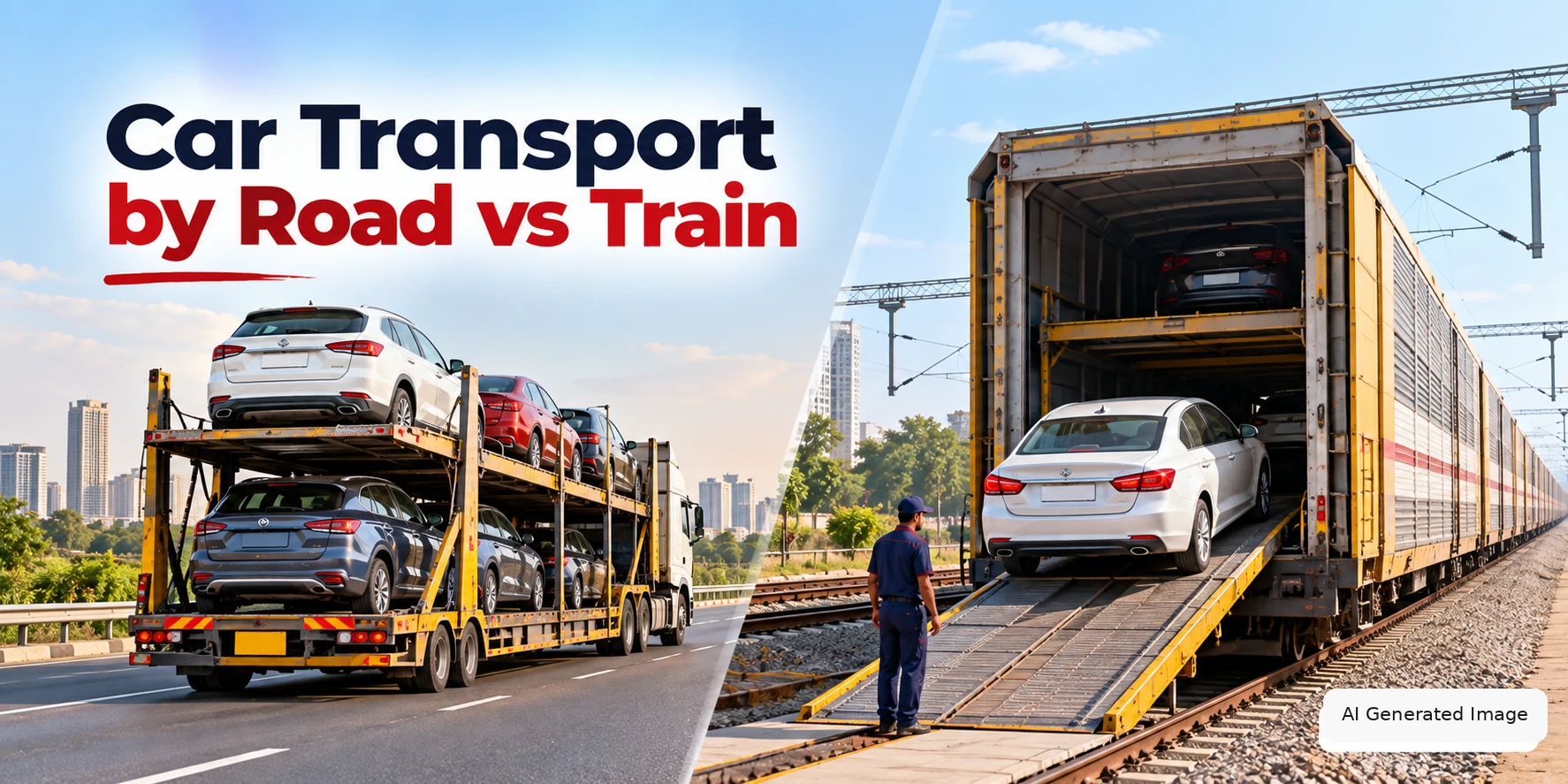
Car transportation through road means transporting the car from one place to another with the help of a specialized car transporter or vehicle transport truck. It offers a very versatile solution in terms of relocating the car, as you can get it transported from your doorstep to a point near your new destination.
Book a Car Transport Service
Begin by identifying a dependable service for moving the car according to the route, type of vehicle, cost, and delivery schedule. Supply information regarding the car, including its make and the places where it is to be picked up and dropped off.
Recommended Reading
Car Transport by Train in India
40.1K Views

Car Shipping Tips: 10 Best Ways to Ship ...
5.5K Views
Car Shifting Charges in India
524 Views

Insurance For Car Transport
497 Views
Vehicle Inspection and Secure Loading
The car is first inspected, and its condition is documented before moving it. It is thereafter loaded into the carrier through appropriate ramps and secured to minimize any unnecessary motion while in transit.
Transportation and Delivery
Once the loading process is done, the car is carried to the desired destination through the roads. The service can deliver the car either at your doorstep or at any other destination as per the agreement. While receiving the car, one should check its condition against the pre-transportation inspection report.
Rules to be Followed:
- It is necessary to hire a registered and experienced car transport service.
- Always keep the necessary documents of the car ready.
- Personal items and valuables need to be removed from the car.
- Check that your FASTag is active and has sufficient balance before transportation.
- Check the condition of the car before and after transportation.
- One needs to verify insurance for transit before booking.
- Also, keep a record of the transport and booking receipt.
Cost of Shipping Car by Road
The cost of shipping a car by road generally ranges from ₹8,000 to ₹25,000. This is a rough estimate, and the exact cost can be determined by the shipping company you choose. The final cost depends on the distance, car size, pickup and delivery locations, and type of carrier used. Door-to-door car transport through a professional car carrier can cost more because it includes pickup, transportation, and delivery services.
What Documents Are Needed for Car Transport by Road?
The documents required may vary depending on the transporter and route, but you will generally need:
- Vehicle Registration Certificate (RC)
- Valid Car Insurance
- Owner’s ID Proof
- Transport Agreement/Booking Receipt
- Vehicle Condition Report
- NOC or Authorisation Letter, if applicable
- Valid PUC Certificate
How Does Car Transport by Train Work?
Train-based transportation of cars refers to moving the car through the railroad system between different stations. It may be an effective mode of transportation of cars in case of long-distance relocation, especially where there are appropriate facilities for rail-based transportation of the car. The process includes booking, documentation, inspection, loading, transportation, and delivery of the car.
Book Car Transportation Through Railways
The process of rail transport of a car begins with booking the services from the railway parcel office. The owner will have to submit the necessary papers and fill in all the details regarding their vehicle in order to book. According to the type of railway service and route available, the vehicle can either be transported as luggage or as a parcel to the destination station.
Car Luggage vs Car Parcel
Indian Railways generally offers two options for transporting cars: luggage and parcels. Car luggage is linked to the passenger’s journey, while car parcel allows the vehicle to be transported separately. The suitable option depends on your travel plans, railway rules, route availability, and preferred delivery arrangements.
Vehicle Loading, Transportation and Delivery
After reserving the vehicle, it will be inspected and then placed in the assigned railway wagon. After reaching the destination, the car has to be picked up from the assigned railway station. Keep all the necessary documents and the railway receipt for picking up the car.
Rules to Follow:
- Carry the original RC and a valid ID proof.
- Keep a copy of the car’s insurance documents.
- Complete the required railway booking and documentation.
- Ensure the car meets railway fuel requirements.
- Remove personal belongings and valuables from the car.
- Check the vehicle condition before handing it over.
- Keep the railway receipt/booking documents safely.
- Remove or deactivate the FASTag if advised by the railway or transporter.
- Collect the car from the designated railway station after arrival.
Cost of Shipping Car by Train
The cost of shipping a car by train is not a fixed rate. Indian Railways applies the relevant tariffs, and the final charges are determined based on factors such as the distance, vehicle type, weight, route, and booking requirements. Once you apply for car transportation, the concerned railway department evaluates the applicable factors and provides the charges for your shipment. In general, transporting a car by train is more economical than transporting it by road.
What Documents Are Needed for Car Transport by Train?
The documents required for transporting a car by train may vary depending on the railway service and route. Generally, you may need the following:
- Vehicle Registration Certificate (RC)
- Valid Car Insurance
- Owner’s ID Proof
- Railway Booking/Parcel Form
- Railway Receipt
- Authorisation Letter, if applicable
- Valid PUC Certificate
Road vs Train Car Transport: Key Differences
The choice between road and train transport depends on your budget, distance, delivery requirements and how much convenience you need. Here’s a quick comparison of the key differences:
| Factor | Car Transport by Road | Car Transport by Train |
| Cost | Generally higher | Generally more economical |
| Delivery | Door-to-door delivery available | Station-to-station delivery |
| Convenience | More convenient | Requires drop-off and collection at stations |
| Delivery Time | Flexible based on route and traffic. The estimated delivery time is around 2–14 days. | Depends on train schedules and route. The estimated delivery time is around 3–10 days. |
| Flexibility | High flexibility in pickup and delivery | Limited to available railway routes |
| Safety | Depends on transporter - ask about insurance and carrier type before booking | Generally secure, as the car is enclosed in a rail wagon during transit |
| Availability | Available across most locations | Depends on railway connectivity |
| Best For | Convenience and flexible relocation | Budget-friendly long-distance relocation |
Which Should You Choose?
Ultimately, the best option will depend upon personal preference, distance, and destination. Road transport will suit you more in case you wish to enjoy doorstep delivery services, convenience, and flexibility. In case of long-distance relocation, you should opt for train transport if there is proper railway connectivity and you wish to keep costs under control. You need to take into account cost, delivery time, safety of the vehicle, accessibility of the station, and your travel arrangements before taking a decision.
How Can NoBroker Help You?
At NoBroker, we make relocation easier with our Packers and Movers service, helping you move your car and household belongings with greater convenience. Our professional moving partners can assist with vehicle handling, packing, and transportation, reducing the hassle of coordinating your move. Whether you’re relocating across the city or to another state, we help you plan and manage your move more smoothly. Plan your move with us today for a smooth, safe, and hassle-free relocation experience!
Frequently Asked Questions
Can I transport my car by train if I am not travelling?
Can I send my car by train to another state?
Can I keep luggage inside my car during transportation?
Can I track my car while it is being transported by train?
What happens if my car is delayed during train transportation?
About the Author

Sourabh
Senior Editor
Reviewed By

Bramha Maity
Reviewer


Recent Blogs
Subscribe to our Newsletter
Get latest news delivered straight to your inbox