Steam Cleaning vs Dry Cleaning Carpet: Which Method is Better in 2026?


2.4K Views
Table of Contents
Summary
Steam cleaning vs dry cleaning carpet compares two effective methods. Dry cleaning uses low moisture for quick drying and gentle care, but offers limited deep cleaning. Steam cleaning uses hot water extraction for better stain and allergen removal, though it takes longer to dry. Choose based on convenience or deep sanitation needs.
Carpet cleaning often becomes challenging when stains, odours, and hygiene concerns start building up at home. Many homeowners struggle to decide between steam cleaning vs dry cleaning carpet methods for the best results. Each option offers different benefits in terms of deep cleaning, drying time, and maintenance effort. Understanding what truly works for your lifestyle can make a noticeable difference in cleanliness and comfort. Imagine carpets that not only look fresh but also feel healthier underfoot. With the right method, maintaining your home becomes easier, more effective, and far less stressful in the long run.
What is Carpet Dry Cleaning?
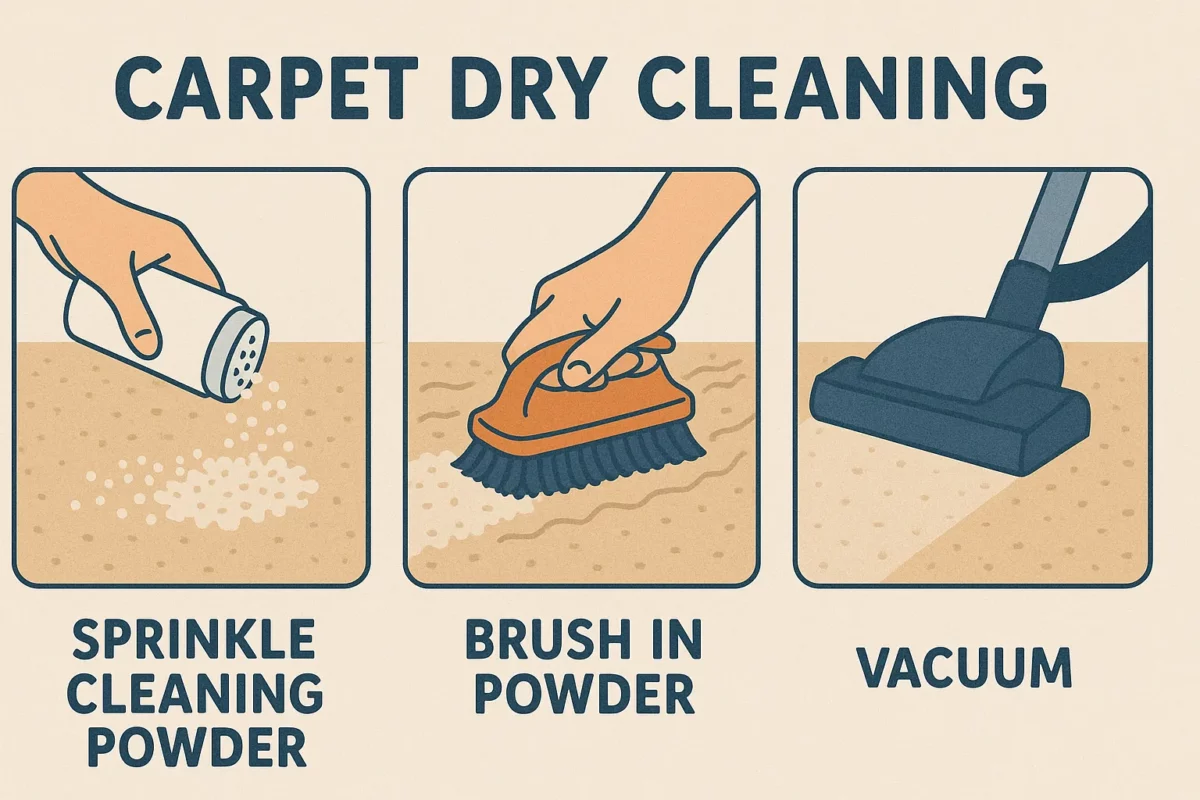
Carpet dry cleaning method employs a modified solvent or encapsulating polymer that spreads across the rug and envelops particulates. Subsequently, the suspended soils are rapidly extracted with a high-efficiency particulate air (HEPA) vacuum. This system is particularly well-suited for sensitive fibers, such as Oriental rugs, fine wool blends, or deteriorating antique textiles that cannot readily tolerate saturation.
Benefits:
- A rapid drying cycle, often under sixty minutes, minimizes service disruption.
- A marked reduction in the potential for secondary microbial activity, including mould and mildew, which can arise with higher moisture applications.
- Ideal for commercial environments or high-traffic residences where any interruption of activity must be kept to an absolute minimum.
Limitations:
- Lacks the capacity for penetrating deeply into the base of the carpet fibre.
- May deposit surfactants that, once dried, can bond with soiling and subsequently attract particulate contaminants.
- Certain solvent formulations can elicit allergic or irritant responses in susceptible individuals.
Homeowners often pair carpet dry cleaning method with natural remedies like baking soda for cleaning to neutralise odours or rubbing alcohol for spot treatments.
Recommended Reading
How to Clean Carpet at Home Easily with ...
9.6K Views

Carpet Cleaning in Chennai: Services, Me...
5.9K Views
Carpet Cleaning Services in Delhi: Types...
4.5K Views
Best Carpet Cleaning in Bangalore: Price...
3.6K Views
Carpet Cleaning in Noida: Types, Methods...
3.5K Views
What is Carpet Steam Cleaning?
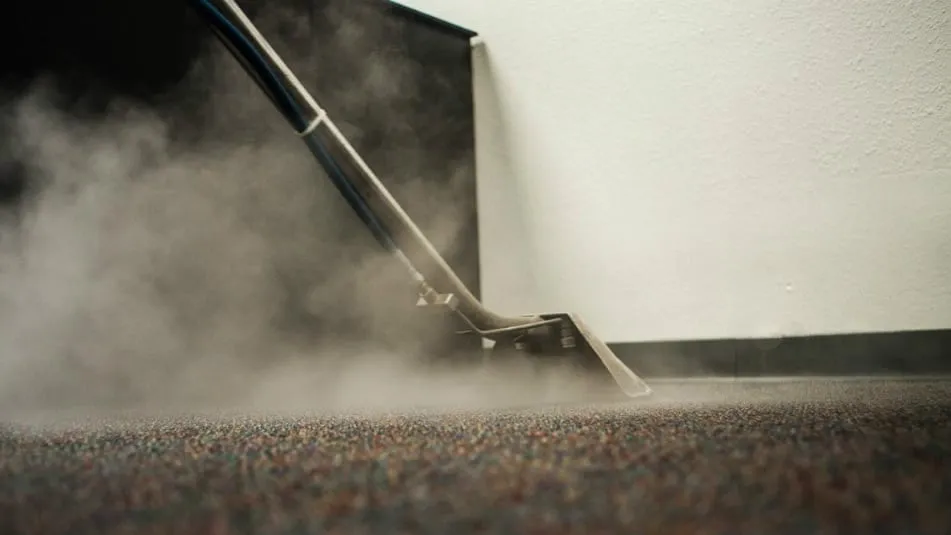
In the steam dry cleaning paradigm, a heated solution containing detergent is pressure-injected more than 1 cm into the carpet pile; a high-velocity vacuum then evacuates emulsified soils, pathogens, and suspended allergens. The steam cleaning carpet method is optimal for carpets that are moisture-resistant and constructionally sound enough to withstand sustained hydronic passage.
Benefits:
- The method achieves thorough penetration, clearing 90-95% of allergens, bacteria, and volatile odour-bearing material.
- The process utilises small quantities of biodegradable detergent, resulting in a benign environmental profile.
- Carpet warranties can be administered by trained personnel.
Limitations:
- After cleaning, the pile retains sufficient moisture for approximately 6-12 hours of drying, unless auxiliary environmental control measures are applied.
- The procedure incurs elevated labour and supply costs compared with low-moisture applications, due to proprietary extraction technology.
- Not recommended for delicate or moisture-sensitive carpets, it risks permanent damage during the treatment.
For light maintenance between professional steam sessions, many people prefer DIY methods like vinegar for cleaning solutions or following a structured house cleaning checklist.
Steam Cleaning vs Dry Cleaning Carpet – Key Differences
Understanding the difference between steam vs dry carpet cleaning is key to choosing the right method.
| Feature | Dry Cleaning | Steam Cleaning (Hot Water Extraction) |
| Cleaning Depth | Surface-level; moderate | Deep into fibres; thorough sanitation |
| Drying Time | Very quick (under 1 hour) | 6–12 hours, depending on carpet and weather |
| Cost | Moderate to higher (due to solvents) | Higher (tools + labor) |
| Effectiveness | Best for light maintenance | Superior for stains, allergens, and bacteria |
| Carpet Safety | Gentle on delicate fibres | Best for durable carpets, not antiques |
| Eco-Friendliness | Low water use but chemical-heavy | Uses water, can be chemical-free |
Which Carpet Cleaning Method is Better for You?
Choosing between the best carpet cleaning methods, involves weighing several critical considerations. Review the menu of questions below to guide your selection:
- Fibre Content: Opt for the dry method with natural wool, silk, or fringe-tasselled antiques; synthetic loops or cut-pile installations tolerate steam methods that release higher temperatures.
- Access Urgency: A dry-clean pass allows a room to recover foot traffic within thirty to sixty minutes, while steam applications often require two to four hours for moisture to exit.
- Contagious Residue: Severe pet or spill substances respond to steam, which drives detergent and heat into backing loops, areas, and to a greater extent, reduces a pathogen load; mild, surface soil may yield to a dry detergent tag.
- Overall Cost: Dry cleaning units may post lower invoice totals; however, a more economical steam cleaning approach in each visit can yield a carpet that stays tolerably clean for longer.
- Green Impact: A steam clean that applies two litres of soft water and a eucalyptus synthetic base offers a smaller footprint than dry cleaning, which relies solely on synthetic solvent carriers.
- Carpet maintenance tips: Pair professional methods with cleaning tools and safe DIY practices, such as how to clean a carpet at home, to achieve optimal results.
When Should You Use Steam Cleaning vs Dry Cleaning?
Understanding when to choose steam cleaning vs dry cleaning carpet helps maintain fabric quality, remove stains effectively, and extend the lifespan of carpets.
Steam Cleaning (Hot Water Extraction)
Hot Water Extraction (HWE), often referred to as steam cleaning, is a thorough form of carpet cleaning that uses pressurized water and detergents to force cleaning into carpet fibres while simultaneously sucking out debris using a vacuum. HWE is seen as the most effective, factory-approved process for deep-dirt removal.
- Steam cleaning is a deep-cleaning method that uses hot water and steam.
- It effectively removes stubborn stains, bacteria, and allergens from carpets.
- It is best suited for heavily soiled carpets or areas with deep dirt buildup.
- This method is ideal for homes with pets, children, or allergy concerns.
- It is typically recommended every 6 to 12 months for thorough cleaning.
- The drying time usually ranges from 6 to 24 hours.
- It is generally more expensive but delivers more comprehensive results.
- There is a risk of mould if the carpet is not dried properly.
Dry Cleaning (Low Moisture)
Dry cleaning involves using a solvent other than water, whereas the dry-cleaning technique in industry involves cleaning in environments where food is prepared without water to inhibit mould and bacterial growth. This is accomplished through vacuuming, scraping, detergent action by alcohol, and dry steam.
- Dry cleaning is a surface-level cleaning method that uses very little moisture.
- It is effective for removing light dirt and maintaining carpet cleanliness.
- It is best suited for quick refreshes or regular maintenance cleaning.
- This method works well in offices and high-traffic areas.
- It can be used more frequently compared to steam cleaning.
- The drying time is typically between 1 and 2 hours.
- It is more affordable and convenient for regular use.
- The risk of mould or mildew is very low due to minimal moisture usage.
Quick Choice
- Steam cleaning should be chosen when a deep and long-lasting clean is required.
- Dry cleaning should be chosen when a quick and convenient cleaning solution is needed.
Why Choose NoBroker for Carpet Cleaning Services?
When homeowners weigh the choice between steam cleaning vs dry cleaning carpet, the ultimate decision depends on the material, specific cleaning objectives, and daily life habits. To optimise convenience, environmental sustainability, and budget, a large number of households employ a regimen of preventive upkeep utilising vinegar or baking soda, complemented by scheduled professional carpet cleaning services from reliable operators such as NoBroker.
Although household remedies provide a moderate benefit, the accuracy and expertise offered by certified cleaning teams is irreplaceable. NoBroker experts also integrate the best home cleaning app features to schedule and track cleaning routines, saving you time and hassle.
Frequently Asked Questions
Is steam cleaning better than dry cleaning for carpets?
Does dry cleaning damage carpets?
How often should I steam clean my carpet?
Can both methods remove tough stains and odours?
About the Author

kruthi
Senior Editor


Recent Blogs
Subscribe to our Newsletter
Get latest news delivered straight to your inbox