- https://blog.portobelloinstitute.com/what-is-the-difference-between-facilities-management-and-property-management
- https://silagroup.co.in/2025/06/28/facilities-and-management-vs-property-management-know-the-difference/
Table of Contents
What is Property Management?What is Facility Management?Property Management vs Facility Management - Key Differences Benefits of Property ManagementBenefits of Facility ManagementEmerging Trends in Facility & Property ManagementHow NoBroker Can Help with Property Management Services?Frequently Asked Questions?
Loved what you read? Share it with others!


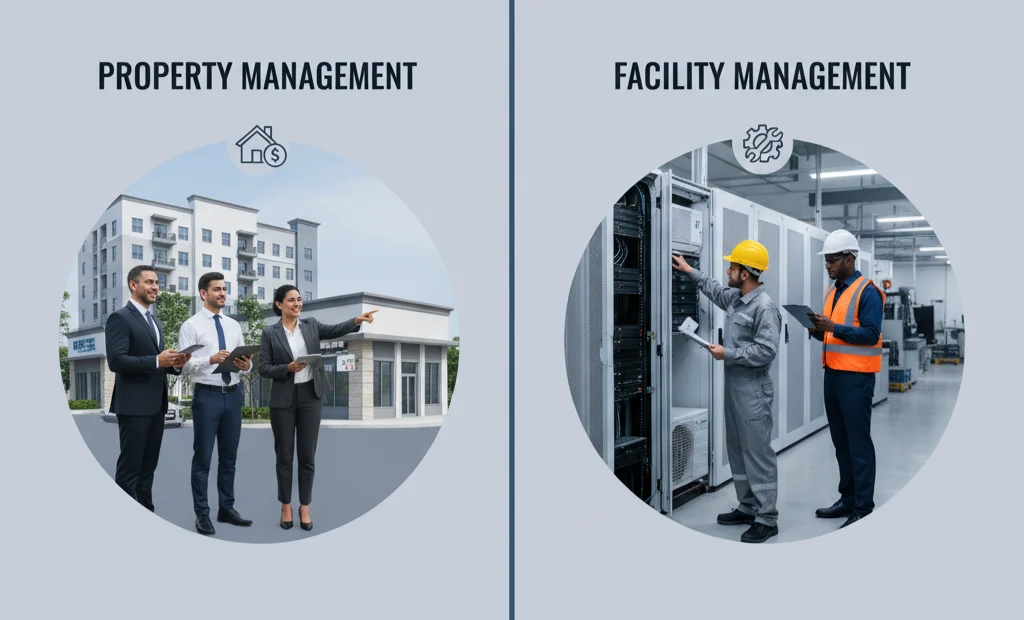
Property Management Vs Facility Management: Meaning, Key Difference and Benefits in 2026
Updated : February 9, 2026, 4:48 PM
Author :
 Kruthi
Summary
Property management and facility management are two different services in real estate. Property management deals with tenants, rent collection, leases, and maintaining the property’s financial value for the owner. Facility management focuses on daily building operations like safety, maintenance, utilities, space planning, and security to ensure a smooth and efficient environment for occupants. While one manages the asset, the other manages the functioning of the space. Choosing the right service depends on whether the priority is rental income or building operations.
Table of Contents
What is Property Management?What is Facility Management?Property Management vs Facility Management - Key Differences Benefits of Property ManagementBenefits of Facility ManagementEmerging Trends in Facility & Property ManagementHow NoBroker Can Help with Property Management Services?Frequently Asked Questions?
Property management and facility management may sound similar, but they serve different purposes in real estate. Property management focuses on handling tenants, rent, and the overall value of the property, while facility management ensures the building’s daily operations run smoothly, including maintenance, safety, and utilities. Knowing the difference helps owners and businesses choose the right service based on whether they need support for tenant-related tasks or building maintenance and operations.
What is Property Management?
Property management primarily focuses on overseeing real estate assets on behalf of owners or investors. Think of a property manager as the owner's representative, handling day-to-day tasks related to renting and maintaining a property. For a deeper dive, explore what is property management.[1]
Key Functions for Property Management
The responsibilities of a property manager revolve around the landlord-tenant relationship and the financial health of the property asset. Key functions include:
- Tenant Acquisition and Screening: Marketing vacant properties, showing them to prospective tenants, conducting background checks, and selecting suitable occupants.
- Lease Administration: Drafting and executing legally compliant lease agreements, managing lease renewals, and handling tenant move-ins and move-outs.
- Rent Collection: Ensuring timely rent collection, managing payment processing, and following up on late payments or defaults according to legal procedures.
- Property Maintenance Coordination: Addressing tenant maintenance requests, arranging for necessary repairs (often minor ones like plumbing leaks or appliance issues), and conducting routine property inspections. This aspect focuses on keeping tenants satisfied and the property habitable.
- Financial Reporting: Maintaining detailed records of income and expenses, providing regular financial statements to the property owner, and assisting with budget preparation.
- Legal Compliance: Ensuring the property and its operations comply with local, state, and national housing laws and regulations, including landlord-tenant laws.
- Tenant Relations: Acting as the primary point of contact for tenants, addressing their concerns, resolving disputes, and maintaining a positive relationship. Understanding the detailed property manager roles and responsibilities is crucial here.
What is Facility Management?
Facility management (often abbreviated as FM) focuses on ensuring the functionality, efficiency, safety, and comfort of the built environment to support the organisation's core activities or the activities of its occupants. The main goal of facility management services is to create a productive and safe workplace or living space by integrating people, place, process, and technology.[1]
Key Functions for Facility Management
Facilities and management encompass a wider range of operational tasks aimed at supporting the people and processes within a building. Key functions include:
- Building Systems Maintenance: Overseeing the regular maintenance and repair of critical building systems, such as HVAC (heating, ventilation, air conditioning), electrical systems, plumbing, elevators, and fire safety systems. This often involves planned preventive maintenance.
- Space Management and Planning: Optimizing the use of space within a building, managing office layouts, planning relocations, and ensuring the workspace meets the functional needs of the occupants.
- Health, Safety, and Environmental Compliance: Ensuring the building complies with all health, safety, and environmental regulations, conducting safety drills, managing waste disposal, and implementing sustainable practices.
- Security Management: Overseeing building security systems, managing access control, coordinating with security personnel, and implementing emergency response plans.
- Vendor and Contract Management: Selecting, managing, and evaluating third-party service providers for tasks like cleaning, catering, landscaping, and specialized maintenance.
- Energy Management: Monitoring and optimizing the building's energy consumption to reduce costs and improve sustainability.
- Workplace Services: Managing services that enhance the occupant experience, such as reception, mailroom operations, meeting room bookings, and sometimes even employee transportation. This is a core part of facility services management.
Property Management vs Facility Management - Key Differences
While both roles involve managing physical spaces, understanding the difference between facility management and property management lies in their focus, scope, and objectives. This table highlights the key distinctions: [2]
| Feature | Facility Management | Property Management |
|---|---|---|
| Focus Area | Operations, efficiency, and occupant well-being within the building. | The real estate asset itself, its value, and its financial performance for the owner. |
| Primary Users/Clients | The organization occupying the space, its employees, or residents using the facilities. | The property owner or investor. |
| Scope | Broad and strategic; integrates people, place, process, and technology for optimal functionality. | Primarily focused on the lease cycle, tenant relationships, and financial returns. |
| Objective | To create a safe, efficient, and productive environment that supports the core business or activities. | To maximize the property's income, maintain its value, and ensure smooth tenant occupancy. |
| Key Responsibilities | Maintenance of building systems, safety compliance, space planning, vendor management, energy efficiency. | Tenant screening, lease execution, rent collection, addressing tenant complaints, financial reporting to owner. |
| Skills Required | Technical knowledge of building systems, project management, H&S expertise, strategic planning, vendor negotiation. | Financial acumen, legal knowledge (rental laws), negotiation skills, customer service, marketing. |
| Typical Use Cases | Corporate offices, hospitals, factories, universities, large residential complexes (common areas). | Residential apartments, individual houses, commercial retail spaces, small office buildings leased to tenants. |
Benefits of Property Management
Engaging professional property management services offers numerous advantages, particularly for owners who lack the time or expertise to manage their properties directly. Considering self-management vs property management often highlights these benefits.
- Hassle-Free Ownership: Reduces the stress and time commitment involved in dealing with tenants, collecting rent, and handling maintenance issues.
- Improved Tenant Retention: Professional managers build strong tenant relationships, resulting in longer tenancies and shorter vacancy periods.
- Efficient Rent Collection: Streamlined processes ensure consistent and timely rent collection, improving cash flow for the owner.
- Legal Compliance: Property managers stay updated on landlord-tenant laws, reducing the risk of legal disputes or penalties.
- Effective Marketing: Professional marketing strategies help fill vacancies faster with qualified tenants.
- Maintenance Oversight: Access to a network of reliable contractors ensures maintenance issues are addressed promptly and cost-effectively.
Benefits of Facility Management
Effective facility management provides significant operational and strategic benefits to organizations and occupants within a building.
- Operational Efficiency: Ensures building systems run smoothly, minimizing downtime and disruptions to core business activities.
- Cost Savings: Optimizes energy consumption, implements preventive maintenance to reduce costly repairs, and negotiates better rates with service vendors.
- Enhanced Productivity: Creates a comfortable, safe, and well-organized work environment, which can boost employee morale and productivity.
- Safety and Compliance: Ensures adherence to all health, safety, and environmental regulations, reducing liability risks.
- Improved Occupant Experience: Provides a higher quality environment through well-maintained facilities and responsive support services.
- Longer Asset Lifespan: Regular and planned maintenance extends the life of building systems and infrastructure, protecting the owner's investment.
Emerging Trends in Facility & Property Management
Both facility management and property management fields are evolving rapidly, driven by technology and changing expectations. Staying aware of these trends is vital for service providers and clients alike.
- Technology Adoption: The use of Internet of Things (IoT) sensors for monitoring building performance, smart building systems for automation (lighting, HVAC), and specialized software like a property management app is becoming standard for enhancing efficiency and data-driven decision-making.
- Green and Sustainable Practices: Increasing focus on sustainability includes implementing energy-efficient systems, reducing water consumption, improving waste management, and using eco-friendly materials for property maintenance and operations.
- Outsourcing vs In-house Management: Organizations are increasingly outsourcing non-core functions like facility management to specialized facilities management companies to leverage expertise and reduce overheads. Similarly, property owners are relying more on professional management firms.
- Integration of AI and Automation: Artificial intelligence and automation are being used for tasks like predictive maintenance, optimizing energy usage based on occupancy patterns, automating rent reminders, and streamlining tenant communication.
How NoBroker Can Help with Property Management Services?
Understanding the difference between facility management and property management helps clarify which service you need. If you are a property owner looking for assistance with managing your rental property, NoBroker offers comprehensive property management solutions. Our services cover everything from finding verified tenants and handling paperwork to rent collection and property maintenance coordination, ensuring a stress-free experience for owners. We leverage technology to provide transparent reporting and efficient service delivery, making us one of the leading property management companies in India.
Frequently Asked Questions?
Q1. Can a property manager handle facility management tasks?
Ans: While there's some overlap (like coordinating minor repairs), a property manager's scope is generally limited. They typically don't handle complex building systems or strategic operational planning inherent to facility management.
Q2. Which skills are required for facility management?
Ans: Facility managers need a blend of technical knowledge (building systems), project management, financial budgeting, H&S expertise, leadership, and strong communication skills to manage operations effectively.
Q3. Who hires property management services?
Ans: Individual property owners, real estate investors, housing associations, and sometimes corporate entities owning multiple residential or commercial rental properties hire property management services.
Q4. Are facility management services mandatory for commercial buildings?
Ans: While not always legally mandatory, professional facility management is practically essential for large commercial buildings to ensure operational efficiency, safety compliance, and a productive environment for occupants.
Q5. How does technology impact facility and property management?
Ans: Technology streamlines operations through automation (rent collection, maintenance requests), provides data insights for better decision-making (energy use, occupancy), and enhances communication between managers, owners, tenants, and vendors.
ARTICLE SOURCES
Most Viewed Articles

List of Top 8 Property Management Companies in India
January 31, 2025
19275+ views
10 Property Management Apps to Streamline Your Real Estate Portfolio
January 31, 2025
7652+ views

What is Property Management in Real Estate?
January 31, 2025
5585+ views

What is Property Maintenance? | A Beginner's Guide
January 31, 2025
5459+ views
Commercial Property Management: An Essential Guide
January 31, 2025
5133+ views
Author
Loved what you read? Share it with others!
Recent blogs in
Sustainable Property Management for Eco-Friendly and Energy-Efficient Buildings in India
November 3, 2025 by Ananth
What is Outsourcing Property Management: Services, Benefits and Challenges in 2026
November 3, 2025 by Vivek Mishra
Property Management Compliance: Legal, Financial, and Technology Compliance in 2026
November 3, 2025 by Vivek Mishra










 Full RM + FRM support


Join the conversation!