Table of Contents
Loved what you read? Share it with others!


New Home Pre Delivery Inspection Checklist : Meaning and Importance in 2026
Updated : February 9, 2026, 4:46 PM
Author :
 Krishnanunni
Table of Contents
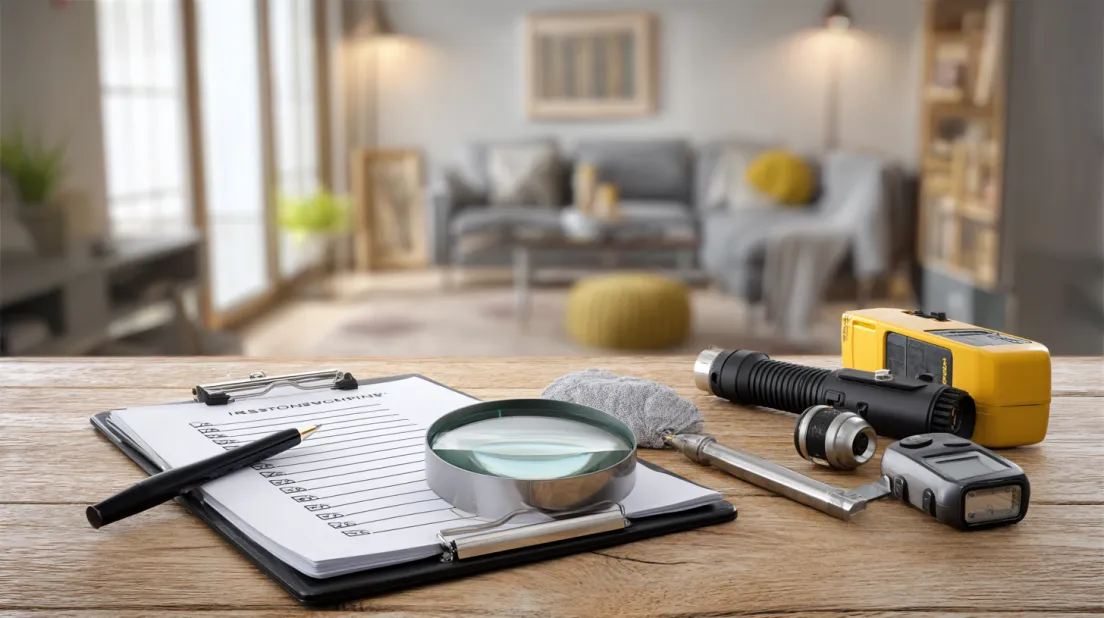
A Pre-Delivery Inspection (PDI) is the final and most crucial step before you take possession of your new home. This detailed examination is your opportunity to create a new home pre-delivery inspection checklist of all pending work, defects, or deviations from the builder's agreement. The builder handover inspection checklist is vital because it protects you as a buyer, ensuring you receive the property in the condition you were promised and saving you from significant future repair costs and disputes.
New Home PDI Checklist - Quick Info
This table provides a quick overview of what a comprehensive new build home inspection should cover, highlighting common issues found in each area.
| Area | Key Checks | Common Issues Found |
|---|---|---|
| Structure & Walls | Cracks, dampness, plaster finish, paint quality | Uneven plaster, wall seepage, paint bubbles. |
| Doors & Windows | Alignment, locks, handles, sealing, smooth operation | Loose fittings, gaps in frames, scratches on glass. |
| Electrical | Switches, sockets, wiring, DB board, power points | Loose connections, non-functional points, incorrect labelling. |
| Plumbing | Faucets, drains, water pressure, leaks, toilet flush | Leaking pipes, low water pressure, blocked drains. |
| Flooring & Tiles | Level, alignment, hollow sounds, skirting, stains | Chipped or cracked tiles, uneven flooring, hollow tiles. |
| Paint & Finishing | Smoothness, coverage, edges, drips | Uneven patches, paint drips, poor edge finishing. |
| Kitchen & Bath | Fixtures, cabinets, countertop, waterproofing | Leaky faucets, chipped countertops, poor cabinet alignment. |
| Safety | Fire alarms, staircase railings, window grills, exits | Missing alarms, wobbly or unsafe railings, improper grill fitting. |
What is a pre-delivery Inspection?
A Pre-Delivery Inspection (PDI) is a formal walkthrough of a new construction home that the buyer conducts with the builder's representative just before the final handover. The purpose is to identify any "snags" or defects that need to be rectified by the builder before you accept possession. This is your final chance to ensure everything is perfect.
Why is a pre-delivery Inspection Important?
Conducting a thorough home inspection for a new house is one of the most important things you will do as a homebuyer. It is a critical step that should never be skipped.
- Protects Your Investment: It helps you identify hidden defects and functions as a critical building safety inspection to ensure you get the quality you paid for.
- Ensures Builder Accountability: The PDI holds the builder accountable for delivering the property as per the sale agreement, including all promised specifications, fixtures, and finishes.
- Saves Future Repair Costs: Identifying and addressing issues like minor leaks, faulty switches, or hollow tiles before you move in, as recommended by the builder, saves you significant time, money, and hassle later on.
- Provides Legal Ground: A documented PDI report, signed by both you and the builder's representative, serves as legal proof of the acknowledged defects, ensuring the builder is obligated to complete the repairs.
The Ultimate New Home Pre-Delivery Inspection Checklist

To conduct a thorough inspection, it is best to have a detailed checklist. This new build house inspection checklist is organised by category to ensure you cover every aspect of your new home.
1. Structural & Finishing
This covers the foundational elements of your home's interior.
- Walls: Check all walls for the finest of visible cracks and signs of dampness, such as discoloured patches or a musty smell. Run your hand over the plaster to feel for any unevenness or waves.
- Ceilings: Inspect ceilings for cracks, water stains (which indicate leaks from the floor above, an issue that can sometimes be traced back to the roof, where a drone roof inspection might be helpful for larger buildings), and a smooth, even finish.
- Paint: Examine the paintwork in good daylight. Look for uneven patches, paint drips, bubbles, and peeling. Check that all edges are neatly finished.
2. Doors & Windows
Doors and windows are crucial for security and insulation.
- Operation: Open and close every single door and window to ensure they operate smoothly without squeaking or getting stuck.
- Locks and Latches: Test every lock, latch, and handle. Make sure they engage properly and feel secure. Collect all the keys and ensure each one works.
- Alignment and Gaps: When closed, doors and windows should fit snugly in their frames. Check for any visible gaps that could let in dust, noise, or drafts.
- Surfaces: Inspect all door and window surfaces, including glass panes, for any scratches, cracks, or dents that may have occurred during construction.
3. Electrical Systems
A thorough electrical check is vital for safety.
- Switches and Sockets: Carry a small device like a phone charger and test every single socket in the house. Flick every switch to ensure it controls the correct light or fan.
- MCB/DB Board: Open the main Distribution Board (DB). Check that all the Miniature Circuit Breakers (MCBs) are correctly installed and clearly labelled for each area (e.g., Kitchen, Master Bedroom, AC points).
- Fixtures: Check all provided light fixtures, fans, and exhaust fans to ensure they are in working condition.
- Power Backup: If the builder has promised an inverter point or generator backup, test it by turning off the main power supply.
4. Plumbing & Water Supply
Water-related issues can be the most damaging, so be meticulous.
- Faucets and Taps: Turn on every faucet and shower in the house. Check for adequate water pressure and look for any leaks from the joints or taps themselves.
- Drainage: While the taps are running, check the drainage in all sinks, washbasins, and shower areas. Ensure the water drains away quickly and doesn't pool.
- Toilets: Flush every toilet to ensure the flushing mechanism works correctly and the tank refills properly without any leaks. Ensure the toilet bowl is securely fastened to the floor.
- Leakage Signs: Inspect the areas under all sinks and around toilets for any signs of water leakage or dampness.
5. Flooring & Tiles
The quality of flooring is crucial for the home's overall look and feel.
- Check for Hollow Tiles: Gently tap every tile on the floor and walls with your knuckle or a small coin. A hollow sound indicates that the tile has not been appropriately laid and could crack or come loose later.
- Level and Alignment: Look across the floor to ensure it is level and free from uneven areas. Check that the grout lines between the tiles are straight and consistent.
- Damage: Inspect every tile for any chips, cracks, or stains. This is especially common in the corners and along the edges.
6. Kitchen & Bathroom Fixtures
These are high-cost areas, so check all fittings carefully.
- Cabinets and Drawers: Open and close all kitchen and bathroom cabinets and drawers. Check for smooth operation, proper alignment of the shutters, and the quality of the handles and hinges.
- Countertops: Inspect the kitchen countertop for any cracks, chips, or stains. Ensure it is properly sealed, especially around the sink.
- Sinks: Check that the kitchen and bathroom sinks are securely installed and that there are no leaks from the faucets or the drain pipes below.
- Waterproofing: Request proof of waterproofing from the builder in all wet areas, such as bathrooms, balconies, and the kitchen utility area. Look for any signs of dampness on the walls.
7. Safety & Compliance
Safety features are non-negotiable and must be in perfect working order.
- Railings: Hold and firmly shake the railings in all balconies and staircases to ensure they are sturdy, secure, and at a safe height.
- Window Grills: Check that all window grills are securely installed and have no sharp edges.
- Fire Safety: If applicable, verify the installation of promised fire safety equipment, such as smoke detectors and sprinklers.
- Main Door: Ensure the main door has a good-quality lock and a peephole for security.
8. Common Areas (if in an apartment)
Your new flat possession checklist in India should extend beyond your front door.
- Check Lifts, Lobbies, and Corridors: Inspect the quality of flooring, paint, and lighting in all common areas and corridors. Travel in lift to ensure smooth operation and emergency alarms.
- Parking: Go to the parking area and confirm that your designated parking spot is clearly marked and accessible.
- Amenities: Check the status of promised amenities like the clubhouse, swimming pool, and gym to see if they are complete and operational.
Common Issues Found During PDI
Being aware of common problems can help you know what to look for during your new build inspection checklist.
- Hollow or chipped floor and wall tiles.
- Leaky faucets or pipes under sinks.
- Doors and windows that do not close or lock properly.
- Faulty electrical switches or sockets.
- Poor quality of paint finish with patches and drips.
- Cracks in walls, especially around door frames and corners.
- Water seepage or dampness on walls, particularly in bathrooms.
Should You Hire a Professional Home Inspection Service?
While you can conduct a PDI yourself, hiring a professional offers several advantages.
- Professionals possess the technical knowledge and utilise specialised home inspection tools to identify problems that a layperson might overlook.
- A professional inspector provides an unbiased, detailed report that can be a powerful tool when negotiating with the builder.
- They follow a systematic process to inspect every aspect of the property, from the structural integrity to the plumbing and electrical systems.
- Knowing that an expert has thoroughly checked your new home provides invaluable peace of mind before you make the final payment.
Do and Don’t of a Pre-Delivery Inspection
To make your new flat possession checklist in India effective, follow these simple guidelines.
1. Do
- Schedule the inspection for broad daylight to spot any defects easily.
- Do take a detailed checklist with you to ensure you don't miss anything.
- Do bring a friend or family member as a second pair of eyes.
- Do take photos and videos of every defect you find as proof.
- Ensure that everything is in writing, documented in a formal snag list, signed by the builder's representative.
2. Don't
- Don't rush the inspection. Take your time to thoroughly check every room and detail.
- Don't inspect an incomplete house. Only do the PDI when the builder says the property is 100% ready.
- Don't verbally agree to anything. All promises for repairs must be documented in writing.
- Don't feel pressured by the builder's representative. You have the right to inspect the property to your satisfaction.
- Don't sign the handover documents until all the major defects you have identified are rectified.
How NoBroker Can Help with Home Property Inspection Services?
Navigating a new home inspection can be daunting. NoBroker simplifies this process by connecting you with professional inspectors. Our partners conduct a thorough, non-invasive inspection and provide a detailed report with images, giving you the leverage you need to negotiate, much like understanding rental tenant inspection rights empowers tenants. With NoBroker, you can ensure your new home is safe, sound, and defect-free before you invest.
Frequently Asked Questions?
Ans: You should conduct a thorough pre-delivery Inspection. The key things to check before taking possession of a new home include the condition of walls, floors, plumbing, electrical systems, and all fixtures.
Ans: While not legally mandatory, it is a highly recommended and standard practice. As a buyer, you have the right to inspect the property before accepting possession from the builder.
Ans: All defects should be documented in a "snag list," which is then submitted to the builder. The builder is contractually obligated to rectify these issues before the final handover.
Ans: Yes, you have the right to refuse to take possession of the property until the builder has satisfactorily repaired all the major defects identified in the PDI report.
Ans: The cost of a home inspection for a new build varies based on the property's size, but for a standard 2BHK apartment, it typically ranges from ₹5,000 to ₹10,000.
Recommended Reading
New Home Pre Delivery Inspection Checklist : Meaning and Importance in 2026
October 3, 2025
1439+ views
Top 10 Home Inspection Tools for Detecting Structural, Electrical, and Safety Issues
August 29, 2025
1351+ views

Home Appraisal vs Home Inspection in 2026: What Buyers, Sellers, and Owners Must Know
August 29, 2025
1222+ views

Home Inspection Checklist: Key Safety, Utilities, and Essentials in 2026
September 5, 2025
1209+ views

Home Re-Inspection: Meaning, Process, Checklist & Benefits in 2026
September 25, 2025
775+ views
Most Viewed Articles

List of Top 8 Property Management Companies in India
January 31, 2025
19201+ views

10 Property Management Apps to Streamline Your Real Estate Portfolio
January 31, 2025
7632+ views

What is Property Management in Real Estate?
January 31, 2025
5570+ views

What is Property Maintenance? | A Beginner's Guide
January 31, 2025
5454+ views

Commercial Property Management: An Essential Guide
January 31, 2025
5127+ views
Author
Loved what you read? Share it with others!
Recent blogs in
Sustainable Property Management for Eco-Friendly and Energy-Efficient Buildings in India
November 3, 2025 by Ananth
What is Outsourcing Property Management: Services, Benefits and Challenges in 2026
November 3, 2025 by Vivek Mishra
Property Management Compliance: Legal, Financial, and Technology Compliance in 2026
November 3, 2025 by Vivek Mishra









 Full RM + FRM support


Join the conversation!