Table of Contents
Loved what you read? Share it with others!


Home Re-Inspection: Meaning, Process, Checklist & Benefits in 2026
Updated : February 9, 2026, 4:40 PM
Author :
 Kruthi
Table of Contents
A home re-inspection is a crucial follow-up to an initial property inspection, conducted after the seller has addressed reported defects. It allows buyers, sellers, and real estate agents to verify that repairs meet the agreed standards. This step ensures that the property is in the promised condition before finalising the sale, providing legal and financial assurance, safeguarding the buyer’s investment, and giving all parties confidence that the transaction proceeds smoothly without unexpected issues.
Home Re-inspection - Quick Info
This table provides a consolidated overview of the key differences between an initial inspection and a re-inspection after a home inspection.
| Aspect | Initial Home Inspection | Home Re-inspection |
|---|---|---|
| Purpose | To identify and document existing defects and issues in a property. | To verify that previously identified defects have been adequately repaired. |
| Timing | Conducted during the due diligence period, before repair negotiations. | Conducted after the seller has completed the agreed-upon repairs, before the final closing. |
| Scope | A comprehensive, top-to-bottom evaluation of the entire property. | A focused inspection limited only to the items on the repair agreement list. |
| Cost | A full fee based on the property's size and scope. | A lower fee, as the scope is limited and the time required is less. |
| Benefits | Identifies problems and provides the basis for repair negotiations. | Confirms completion of work, ensures safety, and protects the buyer's investment. |
What is a Home Re-inspection?

A home re-inspection is a limited, focused examination of a property conducted by a professional home inspector. Unlike a full inspection that covers the entire house, a reinspection is specifically designed to verify that repairs for defects identified during the initial property inspection and agreed upon by the seller have been executed satisfactorily. It is the buyer's primary method for due diligence on repair work.
Why is a Home Re-inspection Needed?
A home re-inspection benefits range from financial security to ensuring the structural and systemic safety of the property.
- Verification of Repairs: It formally confirms that all agreed-upon repairs from the initial inspection report have been completed correctly.
- Quality Assurance: It assesses the quality of the repair work, ensuring it is effective, durable, and complies with professional standards.
- Safety Confirmation: It verifies that critical safety hazards, especially in electrical, plumbing, or structural systems, have been properly rectified.
- Leverage for Negotiation: An updated report provides the buyer with leverage to negotiate further if the repair work is deemed unsatisfactory.
- Investment Protection: It safeguards the buyer's financial investment by preventing them from inheriting costly, unresolved problems after the purchase.
- Provides Peace of Mind: It gives the buyer confidence and final assurance that the property is in the agreed-upon condition before finalising the transaction.
What Does a Re-Inspection Cover?
The scope of what a home re-inspection is deliberately narrow and focused. An inspector will not look for new problems but will concentrate exclusively on the following:
- The Repair Addendum: The inspector will use the list of agreed-upon repairs from the initial inspection report as their guide.
- Verification of Each Item: Each item on the list is carefully examined to confirm that the necessary work has been completed.
- Quality of Workmanship: The inspector assesses the quality of the repair to ensure it is professional and durable.
- Functionality: For repaired systems like plumbing or electrical fixtures, the inspector will test to ensure they are functioning correctly.
Key Steps for a Successful Re-Inspection
To ensure the real estate reinspection process is effective, the buyer should follow a few key steps to facilitate a thorough verification.
- Step 1- Provide the Original Report: The buyer must provide the inspector with a copy of the initial home inspection report and the list of agreed-upon repairs.
- Step 2- Schedule in Advance: The re-inspection should be scheduled a few days before the final closing date to allow time to address any issues.
- Step 3- Get a Written Report: The inspector will provide a formal re-inspection report confirming which items were repaired correctly and which, if any, still require attention.
Benefits of a Re-Inspection
The primary benefit of a home reinspection is risk mitigation. It is a prudent step that offers significant advantages to the home buyer.
- Financial Protection: It prevents the buyer from having to pay for incomplete or poorly executed repairs after moving in.
- Negotiating Power: If repairs are found to be inadequate, the re-inspection report provides the buyer with the necessary evidence to renegotiate with the seller before closing.
- Safety Assurance: It verifies that critical safety issues, such as electrical faults or structural problems, have been properly addressed.
- Contractual Confirmation: It serves as a formal confirmation that the seller has fulfilled their contractual obligations regarding repairs.
Home Re-Inspection Checklist for Buyers
A comprehensive home inspection checklist helps the buyer ensure that all agreed-upon repairs have been addressed. This list should be based directly on the initial inspection report.
Items to check
- Structural Issues:
- Have all specified cracks in the foundation or walls been appropriately filled and sealed?
- Is there evidence of professional repair for any previously noted structural damage?
- Roofing and Gutters:
- Have the missing or damaged shingles been replaced?
- Are the gutters cleaned and properly re-attached as requested?
- Is there any sign of a leak in the attic from the repaired area? This may require a thermal roof inspection.
- Electrical Systems:
- Has a licensed electrician corrected the faulty wiring, non-functional outlets, or unsafe panel conditions?
- Are there receipts or documentation for the electrical work performed?
- Plumbing System:
- Have the previously identified leaks in pipes or faucets been fixed?
- Does the water heater now function correctly?
- Has the sewer line issue been addressed as per the agreement?
- HVAC System:
- Has the heating, ventilation, or air conditioning system been serviced or repaired as agreed?
- Is the system now functioning correctly and providing adequate heating/cooling?
How to Prepare for Re-inspection
- Review the Repair Agreement: Have a clear copy of the addendum that lists all repairs the seller agreed to make.
- Gather All Documents: Collect all receipts, invoices, and warranties for the work done by the seller's contractors.
- Communicate with Your Inspector: Provide all these documents to your home inspector well before the re-inspection appointment.
When Should You Get a Home Re-Inspection?
A re-inspection should be scheduled at a specific point in the property transaction timeline to be most effective.
- The re-inspection should only be booked after the seller has confirmed that all agreed-upon repairs have been completed.
- t should be conducted before the final walkthrough and a few days before the closing date. This provides a buffer to resolve any last-minute issues.
- A new home reinspection is often done before the final handover from the builder to ensure that all items on the "punch list" have been rectified.
Common Issues Found in Re-inspection
Unfortunately, not all repairs are made to a professional standard. A home re-inspection after repairs often uncovers several common issues.
- Cosmetic Fixes Only: A crack is painted over instead of being properly sealed and structurally repaired.
- Incomplete Work: A contractor may have only partially completed the agreed-upon repair.
- Use of Improper Materials: The repair was done using substandard materials that will not last.
- New Damage Caused: The process of repairing one item may have caused a new problem (e.g., a plumber damaging a wall while fixing a leak).
- Work Not Done by a Licensed Professional: Critical electrical or plumbing work was done by a handyman instead of a licensed professional, potentially creating new safety hazards.
How to Book a Home Inspection with NoBroker?
Booking a comprehensive home inspection or a follow-up re-inspection with NoBroker is a simple, digital process.
- Step 1: Visit the NoBroker Website and navigate to the Home Inspection service page.
- Step 2: Choose the type of inspection you require (e.g., full inspection or re-inspection).
- Step 3: Select a convenient date and time for the inspector to visit the property.
- Step 4: After the inspection, you will receive a comprehensive digital report with images and expert analysis.
How Can NoBroker Help with Home Property Inspection Services?
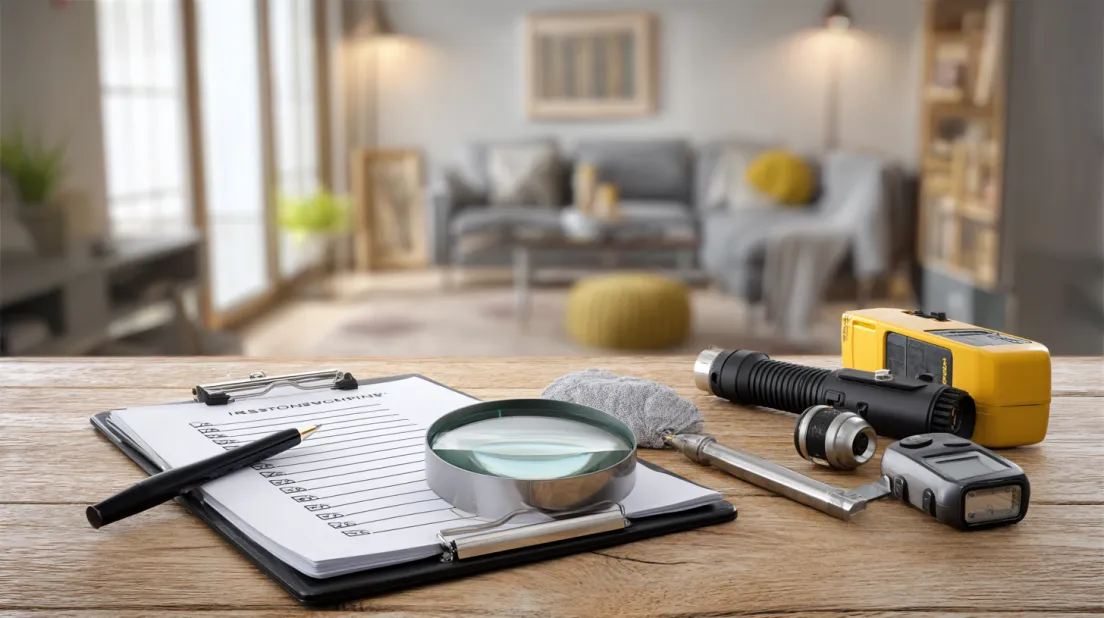
A home re-inspection is a crucial final step in the property buying process, and NoBroker’s professional services ensure it is done correctly. We provide detailed inspections using advanced home inspection tools, conducted by certified engineers. Our formal report provides you with the clear, unbiased verification you need to proceed with your purchase with confidence, ensuring that all agreed-upon repairs have been completed to the highest standard.
Frequently Asked Questions
Ans: You should schedule it after the seller has completed all agreed-upon repairs, but a few days before the final closing date of the property transaction.
Ans: It is not legally mandatory, but it is highly recommended as a crucial step of due diligence to protect your investment.
Ans: The buyer typically pays for the re-inspection, as it is a service performed to protect their interests and verify the repair work.
Ans: Yes, a buyer can request multiple re-inspections if repairs from the first re-inspection are still not satisfactory, though this may delay the closing.
Ans: No, sellers are not required to be present. The buyer's real estate agent typically coordinates access to the property for the inspector.
Ans: It is a follow-up inspection focused solely on verifying that previously identified defects have been repaired correctly as per the purchase agreement.
Ans: A final walkthrough vs reinspection is different. The walkthrough is a final check by the buyer to ensure the property is in the same condition. The re-inspection is a professional assessment of specific repairs.
Ans: The cost is less than a full inspection, typically ranging from ₹4,000 to ₹8,000, as it is limited in scope and takes less time.
Recommended Reading

New Home Pre Delivery Inspection Checklist : Meaning and Importance in 2026
October 3, 2025
1569+ views
Top 10 Home Inspection Tools for Detecting Structural, Electrical, and Safety Issues
August 29, 2025
1367+ views

Home Inspection Checklist: Key Safety, Utilities, and Essentials in 2026
September 5, 2025
1234+ views

Home Appraisal vs Home Inspection in 2026: What Buyers, Sellers, and Owners Must Know
August 29, 2025
1231+ views
Home Re-Inspection: Meaning, Process, Checklist & Benefits in 2026
September 25, 2025
786+ views
Most Viewed Articles

List of Top 8 Property Management Companies in India
January 31, 2025
19277+ views

10 Property Management Apps to Streamline Your Real Estate Portfolio
January 31, 2025
7654+ views

What is Property Management in Real Estate?
January 31, 2025
5586+ views

What is Property Maintenance? | A Beginner's Guide
January 31, 2025
5459+ views

Commercial Property Management: An Essential Guide
January 31, 2025
5133+ views
Author
Loved what you read? Share it with others!
Recent blogs in
Sustainable Property Management for Eco-Friendly and Energy-Efficient Buildings in India
November 3, 2025 by Ananth
What is Outsourcing Property Management: Services, Benefits and Challenges in 2026
November 3, 2025 by Vivek Mishra
Property Management Compliance: Legal, Financial, and Technology Compliance in 2026
November 3, 2025 by Vivek Mishra










 Full RM + FRM support


Join the conversation!