Maharashtra Rent Control Act 1999: Provisions, Tenant Rights and Rental Laws Explained


24.5K Views
Table of Contents
Summary
The Maharashtra Rent Control Act governs rental relationships between landlords and tenants, providing a legal framework for rent regulation, eviction procedures, tenancy rights, and property management. As cities like Mumbai, Pune, and Nagpur continue to witness strong demand for rental housing, understanding these provisions has become increasingly important for both parties. Whether you are renting a house, flat, or apartment, knowing the key rules under the Act can help prevent disputes, protect your legal rights, and ensure a transparent and legally compliant rental arrangement from the very beginning.
What does Rent Control mean?
Rent Control is a means by which a limit is set on the amount of rent a landlord can demand, even when the rental agreement has to be renewed. This amount is carefully arrived at by the local executive, legislative, or judicial government, as the case may be.
Why was the Maharashtra Rent Control Act Enforced?

Back in the day, during the First World War, there was a massive influx of people into the city; this included military personnel and migrants. To add to this, there were also dock workers and factory workers who were very handsomely paid for their key contributions.
The growing demand for homes and the growing supply of money led to landlords hiking the price of rent to capitalize on the situation. To ensure that rental prices were not getting out of hand, a standard rent was set in 1915.
History of Rent Control Laws in Maharashtra
Rent control in Maharashtra traces back to 1915, when the Bombay Presidency introduced laws to curb wartime rent increases. The Bombay Rents, Hotel and Lodging House Rates Control Act, 1947 later strengthened tenant protections but was criticized for discouraging landlord investment. The Maharashtra Rent Control Act, 1999 replaced earlier laws with a unified framework, introducing standard rent, permitted rent increases, and legal recognition of the pagdi system.
Maharashtra Rent Control Act 1999: Key Provisions
There have been many changes made to the Rent Control Act since 1915; the one that is currently enforced in the state of Maharashtra is the Maharashtra Rent Control Act 1999 Bare Act.
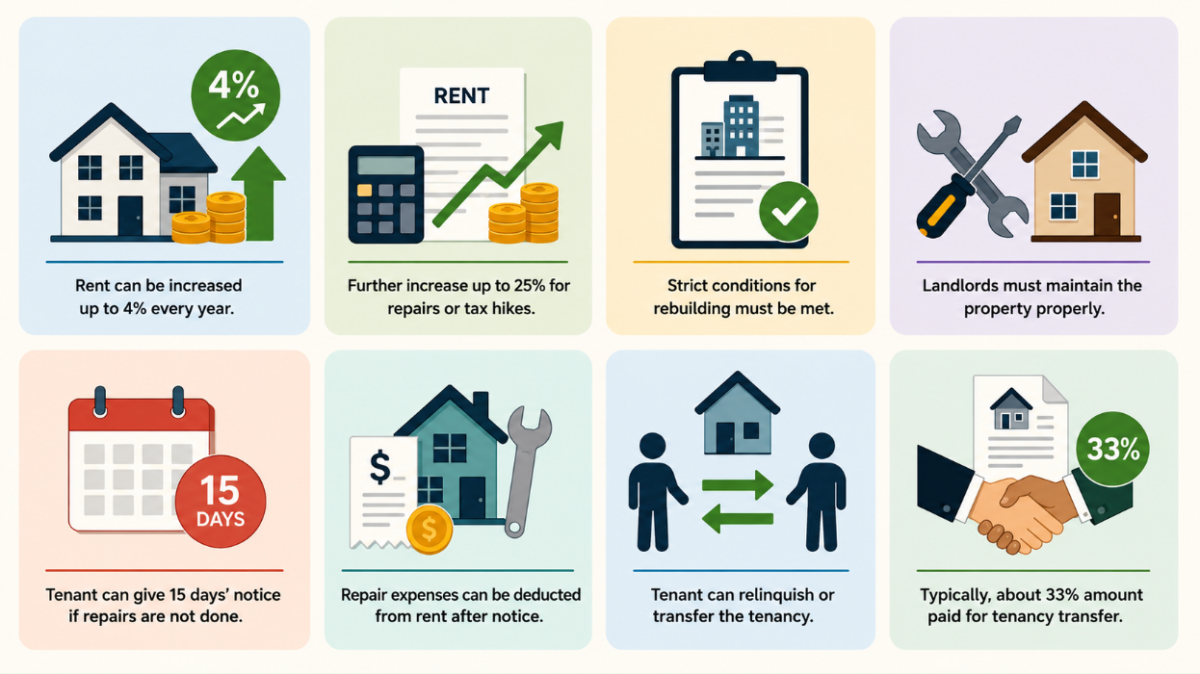
In this Act-
- The landlord has the right to decide and increase rent at the rate of 4% every year. This can be increased to 15% if improvements are needed and 70% if the tenant’s consent.
- The rent can be increased further to 25% if there are structural repairs needed. Also, if there is a hike in taxes, you can expect your landlord to increase the rent charged.
- To rebuild, the landlord needs to meet strict conditions set forth by the Act. This will include raising funds, getting the building plans approved by municipal authorities, etc.
- Landlords must maintain their property. If the tenant feels it is not maintained and unfit to live in, he can serve the landlord with a notice of 15 days.
- If the tenant does the repairs, after serving the notice, they can deduct the repair expenses from the rent they pay.
- A tenant can relinquish or transfer his tenancy, this is normally done when someone offers to buy out the rest of their tenancy.
- To transfer tenancy they usually pay about 33% of the amount to the landlord to effect the transfer of tenancy.
Grounds for Eviction Under the Maharashtra Rent Control Act
A landlord can seek eviction of a tenant under the Maharashtra Rent Control Act on the following grounds:
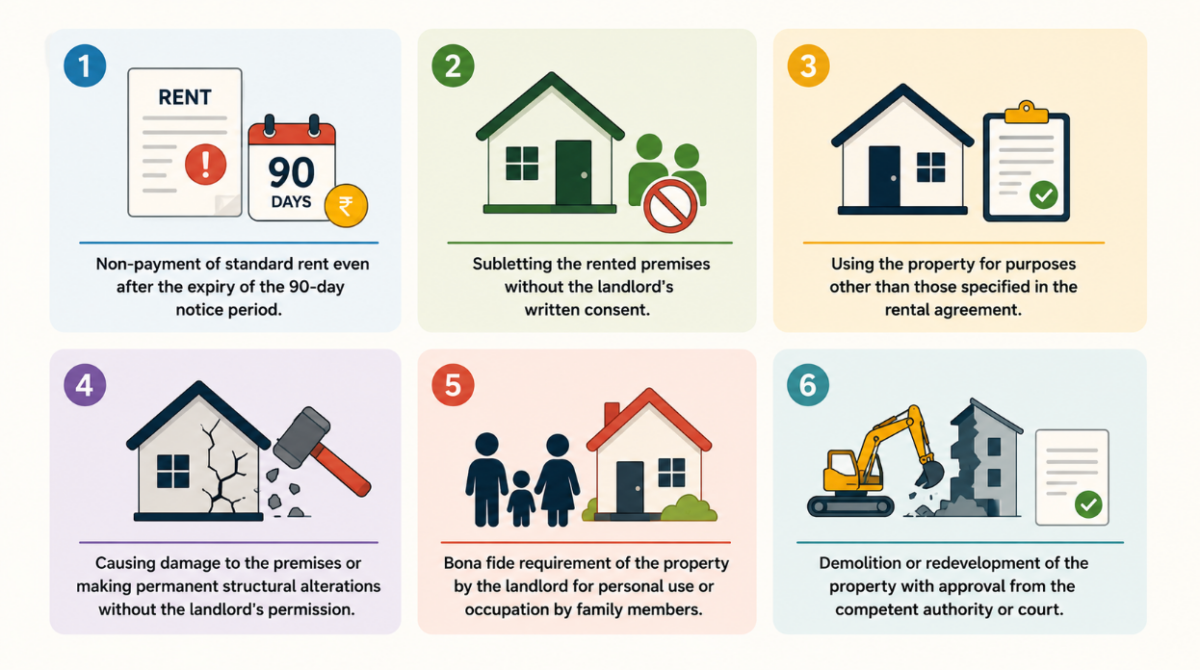
- Non-payment of standard rent even after the expiry of the 90-day notice period.
- Subletting the rented premises without the landlord's written consent.
- Using the property for purposes other than those specified in the rental agreement.
- Causing damage to the premises or making permanent structural alterations without the landlord's permission.
- Bona fide requirement of the property by the landlord for personal use or occupation by family members.
- Demolition or redevelopment of the property with approval from the competent authority or court.
Note: All eviction orders must be obtained through the Rent Authority. Self-help eviction, such as forcibly removing a tenant or disconnecting essential services, is a criminal offense under Section 41 of the Act.
The Pagdi System Under the Maharashtra Rent Control Act
The pagdi system is a tenancy arrangement in which a tenant pays a substantial one-time lump sum to the landlord in exchange for a nominal monthly rent. Recognized under Section 56 of the Maharashtra Rent Control Act, 1999, it also allows landlords to receive approximately 33% of the transaction value when tenancy rights are transferred. The system remains common in South Mumbai, where some tenants pay as little as ₹500 per month, even though market rents exceed ₹60,000. Properties governed by the pagdi system are not covered by the Model Tenancy Act.
Tenant Rights and Landlord Obligations Under the Maharashtra Rent Control Act
The Maharashtra Rent Control Act clearly defines the rights of tenants and the responsibilities of landlords to ensure fair and lawful rental practices. Below are the key rights and obligations under the Act.
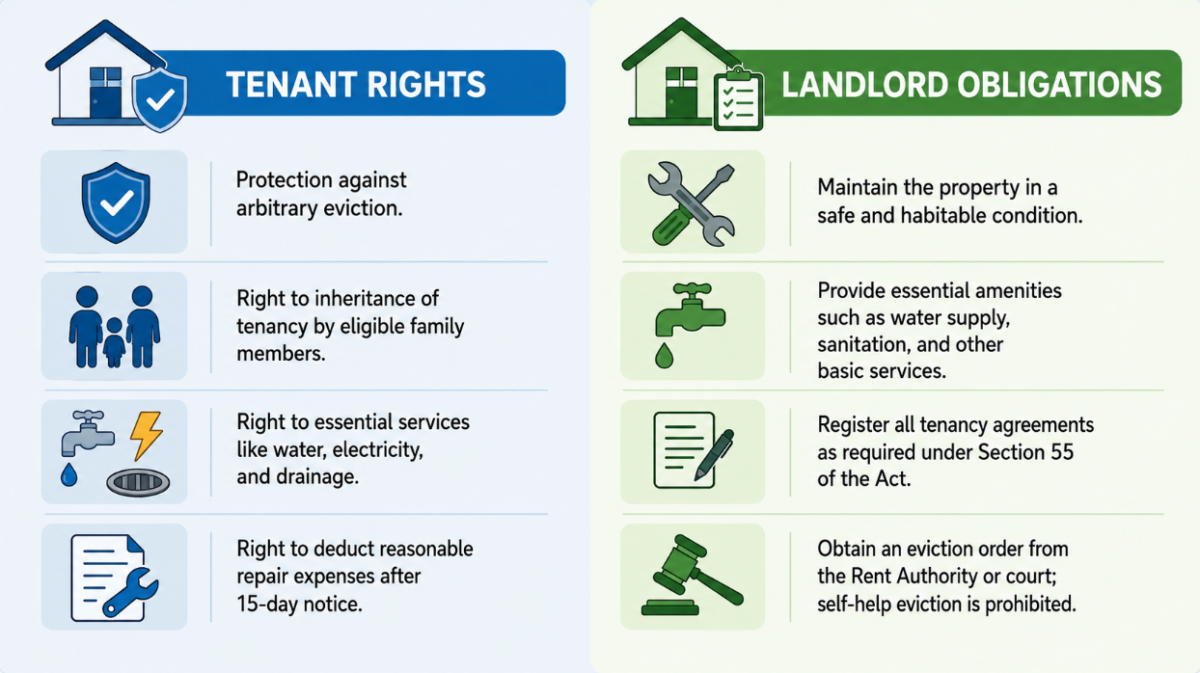
Tenant Rights
Tenants protected under the Maharashtra Rent Control Act are entitled to the following rights:
- Protection against arbitrary eviction, provided the rent is paid on time and tenancy conditions are fulfilled.
- Right to inheritance of tenancy by eligible family members residing with the deceased tenant.
- Right to essential services, including water, electricity, and drainage, under Section 41 of the Maharashtra Rent Control Act, 1999.
- Right to deduct reasonable repair expenses from the rent after giving the landlord a 15-day notice if necessary repairs are not carried out.
Landlord Obligations
Landlords must comply with the following responsibilities under the Act:
- Maintain the property in a safe and habitable condition.
- Provide essential amenities such as water supply, sanitation, and other basic services.
- Register all tenancy agreements as required under Section 55 of the Maharashtra Rent Control Act, 1999.
- Obtain an eviction order from the Rent Authority or a competent court before evicting a tenant, as self-help eviction is prohibited.
The Impact Of The New Model Tenancy Act 2021 On The Maharashtra Rent Control Act
The Model Tenancy Act was approved and guidelines for the same were issued to states in 2021. The new Act’s aim is to enforce an ecosystem that is not only transparent between the landlord and the tenant, but also that disputes and litigation are minimised. The state of Maharashtra ranks among the top states with the highest number of tenants. However, this will not impact properties that are currently being rented out based on the pagdi system.
Read: Know Your Renting Rights with the Model Tenancy Act
How NoBroker Helps With Maharashtra Rent Control Act Legal Services?
Navigating rental laws doesn't have to be complicated. At NoBroker Legal Services, we help landlords and tenants stay compliant with the Maharashtra Rent Control Act through reliable and hassle-free legal services. We draft legally compliant rental agreements, handle e-stamping and registration, and ensure every agreement meets the requirements of Section 55 of the Maharashtra Rent Control Act. Our legal experts also assist with rent disputes, eviction notices, and tenant verification, making the entire rental process simple, secure, and legally compliant across Maharashtra. Create your rental agreement with NoBroker today for fast, legally compliant, and hassle-free documentation!
Frequently Asked Questions
What is rent control?
What is the Maharashtra Rent Control Act?
When did the Maharashtra Rent Control Act come into effect?
What is penalty for charging more than the standard rent set by the Act?
How much rent is allowed to increase under the Act?
What is the Bombay Rent Control Act and how does it differ from the Maharashtra Rent Control Act 1999?
What are the grounds for eviction under the Maharashtra Rent Control Act?
About the Author

Vinay Kulkarni
Senior Editor


Recent Blogs

Subscribe to our Newsletter
Get latest news delivered straight to your inbox