How To File an Affidavit: Types, Format, Documents and Filing Process in India 2026


Affidavit Guide & Formats

904 Views
Table of Contents
Summary
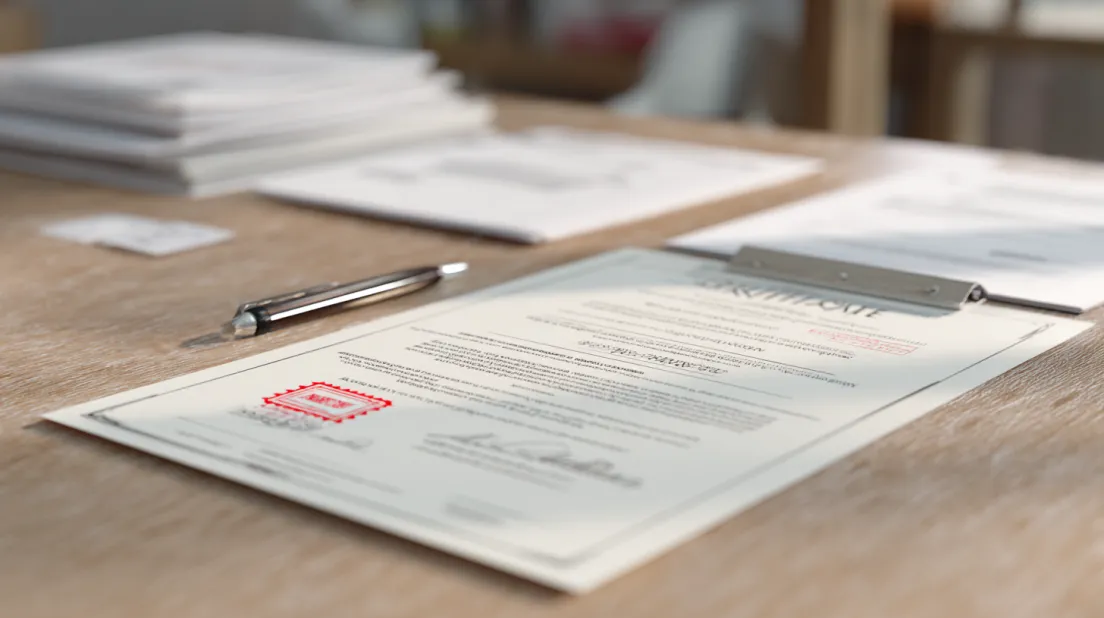
An affidavit is an essential legal document used in judicial and administrative processes, serving as a written statement of facts sworn under oath. Whether you are correcting personal details or presenting evidence in court, understanding how to file an affidavit correctly is important to ensuring it is accepted. It acts as a guarantee of truthfulness, and errors can lead to rejection or legal issues. Before starting the process, it is essential to understand what an affidavit is and why it holds such significant legal weight in valid proceedings.
Recommended Reading

Name Change for Minor in India: Procedur...
4.2K Views


How to Change Birthdate in Birth Certifi...
3.9K Views
How to Change Name in Educational Certif...
3.8K Views

How to Change Name Legally in India: Ste...
2.3K Views

What Is One and Same Person Affidavit: M...
2.2K Views
- Preparation: An affidavit can be drafted by the individual, but lawyers or professional document writers usually prepare it to avoid errors and ensure correct legal wording.
- The Deponent: The deponent is the person making the affidavit. They must be legally competent and are fully responsible for the truthfulness of all statements. The role and responsibilities of what is an affiant (or deponent) is to bear the criminal liability for any false statements made in the document.
- Filing Authority: Affidavits are filed by individuals for personal matters, while court-related affidavits are usually submitted through an advocate or authorised representative.
When Do You Need to File an Affidavit?
Affidavits are versatile documents used in a wide range of scenarios. [2]
- Court cases and legal proceedings: They are used extensively to present evidence or formally deny or accept allegations in civil and criminal cases. This avoids the need for the witness to appear in person for every minor verification.
- Government applications: You may need to file one to issue passports or visas, or to correct details in government IDs such as PAN cards or Aadhaar cards when there is a discrepancy.
- Banking and financial matters: They are often needed for issuing duplicate certificates, loan applications, or by legal heirs to claim assets of a deceased account holder.
- Property and tenancy matters: Essential for rental agreements, property registration, and transfer of ownership, to ensure the property is free from disputes.
- Identity, address, and income declaration: Used when formal proofs are missing or need corroboration from the individual directly.
Types of Affidavits Commonly Filed
Before you understand how to fill out an affidavit, you must identify the specific type required for your situation. [3]
- Affidavit of evidence: This is used strictly in court proceedings to provide witness statements in writing rather than orally, speeding up the judicial process.
- Affidavit of address: This is often used to prove one's current residence when standard documentary proof, such as a utility bill, is unavailable. If you are in such a situation, knowing how to make an affidavit for address proof can help you create a valid document accepted by passport offices and banks.
- Affidavit of income: This is often required for scholarship applications, college admissions, or government subsidy schemes to declare family earnings. Details on what an affidavit of income is can clarify the financial specifics and supporting documents needed for this declaration.
- Name change affidavit: Mandatory when an individual changes their name due to marriage, astrology, or personal preference. This is usually followed by a newspaper publication.
- Date of birth affidavit: Used to declare a birth date if a municipal birth certificate is missing or contains errors.
- Affidavit for bank claim: Filed by legal heirs to claim funds from a deceased person's account without going through a full succession certificate process for smaller amounts.
- Affidavit for legal compliance: Companies often file these to declare compliance with specific statutory regulations to government bodies.
Documents Required to File an Affidavit
To successfully draft and file an affidavit, you must have certain supporting documents ready. [4]
- Valid ID proof: You must produce the original and a photocopy of a Government-issued ID, such as an Aadhaar Card, Passport, Voter ID, or Driving License.
- Address proof: Utility bills, bank statements, or rental agreements that verify the deponent’s current residence mentioned in the affidavit.
- Supporting documents related to affidavit purpose: If the affidavit is for a name change, you might need marriage certificates; if for education gap years, previous mark sheets may be required.
- Stamp paper (as per state rules): The affidavit must be printed on non-judicial stamp paper of the correct value (typically ₹10, ₹20, or ₹100), depending on the state's Stamp Act. Using the wrong value can render the document invalid.
How to File an Affidavit?
The process of how to file affidavit involves a systematic approach. It is not merely about writing a letter; it is about creating a legally binding document that withstands scrutiny. Here is the step-by-step procedure you should follow. [4]
Step 1: Draft the Affidavit
Write the affidavit in the first person, clearly mentioning your full name, age, address, and other identity details to make the declaration legally valid.
Step 2: Choose the correct stamp paper
Print the affidavit on the required non-judicial stamp paper, usually ₹10 or ₹20, or use e-stamping or franking as per state rules.
Step 3: Get the Affidavit Notarized
Sign the affidavit before a Notary Public, Magistrate, or Oath Commissioner, who verifies your identity and adds their official seal and stamp. Understanding who can notarize an affidavit ensures you approach a legally authorized person, preventing future validity issues.
Step 4: File or Submit the Affidavit
Submit the notarized affidavit to the court through a lawyer or directly to the concerned authority, and keep a photocopy for records.
FORMAT FOR FILING AFFIDAVIT
IN THE [NAME of="true" court="true" authority="true"]
AT [PLACE]
Case Title: _______________________
Case No.: _________________________
I, [Full name="true"],
son/daughter of [Father s="true" mother="true" name="true"],
aged [Age] years,
resident of [Full address="true"],
do hereby solemnly affirm and state as follows:
- That I am the [petitioner respondent="true" deponent="true"] in the above-mentioned matter and am well acquainted with the facts of the case.
- That the contents of this affidavit are true and correct to my personal knowledge.
- That [state the="true" facts="true" clearly="true" in="true" numbered="true" paragraphs="true"].
- That this affidavit is filed for the purpose of [mention reason="true" compliance="true" proof="true" submission="true" before="true" court="true" etc="true"].
VERIFICATION
I, [Name of="true" deponent="true"], do hereby verify that the contents of paragraphs 1 to 4 are true and correct to my knowledge and belief and nothing material has been concealed therefrom.
Verified at [Place] on this [Date].
DEPONENT
(Signature)
Name: ___________________
SWORN BEFORE ME
Sworn and signed before me on this [Date] at [Place].
Signature & Seal
Notary Public / Oath Commissioner
Key Elements of a Valid Affidavit
For an affidavit to be accepted, it must contain specific structural elements. Missing any of these can lead to rejection by the court or authority, forcing you to restart the process. [5]
- Title and purpose: A clear heading stating what the affidavit is for (e.g., "Affidavit for Name Change" or "Affidavit of Support").
- Deponent’s details: Full personal identification details, including age and father's name, to strictly establish who is making the statement.
- Statement of facts: The core content where facts are declared in clear, numbered points without ambiguity.
- Verification clause: A mandatory section at the bottom where the deponent verifies that the contents are true and nothing has been concealed. This is the most legally significant part.
- Signature and date: The deponent must sign immediately after the verification clause, and the date and place of signing must be mentioned.
- Notary or oath authority details: The seal, signature, and registration number of the notary attesting the document must be clearly visible.
Affidavit Filing for Court vs Non-Court Purposes
The procedure for how to file affidavit differs significantly depending on whether it is intended for a courtroom or a general administrative office. Understanding these distinctions saves time and prevents procedural errors.
| Aspect | Court Affidavit | Non-Court Affidavit |
|---|---|---|
| Authority | Often attested by an Oath Commissioner or court official specially appointed for judicial matters. | Usually attested by a Notary Public available in public areas. |
| Oath | Requires strict adherence to procedural codes (CPC/CrPC) and formal swearing-in. | Involves a standard declaration of truth and identity verification. |
| Filing Location | Filed at the specific court registry, bench, or presented during a hearing. | Submitted directly to the concerned office, bank, or government department. |
| Format | Highly specific legal format mandated by the court rules, often requiring legal jargon. | General format, often flexible based on the purpose (e.g., simple declaration). |
Can Affidavit Be Filed Online?
In the digital age, many people seek online affidavit services to save time and avoid the hassle of finding a physical notary.
- Some courts and departments accept e-affidavits: Certain states have initiated e-filing systems where scanned copies of affidavits can be uploaded for initial processing, especially in high courts and tribunals.
- Notarization still required in most cases: Even if you submit a digital copy, the original document usually needs to be physically notarized before scanning. However, digital signature solutions are emerging in specific sectors.
- Depends on authority and state rules: The acceptance of a purely digital affidavit depends entirely on the specific state laws and the recipient organization's policies. You can check the validity and process of an e-affidavit to see if it applies to your specific situation and jurisdiction.
How NoBroker Can Help with Affidavit and Notary Services?
Navigating the legalities of how to file an affidavit can be daunting, especially when finding a stamp vendor or notary. NoBroker offers comprehensive legal support to simplify this process entirely for you. Their experts assist in drafting affidavits for various needs, ensuring the language complies with strict legal standards to prevent rejection. They also handle the procurement of the correct stamp paper and facilitate the necessary notary steps. With their professional Notary services, you can get your documents processed efficiently and securely from the comfort of your home.
Frequently Asked Questions
Can an affidavit be filed without a lawyer?
Is notarization mandatory for all affidavits?
Can affidavits be filed online in courts?
What happens if false information is given in an affidavit?
Can the same affidavit be used for multiple purposes?
About the Author

Sanjay A
Senior Editor
Hi, I am an experienced advocate and legal documentation expert passionate about simplifying legal paperwork and compliance processes. I regularly write about affidavits, rent agreements, notaries, and property-related documentation to help readers better understand legal formalities in a simple, practical manner. I aim to make legal information more accessible through clear, reliable, and easy guidance....


Recent Blogs
Subscribe to our Newsletter
Get latest news delivered straight to your inbox