Items Packers And Movers Won't Move: A Complete List

Packers and Movers Tips

148 Views
Table of Contents
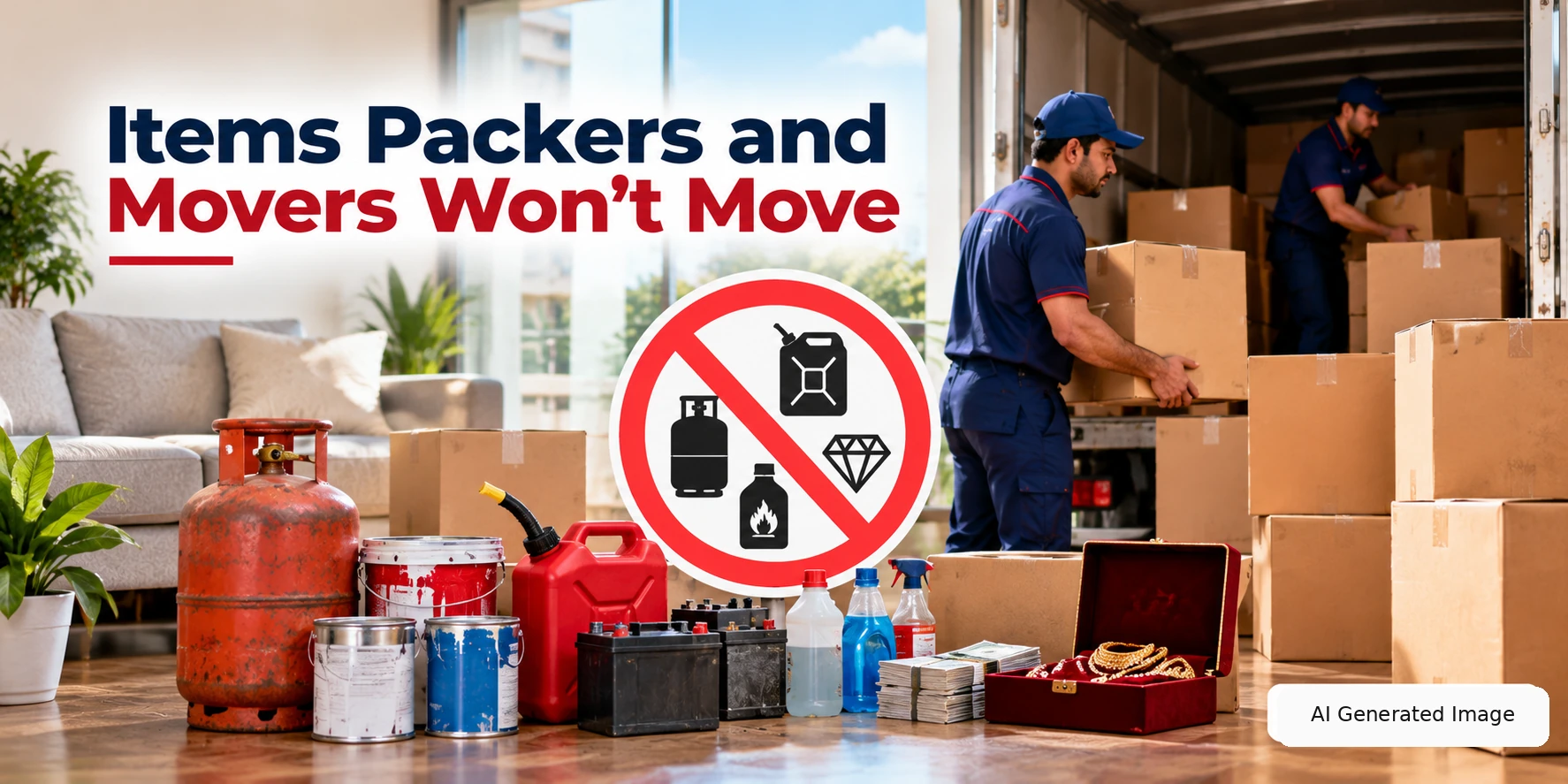
Packers and movers refuse to transport certain items for safety, legal, insurance and handling reasons. These include items which are hazardous, perishable, high-value personal belongings, and living items, such as gas cylinders, chemicals, paints, cash, jewellery and pets. Such restrictions help protect the moving crew, your belongings, and the vehicle from potential hazards from happening during the move. This blog includes a complete list of the items packers and movers won’t move, and what you can do with them instead.
Why Do Packers and Movers Refuse to Transport Certain Items?
Packers and movers often refuse to transport certain items because they carry massive safety, legal, or insurance risks, or require specialised handling. The reasons for this refusal include:
Recommended Reading

NoBroker Packers and Movers: Application...
13.8K Views

Railway Parcel Charges in India 2026: Pe...
7.9K Views

Guide to Choosing the Best Packers and M...
5.2K Views
Types of Packers and Movers in India: Se...
4.1K Views

How To Transport Furniture By Train
1.4K Views
- Safety and fire hazards
- Legal restrictions
- Risk of damage to other belongings
- Limited or excluded insurance coverage
- Need for specialised handling
- Company-specific policies.
What Items Do Packers and Movers Refuse to Transport?
Certain items, which carry safety and legal risks, limit packers and movers from handling them for transportation. You will either need to get special permission for these items or carry them yourself. These items include:
Items at Risk of Fire and Safety Hazards:
- Fuels, oils and gases such as petrol, diesel, kerosene, propane tanks and gas cylinders
- Chemicals and strong cleaners such as bleach, ammonia, drain cleaners, fertilisers and acids
- Combustible materials such as paint, paint thinners, varnishes, matches and fireworks
- Aerosols and flammable products such as spray paint, hairspray and certain solvents
Consumables & Items Likely To Perish
- Fresh foods such as fruits, vegetables, dairy products and meat
- Open food packets containing flour, sugar, pulses and other loose items that can spill
- Frozen or refrigerated food that is likely to spoil during the move.
Valuable & Irreplaceable Personal Items
- Cash, jewellery, precious gems and other high-value items
- Passports, property deeds, titles, birth certificates and other important documents
- Credit cards, financial records and other sensitive paperwork
- Prescription medicines and needed medical supplies
Illegal or Restricted Items:
- Unauthorised weapons and ammunition
- Narcotics and illegal substances
- Stolen goods or prohibited items
- Any item whose possession or transportation is restricted by law
Pets & Plants
- Domestic pets and other live animals
- Indoor and outdoor plants
- Fish, reptiles and other live aquatic or exotic animals
Items You Should Carry Yourself
You will need to carry certain personal items and valuables along with some everyday items with you and leave the rest to the movers. These include:
- Laptops, phones and other personal electronics
- Keys and access cards
- Personal and sentimental items
- A change of clothes and basic toiletries
- Chargers and power banks
- Basic snacks and water for the move.
What to Do With Items Your Packers and Movers Won’t Take
For items that your movers refuse to transport, you can handle them separately before moving day in the following ways:
- Finish or donate perishable pantry food before the move. Give unopened, usable food to a local food bank or charity nearby
- Take leftover paint, fuel, gas cylinders, and other hazardous materials to an authorised collection or disposal centre. Do not pour them down drains or throw them along with your regular household waste
- Keep cash, jewellery, important documents, and other valuables in a separate and safe bag and carry them with you
- Transport small plants carefully in your car, and give away the larger plants if they cannot be transported to your new home
- Dispose of unwanted or restricted items through the right methods rather than leaving them for the movers.
What Happens If You Pack a Restricted Item Anyway?
If a restricted item is found with your packed belongings, the movers will refuse to load it, ask you to remove it, or cancel the service if their policy is breached. If the item causes safety hazards like damage, fire or leakage, you will be the only one responsible for the losses, damages or fines. Transit insurance or compensation will also not be allowed to cover these losses, and furthermore, transporting illegal and restricted items can lead to severe legal consequences.
Moving Made Easier with NoBroker Packers & Movers
Knowing what your packers and movers will and won't move in advance will help you plan better and avoid last-minute delays, unexpected costs and legal consequences. Available across most Indian states, NoBroker Packers & Movers are the leading choice, helping you pack and transport your belongings via trained professionals, quality packing materials, and years of experience. We help you at every stage of your moving process, starting from packing and loading to transportation and unloading.
Frequently Asked Questions
Can packers and movers transport gas cylinders?

Can packers and movers transport refrigerators with food inside?
What are the packing rules for packers and movers?
How can I find out whether a specific item will be accepted by my movers?
About the Author

Yumna Ahmed
Senior Editor
Reviewed By

Bramha Maity
Reviewer


Recent Blogs
Subscribe to our Newsletter
Get latest news delivered straight to your inbox